
The dream of becoming a professional footballer is a powerful one. For young players across the US, UK, Africa, and the world, it’s a goal that drives them every day. Unfortunately, this passion also makes them a target. Scammers posing as agents and scouts prey on these dreams, but you can protect yourself. Once you understand the official rules of the industry, spotting a fake is surprisingly simple.
This guide will give you the knowledge to tell a real opportunity from a dangerous scam. Consequently, you can pursue your career with confidence.
The Golden Rule: Never Pay Upfront
First and foremost, remember this critical rule: legitimate agents and scouts do not ask players for money up front. This is the biggest and most reliable red flag. Real professionals earn their income through commission after they have secured a professional contract for you.

Common “Fee” Excuses
- ✕“Registration fees”
- ✕“Visa processing” or “expediting”
- ✕“Insurance costs”
- ✕“Trial accommodation”
- ✕“Medical clearance fees”
According to FIFA regulations, the inviting club must cover the costs of travel, accommodation, and meals for international trials.
DANGER: Any request for you to send money to a representative via Western Union, crypto, or a personal bank account is a definite scam.
Telltale Signs of a Fake Agent
Unprofessional Communication
How does this person contact you? Professionals conduct business through official channels.
- ✓Real agents use official company email addresses (e.g., name@agencyname.com) and are willing to have video calls.
- ✕Fake agents almost always use social media DMs or generic accounts (Gmail/Yahoo).
Unrealistic Promises
Scammers sell an impossible dream. They might “guarantee” a trial at a top-tier club like Real Madrid for a player with no professional background.
“This is a limited-time offer. You must pay by tonight or the spot is gone.”
Genuine opportunities do not disappear in a few hours. This pressure is a classic tactic.
How to Verify Any Agent
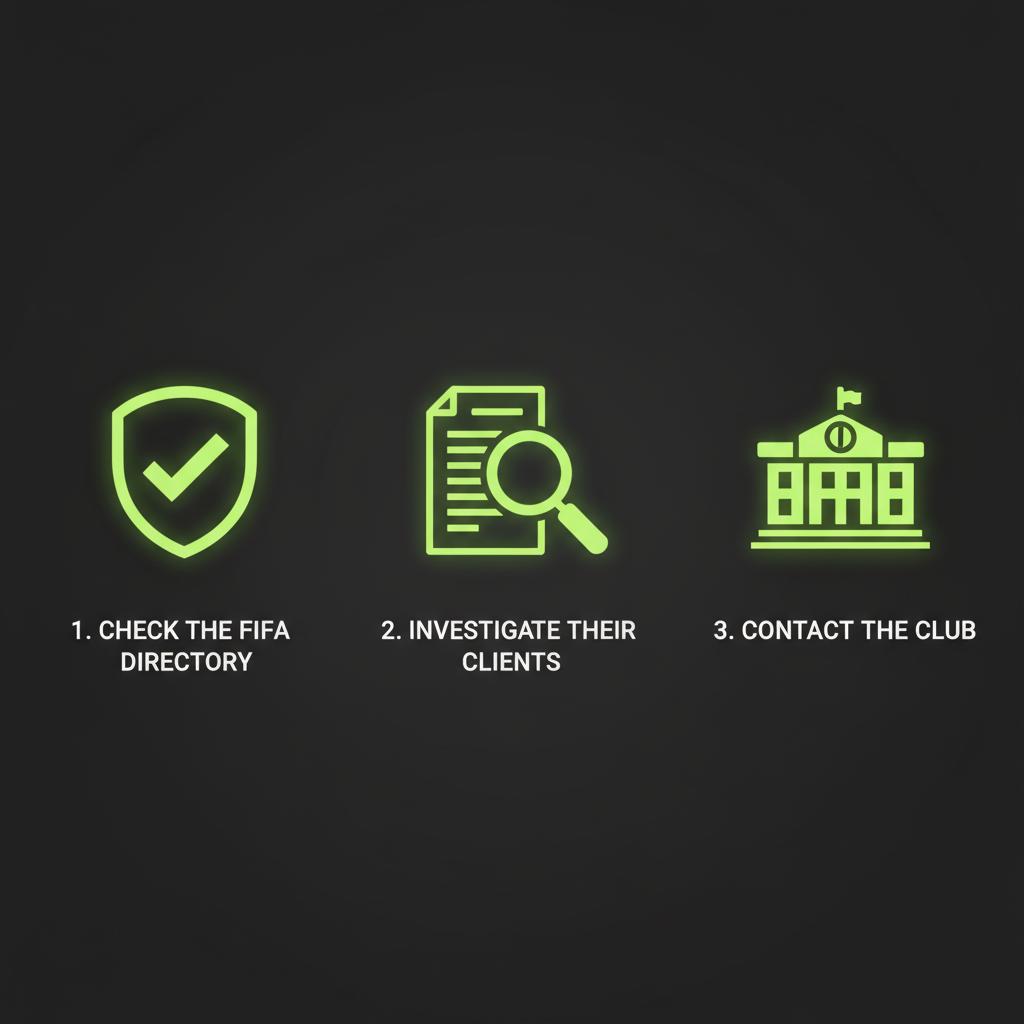
1. Official FIFA Directory
Check if they hold a legitimate FIFA license number on the official agent platform.
2. National FA Lists
Check local associations like The FA in England for registered intermediaries.
3. Transfermarkt
A real agent will have a profile showing their current professional player clients.
Go Straight to the Source
Finally, the most direct way to verify a trial is to contact the club yourself. Scammers can easily forge letters with club logos and FIFA watermarks. Do not use any phone number or email address that the supposed agent gives you. Instead, find the “Academy Recruitment” or general contact email on the club’s official website and ask them directly if the invitation is genuine.
Protect Your Dream by Being Proactive
Your footballing dream is worth protecting. Scammers succeed by exploiting a lack of knowledge, but now you have the tools to shut them down.”
Always remember the most important rule: never pay money up front for a trial. Verify every claim, check official directories, and contact clubs directly. By being cautious and informed, you can safely navigate your path and focus on what truly matters—your performance on the pitch.