How Reformer Training Prevents Modern Sports Injuries
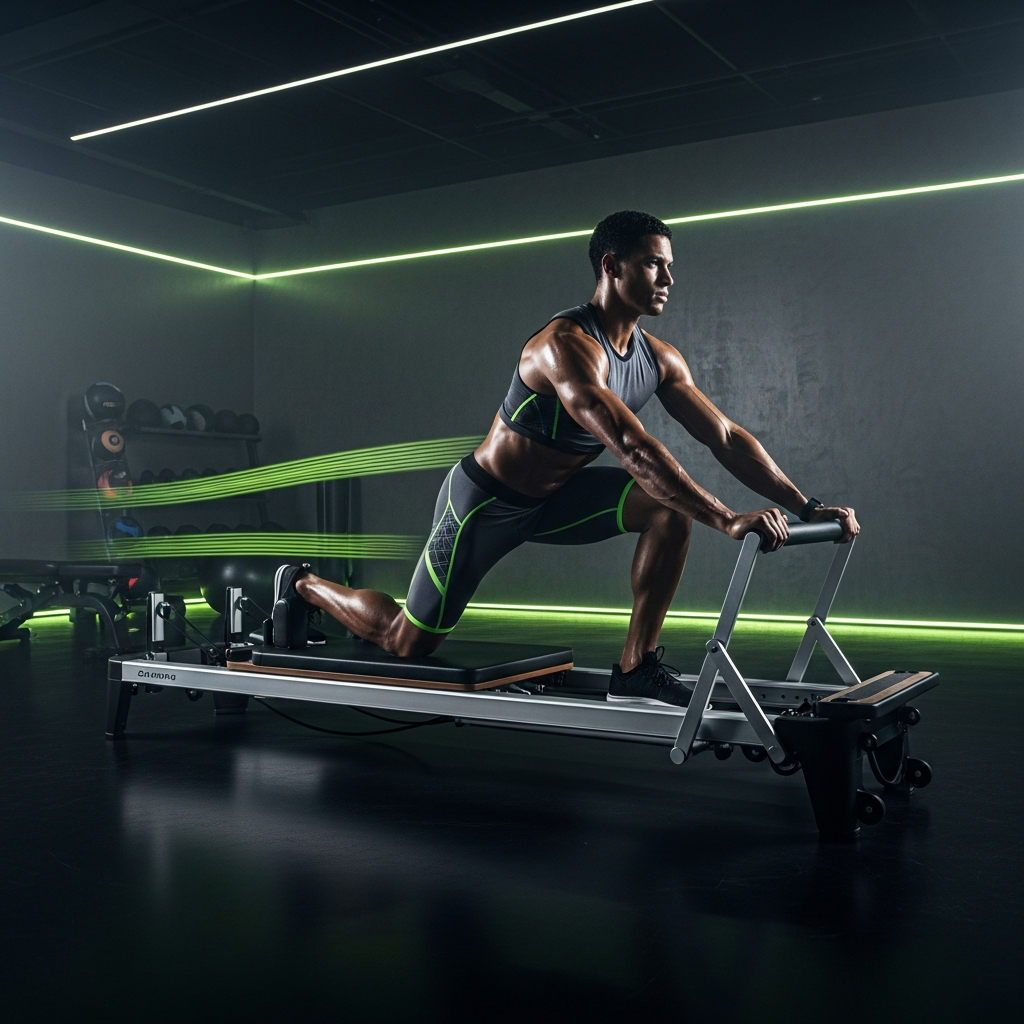
Once a niche recovery tool for dancers, Reformer Pilates has exploded into the mainstream of elite athletic training. Stars in the NFL, NBA, and international soccer now rely on it. Why the shift? Today’s athletes face a new breed of “modern sports injuries,” driven by year-round specialization and intense repetitive stress.
Why Today’s Athletes Get Injured Differently
Modern sports push the human body to its limits. However, the very training that builds elite athletes also creates specific vulnerabilities that lead to nagging injuries and season-ending tears.
The Problem with Sport Specialization
Focusing on one sport year-round creates powerful, yet lopsided, bodies. For example, a baseball pitcher’s throwing arm or a soccer player’s kicking leg becomes incredibly strong. But the smaller, stabilizing muscles that support these powerful movements are often left behind. This imbalance is a primary cause of overuse injuries like tendinitis and stress fractures.
The Danger of Deceleration
Most non-contact injuries, such as ACL tears, don’t happen when an athlete is speeding up. They happen when they try to slow down, pivot, or land. This is the deceleration phase, where muscles must act as powerful brakes. When an athlete’s “engine” outpaces their “brakes,” the joints and ligaments take the force, leading to catastrophic failure.
Building Better Brakes: The Power of Eccentric Strength
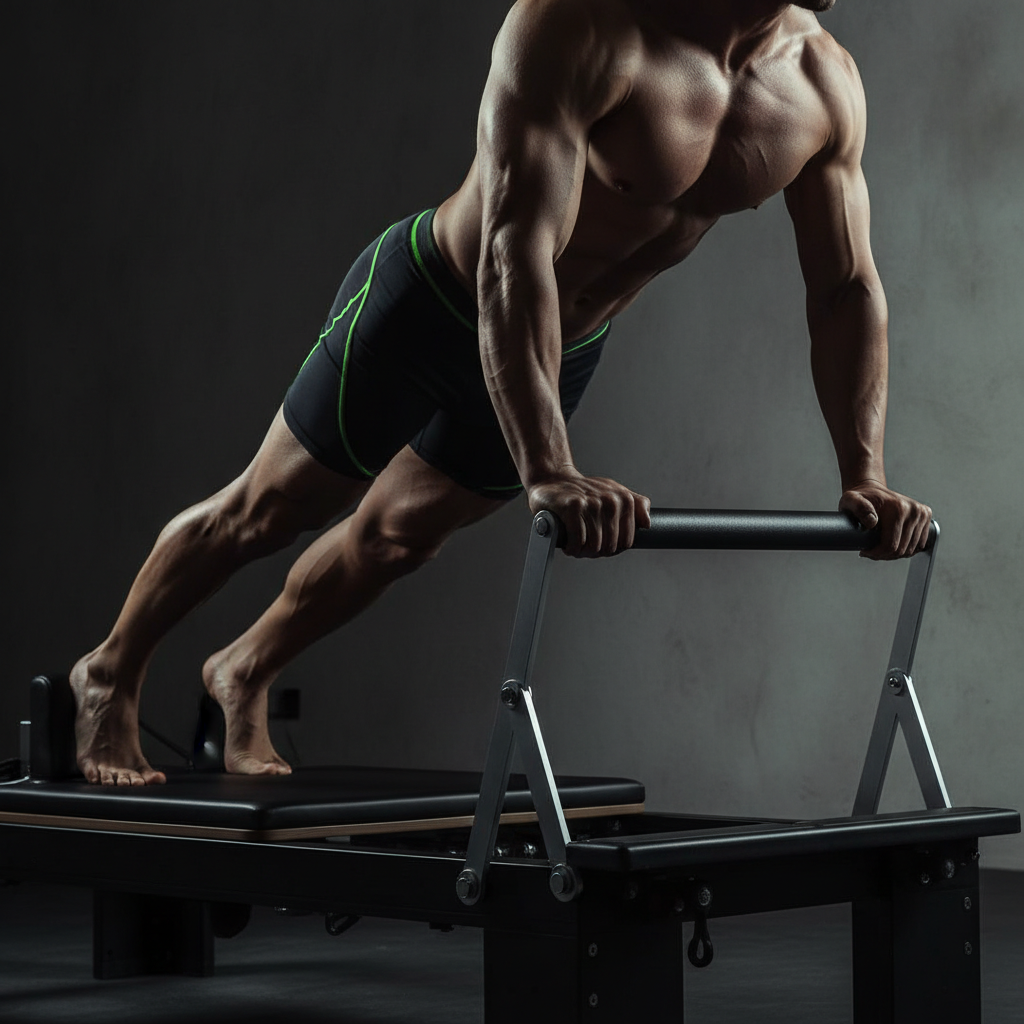
This is where the Reformer machine truly shines. Unlike traditional weights that often focus on the lifting (concentric) phase, the Reformer’s spring-loaded carriage emphasizes control during the lengthening (eccentric) phase of a movement.
Think of it as carefully controlling the carriage as it slides back to the start. This action is precisely what trains your “brakes.” In fact, eccentric strength is the number one protector against hamstring strains and ACL tears. It effectively bulletproofs your muscles and tendons against the violent forces of sudden stops.
Beyond Brute Force: Neuromuscular Control
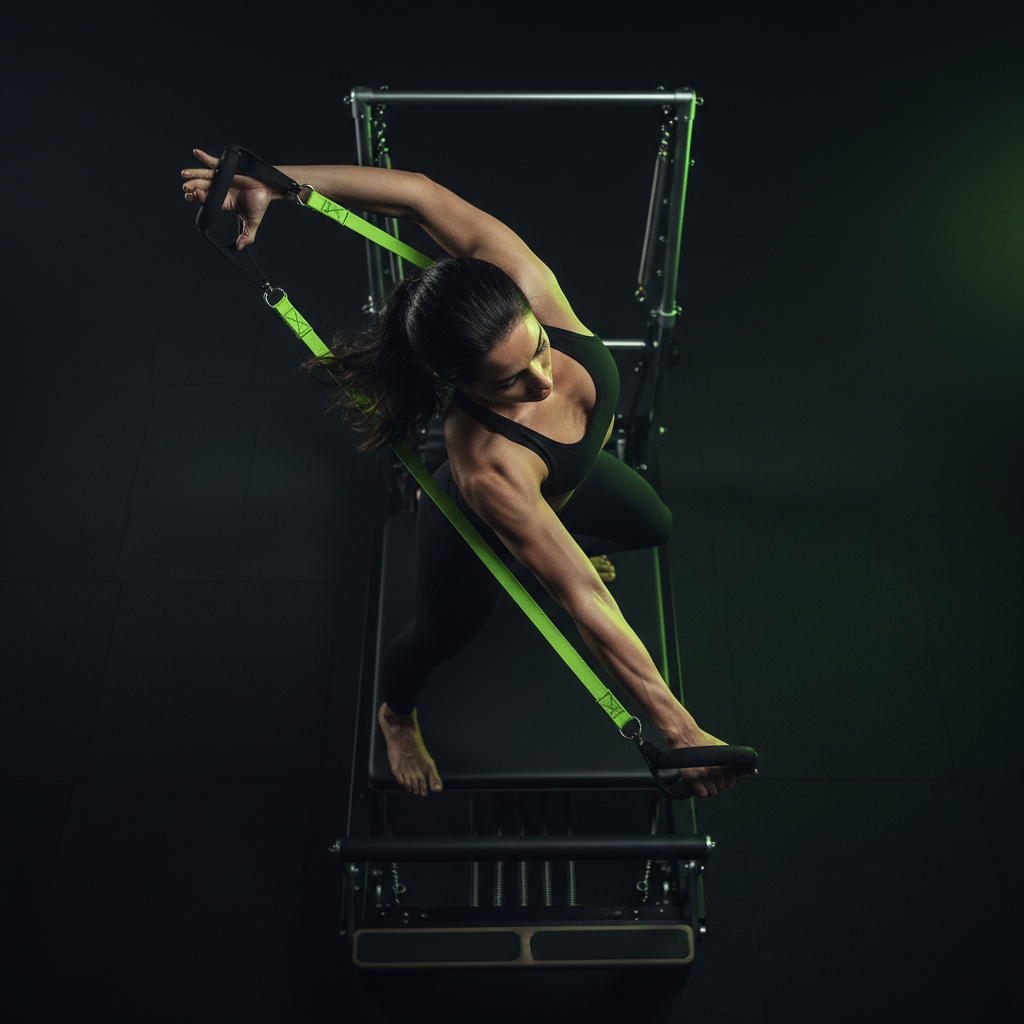
Big “show muscles” aren’t enough to prevent injury. Your brain needs to know how to use them. Reformer training builds proprioception—your brain’s awareness of where your body is in space.
Because the sliding carriage is an unstable surface, your body must constantly fire tiny stabilizer muscles to maintain balance. This builds a powerful mind-body connection. As a result, when you land awkwardly, your stabilizers are already “awake.” They react in milliseconds to support the joint, preventing a roll or tear before it happens.
Sport-Specific Solutions
Basketball
The Jumpboard attachment allows athletes to practice explosive jumping and soft landings with zero joint impact.
Soccer & Football
Exercises like “Footwork” and “Leg Circles” enhance ankle stability and hip mobility for rapid changes of direction.
Running
Movements like the “Scooter” build incredible single-leg stability. You can find more runner-specific Pilates insights in this guide for runners.
Active Recovery and Longevity
Durability is the ultimate competitive advantage. Because Reformer Pilates is low-impact, it serves as the perfect active recovery tool. It increases blood flow to joints, tendons, and ligaments—tissues that have poor natural blood supply. This accelerates repair without the fatigue of a heavy lifting session.
A physical therapist’s guide often highlights how this makes Pilates ideal for both rehab and prehab, as detailed in this physical therapist’s guide to Pilates.
The Takeaway
For the modern athlete, the Reformer is not just for stretching. It is a powerful tool for neuromuscular conditioning. By correcting the muscle imbalances caused by sport specialization and training the body to handle deceleration, Reformer Pilates ensures that your power doesn’t overwhelm your stability.