Don’t let a little rain or mud stop you from capturing the perfect shot. Filming in harsh weather can create incredibly dramatic and cinematic footage. However, water and expensive electronics rarely mix well.
Protecting your smartphone is just the first step. You also need to consider your audio, lenses, and the rig itself to get usable, high-quality results.
Whether you have a professional budget or are looking for clever DIY solutions, this guide will show you how to weatherproof your mobile filmmaking gear. Consequently, you can shoot confidently, no matter what the forecast says.
Pro-Grade Protection
When you need absolute certainty that your phone will stay dry, nothing beats a professional-grade housing. These are designed not just to resist water, but to maintain full functionality for filmmakers.

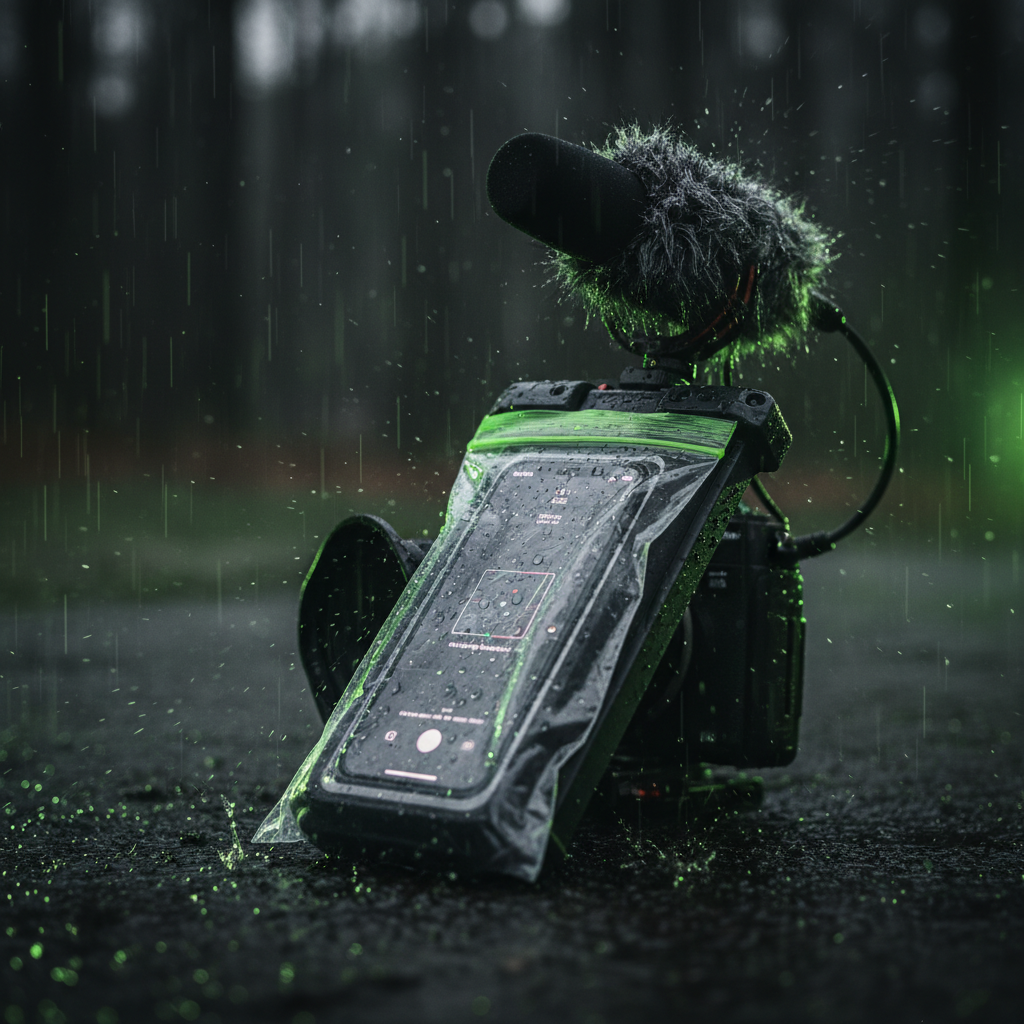
For Full Touchscreen Control: DiveVolk SeaTouch 4 Max
The DiveVolk SeaTouch 4 Max stands out for one key reason: its unique gel-filled membrane. This technology allows for full, reliable use of your phone’s native touchscreen even when completely submerged or pelted by rain. While a normal wet screen suffers from “phantom touches,” the SeaTouch’s membrane requires a firmer press that ignores water droplets. This means you can still adjust focus, change settings, and use features like Cinematic Mode without issue.
Caution: Audio
The airtight seal means built-in audio will be unusable. You’ll need a separate audio solution.
Maintenance
The soft membrane can be scratched by mud. Always rinse with clean water before wiping down.
For Durability and Physical Controls: JOBY SeaPal
Developed with AquaTech, the JOBY SeaPal is a robust option built for surf and splash zones. It features a high-quality glass lens port for maximum clarity and an ergonomic grip. While its back membrane allows for touch access, users report it can become unresponsive when wet.
For this reason, the optional Bluetooth Shutter Grip is considered essential for filming in the rain. It gives you a reliable physical button to start and stop recording, bypassing any screen issues. Keep in mind that the case is prone to fogging, so using anti-fog inserts is highly recommended.
Smart DIY Solutions
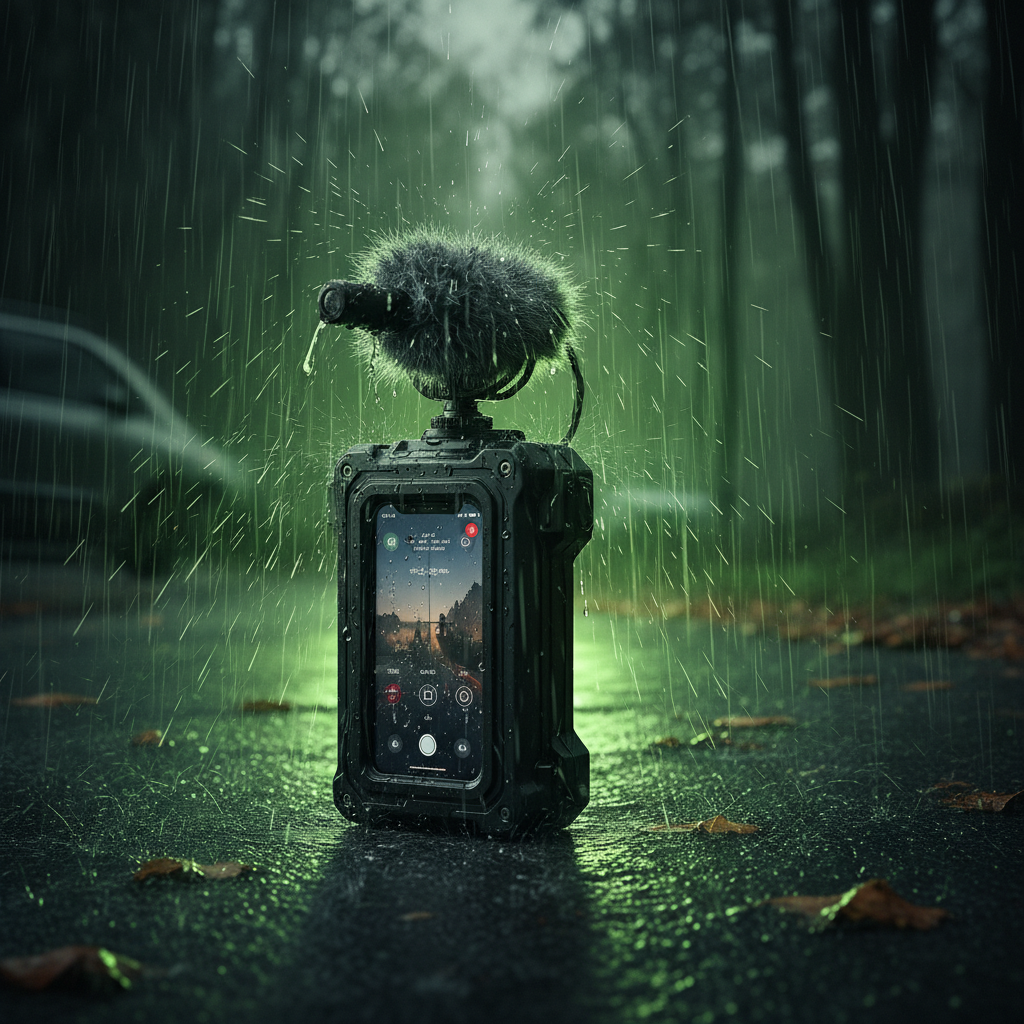
You don’t need to spend hundreds of dollars to protect your phone. Some of the most effective methods use everyday household items. These hacks are perfect for light drizzles or when you’re caught in a surprise downpour.
- 01
The Freezer Bag Trick: Use a high-quality, thick Ziploc freezer bag. Place your phone inside and carefully squeeze out all the air before sealing it. This keeps the plastic tight against the screen.
- 02
The Lunchbox Housing: Find a small, clear, and fully airtight food container. Secure your phone inside with double-sided tape to keep the camera lens flush against the clear plastic.
- 03
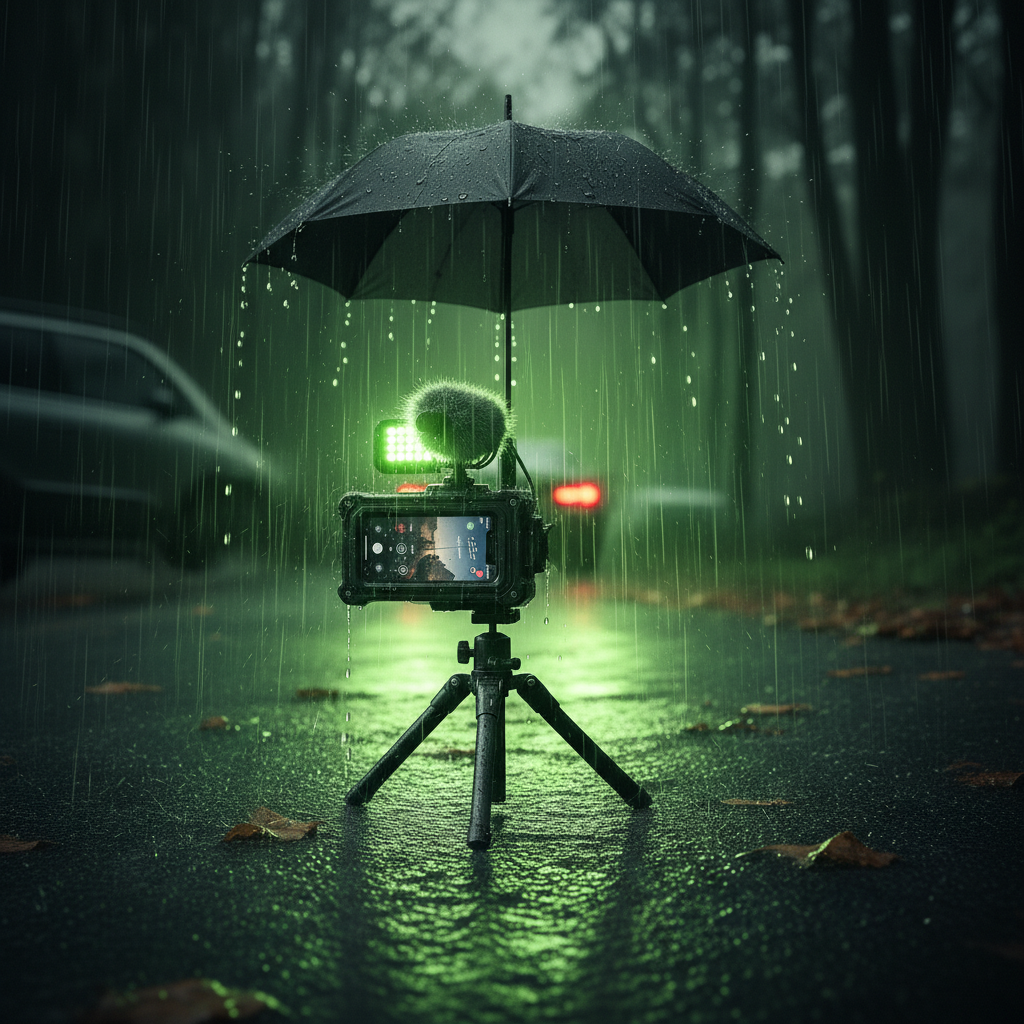
The Tripod Umbrella. One of the best DIY methods is to keep rain off your gear entirely. Use a clamp or zip ties to attach a small umbrella directly to your tripod.
Capture Clear Audio
Audio is often the first casualty of bad weather. A few drops of water can muffle or short out your phone’s built-in microphone. Therefore, protecting your sound is just as important as protecting your phone.
Waterproof Microphones
For professional results, a dedicated waterproof microphone is the best investment. Lavalier mics like the Shure DuraPlex (IP57) or the Voice Technologies VT500WA (IPX7) are designed to be submerged and still capture crystal-clear dialogue.
If clean audio is a priority, exploring the specs of the Shure DuraPlex is a great place to start.
Clear Vision & Optics
A protected phone and perfect audio are useless if your lens is covered in blurry water droplets or fogged up from the inside.
Hydrophobic Coating
Products like Rain-X cause water to bead up and roll right off the lens glass.
Anti-Fog Inserts
Small desiccant strips, like GoPro inserts, absorb moisture from internal condensation.
Lens Hood
A clip-on hood acts like a tiny umbrella, preventing rain from hitting the glass.
Stay informed on the latest tech by reading about advanced optical coatings used for weather resistance