Creating a Football CV: What Stats Actually Matter?
The dream of turning pro is now data-driven. Learn how to build a CV that forces scouts to take notice.
In 2026, the dream of becoming a professional footballer is more competitive than ever. Gone are the days when a simple list of clubs and goals was enough. Today, scouts and recruitment directors use powerful data-filtering to sift through thousands of players. Before they even watch your highlight reel, they look at your numbers. Your football CV is no longer just a history; it is your data-driven pitch.
Consequently, understanding which statistics truly matter is crucial. It’s about blending traditional achievements with the advanced metrics that reveal how you play. This guide will show you exactly what scouts are looking for, helping you build a CV that gets you noticed in the modern game.

The Foundation: Three Stats Every Scout Looks for First
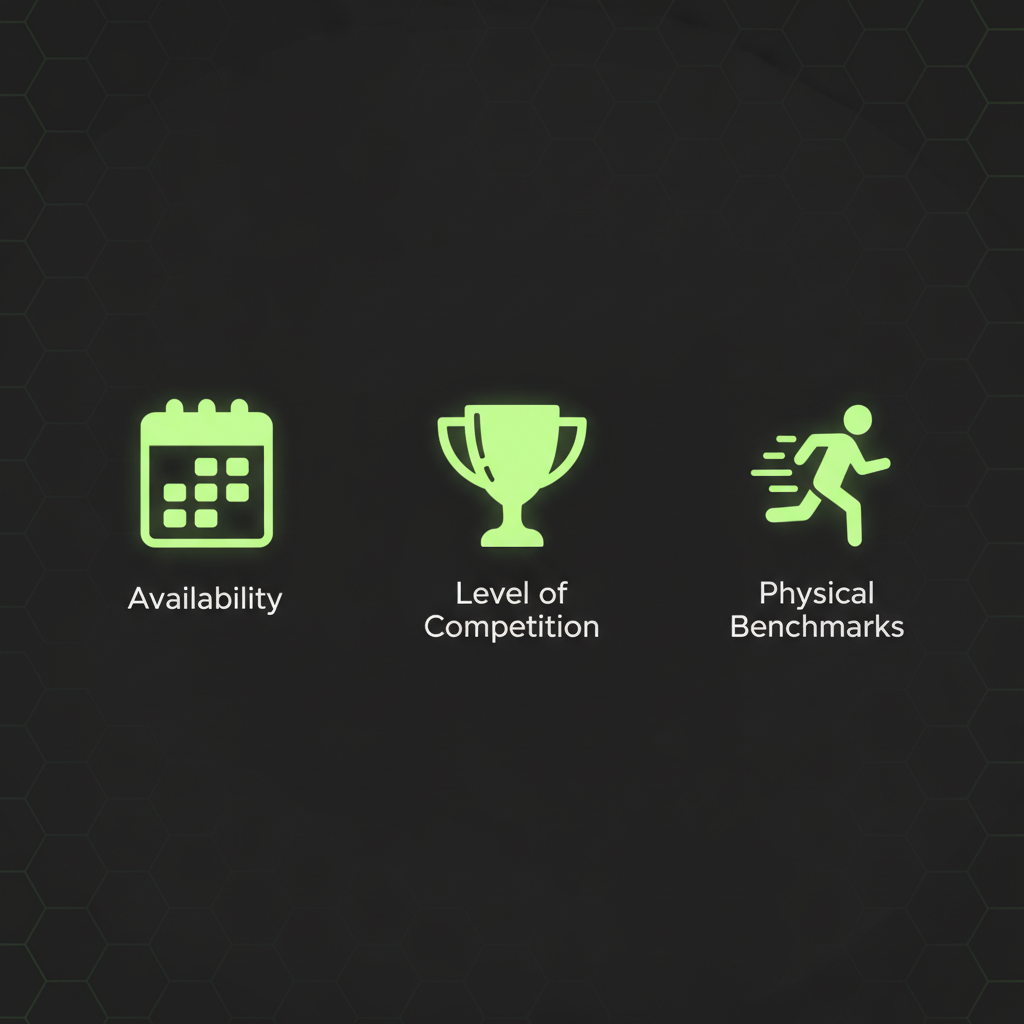
Before a scout even considers your position-specific skills, they check for three fundamental data points. These are non-negotiable and should be at the very top of your CV. They provide immediate context and answer a scout’s most basic questions.
- 1
Availability: This is arguably the most important stat. Scouts need players who are consistently on the pitch, not on the treatment table. You must show your total minutes played versus the total possible minutes. For example, playing 90% of a season is a massive green flag that tells clubs you are durable and reliable.
- 2
Level of Competition: Stats are meaningless without context. Clearly state the league and its tier (e.g., “U18 National League, UK” or “Spanish 3rd Division”). Ten goals in a top youth league are far more impressive than 30 in a lower-tier local league. This helps scouts accurately benchmark your performance.
- 3
Physical Benchmarks: Football is an athletic contest. Therefore, your physical data is essential. Include key metrics like your 10m/30m sprint times, Beep Test or Yo-Yo Test scores, and if possible, data from a GPS tracker like STATSports. This raw data proves your athletic capacity for the professional game.
Tailoring Your CV: Position-Specific Metrics That Impress
Once you’ve established the basics, the next section of your CV must be tailored to your position. Scouts search for Key Performance Indicators (KPIs) that prove you excel in your specific role.
Forwards & Wingers: Prove Your Attacking Output
For attackers, it’s all about quantifiable results. Your job is to create and score goals.
Your CV must include traditional stats like goals and assists, but smart players also highlight non-penalty goals. However, to truly stand out, you need advanced metrics. npxG (Non-Penalty Expected Goals) is a key stat; it proves you consistently get into dangerous scoring positions. In addition, for wingers, a 1v1 success rate above 55% is a benchmark for elite dribblers.
Midfielders: Show You Run the Game

Scouts want to see impact. Therefore, you should highlight Progressive Passes—passes that move the ball significantly toward the opponent’s goal. This metric separates simple passers from true playmakers. Furthermore, passing into the Final Third demonstrates your ability to break defensive lines. For defensive midfielders, Recoveries and Interceptions per 90 minutes are vital for showcasing your work rate and tactical intelligence.
Defenders & Goalkeepers: Highlight Your Reliability
Defensive players are judged on their ability to prevent goals and provide security.
For central defenders, an Aerial Duel Win % above 65-70% is considered elite. Similarly, your Defensive Duel Success rate in 1v1 tackling situations is critical. For goalkeepers, the gold standard metric is PSxG +/- (Post-Shot Expected Goals minus Goals Allowed). This stat shows how many goals you saved above or below what was expected, proving your shot-stopping ability. Modern keepers should also include their Distribution Accuracy to show they are comfortable with the ball at their feet, a key insight available on some platforms like Wyscout. For more on how professional academies view player development, you can check out insights on official club blogs.
How to Present Your Data for a 30-Second Scan
A scout might spend less than a minute on your CV. Because of this, your presentation must be clean, concise, and impactful. Don’t just list numbers; make them easy to digest.
Use “Per 90” Metrics
“0.5 goals per 90” is the professional standard and allows for fair comparison, unlike total season stats.
Leverage Percentiles
Show how you rank against others in your league (e.g., “Top 5% of league for Progressive Passes”).
Finally, use a simple table or small infographic-style bars for your top four KPIs. This visual approach helps a scout grasp your key strengths instantly.
Red Flags: What to Leave Off Your Football CV
What you exclude is just as important as what you include. Certain mistakes can get your CV thrown out immediately.
First, never inflate your numbers. Scouts in 2026 have access to global databases like Transfermarkt and can verify your claims in seconds. A single lie will destroy your credibility. Second, avoid vague, subjective phrases like “hard worker” or “good vision.” Instead, prove these traits with data. Replace “hard worker” with “Covered 11.5km average per match.” Finally, do not include lengthy match reports. Stick to the data and key achievements.
Bringing It All Together: The Video-Data Link
The ultimate goal of your CV is to get a scout to watch your highlight video. The data earns their interest; the video confirms your ability. Therefore, every key stat on your CV must be backed up by video evidence.
For instance, if your CV boasts a “75% Long Ball Accuracy,” the first few clips of your highlight reel should show you executing perfect cross-field passes. This powerful combination of data and visual proof is what convinces a scout to pick up the phone. For inspiration on creating compelling highlight reels, many players share their own compilations online, like on official player channels.
Conclusion
“Creating a football CV in 2026 is about telling a compelling story with data. By focusing on the essentials—availability, competition level, and physical data—you build a strong foundation. From there, you must layer on position-specific metrics that prove you are not just a participant but a difference-maker.”
Present your stats professionally, avoid common mistakes, and always link your data to video proof. By following this data-driven approach, you move beyond simple claims and provide the concrete evidence that modern scouts demand. Your CV becomes a powerful tool that can open the door to your next trial and, ultimately, your professional career.