
Beyond the Hype: The Multi-Billion Dollar Economics of Women’s Sports
“The narrative around women’s sports has permanently shifted. What was once seen as a philanthropic venture is now a high-growth asset class commanding billion-dollar valuations.”
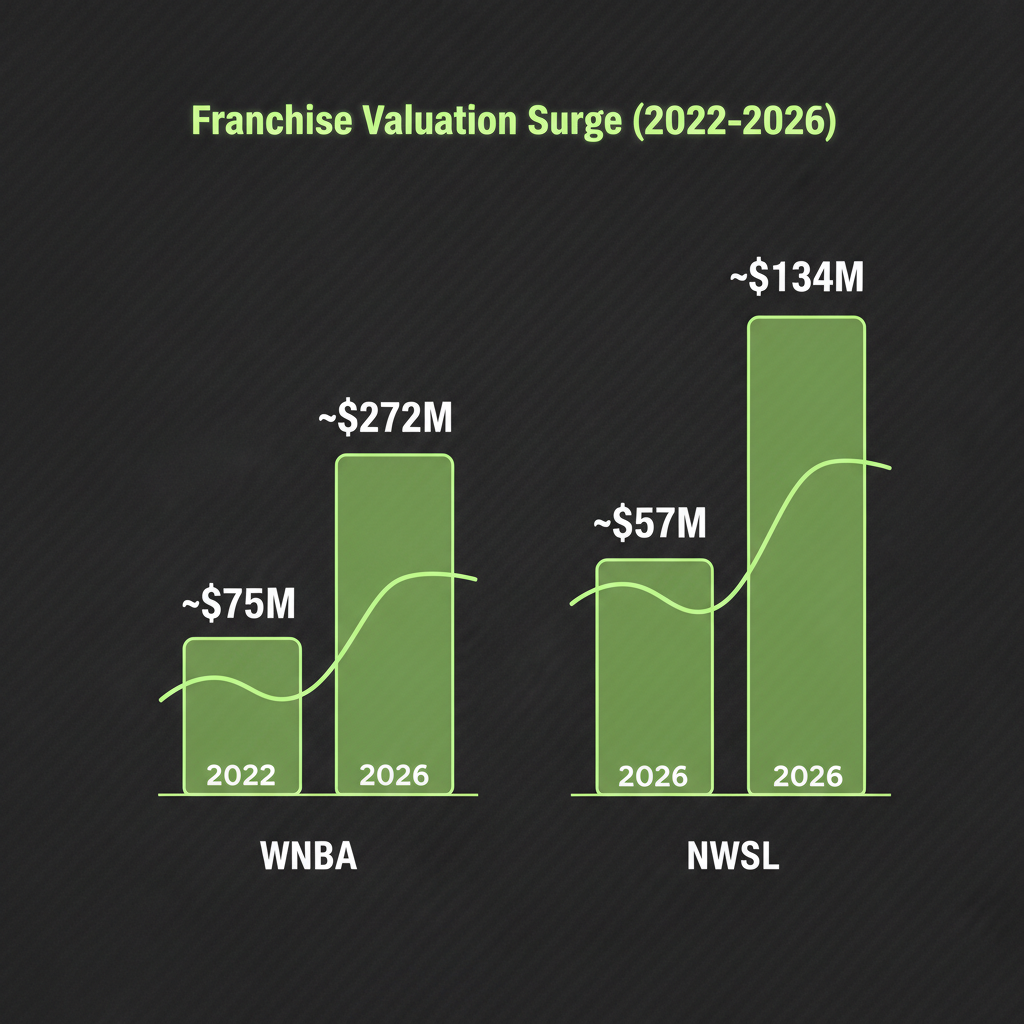
Specifically, the 2025-2026 period marked an explosive economic turning point. Franchise values in leagues like the WNBA and NWSL skyrocketed, driven by record-breaking media deals and savvy investments. Consequently, this boom has captured the attention of high-net-worth individuals, B2B leaders, and a new generation of athlete-owners. This isn’t just about potential anymore; it’s about proven, exponential growth.
The Media Rights Multiplier: Fueling the 300% Valuation Surge
The primary catalyst for this financial explosion is a dramatic escalation in media rights value. Previously, broadcast deals were modest. However, 2026 changed everything. The WNBA’s new 11-year agreement with Disney, NBCUniversal, and Amazon is worth approximately $2.2 billion, a nearly 4x increase. Similarly, the NWSL’s recent deal saw its value increase by a staggering 40 times.


This influx of guaranteed revenue fundamentally changes team economics. For investors, it transforms franchises from speculative assets into predictable cash-flow businesses. Therefore, leagues are now valued at 8x to 14x revenue—multiples that reflect aggressive, venture capital-style growth expectations. This secured income provides the foundation for every other aspect of growth.
From Millions to Billions: A Look at Franchise Valuations
WNBA Highlights
- ▹Golden State Valkyries: $500M valuation debut in 2025.
- ▹Indiana Fever:$335M+ powered by Caitlin Clark’s impact.
- ▹Expansion Fees: Surged from $50M to $250M.
NWSL Highlights
- ▹KC Current:$275M with first purpose-built stadium.
- ▹Angel City FC:$250M-$280M valuation.
- ▹Expansion Fees: Jumped to $165M for 2028 team.
The Rise of the Athlete-Owner
Beyond traditional investors, elite athletes are now becoming key equity players. Leveraging their global brands and immense earnings, they are diversifying into team ownership, often with a focus on women’s leagues. This trend adds a layer of credibility and marketing power that is invaluable.

For instance, athletes like Serena Williams (Angel City FC) and Patrick Mahomes (KC Current) were early investors, recognizing the high-growth potential. This model is becoming more sophisticated. Athletes are no longer just passive partners; they are active business builders. Kevin Durant’s media company, Boardroom, partners directly with teams like PSG to create content and expand their footprint. In the same way, LeBron James, through his stake in Fenway Sports Group, holds ownership in multiple major franchises.
The B2B and High-Net-Worth Opportunity
For B2B brands and high-net-worth individuals, the women’s sports market represents a unique “white space” opportunity. The data reveals a market that is still significantly undervalued relative to its engagement and influence. Research shows that fans are three times more likely to purchase products from brands sponsoring women’s sports compared to men’s.
Despite this, a staggering 94% of Fortune 500 companies have no investment in women’s sports. This sponsorship gap presents a multi-billion dollar pipeline for brands seeking high-ROI marketing. Furthermore, specialized funds like Monarch Collective are emerging to help investors gain diversified exposure. As Alexis Ohanian, a leading investor in the space, has demonstrated, the strategy is an infrastructure and scaling play.
Conclusion: A New Era of Sports Business
The explosive growth in WNBA and NWSL valuations during 2025-2026 is not a temporary trend. Instead, it is a fundamental market correction fueled by massive media deals, dedicated infrastructure, and strategic investment from a new class of athlete-owners and forward-thinking business leaders. The economics have shifted from subsidized potential to sustainable, high-growth ecosystems. For investors and brands, the message is clear: the era of women’s sports as a premier alternative asset class has arrived.