
Every young player dreams of impressing a scout. Many believe a flashy dribble or a powerful shot is the key. However, scouts are looking for something much deeper: tactical awareness.
They call it “Game IQ”—the ability to read the game, understand your position, and make smart decisions under pressure. It’s the one skill that separates good players from those with real potential. This guide will break down exactly what tactical intelligence looks like and how you can show it in your next trial.
The 5 Cues: What Every Smart Player Sees
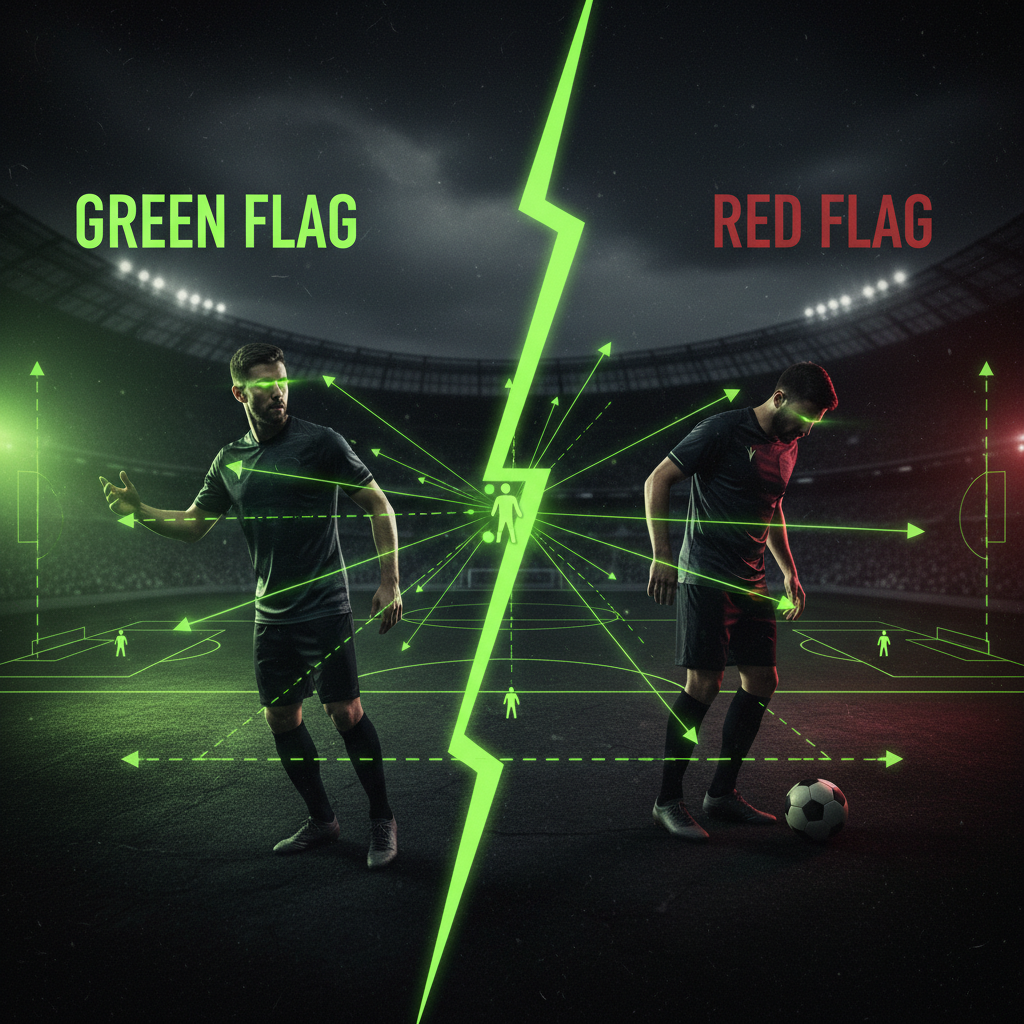
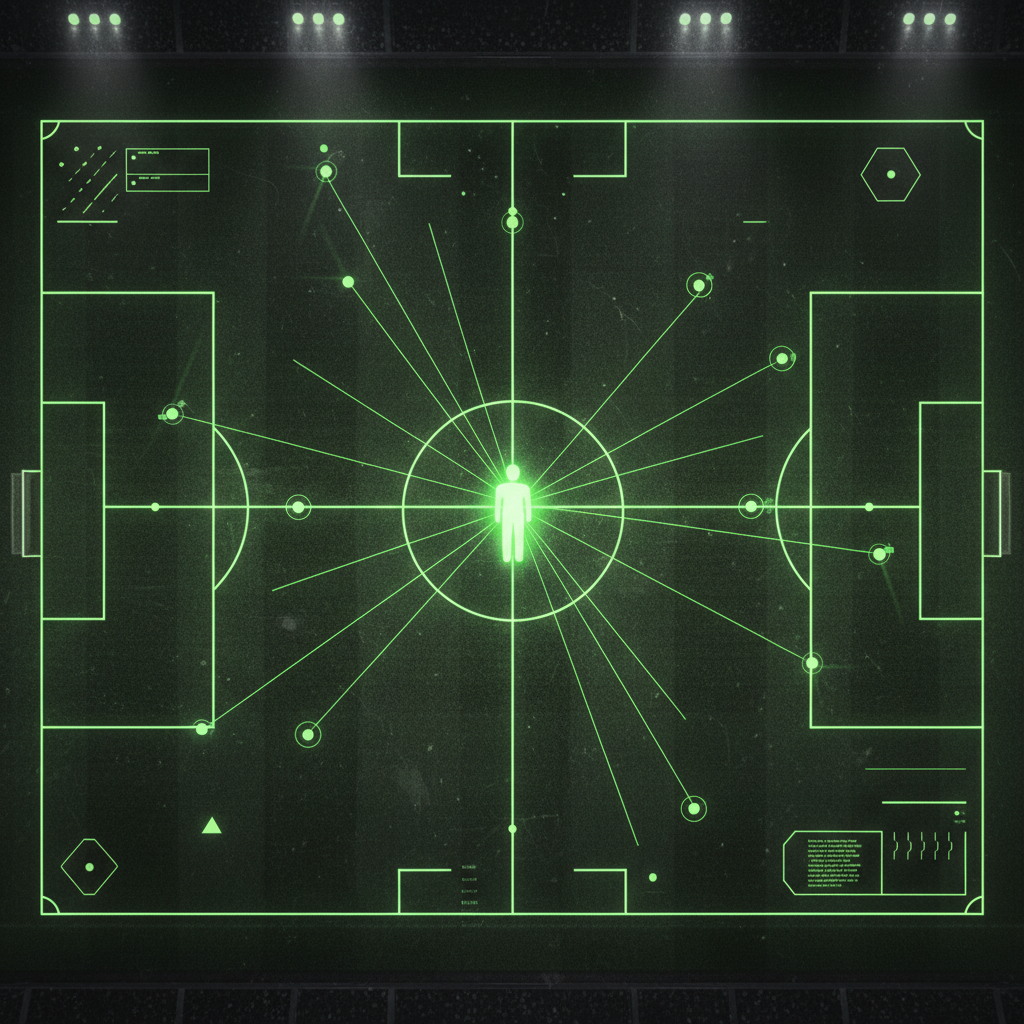
Great tactical awareness starts with seeing the entire picture, not just the ball. Every decision you make on the pitch should be guided by five key reference points. In fact, scouts specifically watch how you react to these cues.
The Ball
Is it with a teammate who has time (“open”) or one who is under pressure (“closed”)? This dictates your next move.
The Goals
Your position relative to your goal and the opponent’s goal should always inform your level of risk.
Your Teammates
Are you creating space for them or clogging it? Offering a passing option is a crucial sign of game intelligence.
Your Opponents
Where is the danger? A smart player is always aware of the opponent’s position, especially marking “goal-side”.
Your Position, Your Playbook: What Scouts Look For
While the five cues are universal, scouts have a specific checklist for each position. Mastering these tactical duties shows you truly understand your role.
Goalkeeper: The Organizer
- Defense Organization: Scouts listen for your voice. Are you organizing the defenders before a shot happens?
- Proactive Sweeping: When your team attacks, are you positioned high to cut off long balls?
- Smart Distribution: Know when to play safe versus starting a quick counter-attack.
Defender: The Anchor
- Open Body Shape: Always see both the attacker and the goal. Never just face the ball.
- Cover and Balance: Instinctively tuck in to cover the space behind your partner.
- Delay, Don’t Dive: Delaying an attacker is often more valuable than a reckless tackle.
Forward: The Predator
Are you making runs to create space for your teammates, or only when you want the ball? When possession is lost, a top striker immediately presses. You set the defensive tone.
The Golden Minute: Why Transitions Make or Break a Trial
Scouts pay the most attention during transitions—the moments right after the ball changes possession. This “golden minute” reveals a player’s true game intelligence and reaction speed.
Offense to Defense
If you lose the ball, what is your first reaction? Do you immediately chase it (react), or do you sprint back into your defensive shape (re-shape)? Scouts value re-shaping far more.
Defense to Offense
After winning the ball, is your first thought a safe backward pass or a forward, “penetrating” pass? For more on building attacks from transitions, Coaches Insider offers great insights.
Green Flags vs. Red Flags: A Scout’s Checklist
During a trial, your habits become very clear. Here are the simple green flags scouts love to see and the red flags they try to avoid.
✓Green Flags
- •Constant Scanning: Looking around every few seconds.
- •Clear Communication: Using simple shouts like “Man on!” or “Time!”.
- •Recovery Runs: Sprinting back at 100% effort after losing the ball.
- •Positional Discipline: Staying in your zone instead of chasing the ball.
✕Red Flags
- •Ball Watching: Only focusing on the ball and nothing else.
- •Silent Play: Not communicating or offering information.
- •Walking Back: Showing a poor work rate when possession is lost.
- •Leaving Your Zone: Leaving gaps for the opponent to exploit.

Conclusion
Ultimately, getting noticed at a trial is less about that one spectacular moment and more about consistently making smart decisions. Scouts can teach skills, but it’s much harder to teach Game IQ. By focusing on your tactical awareness—scanning the pitch, understanding your role, and reacting quickly in transitions—you show them a player who thinks the game. Play simple, play smart, and let your football intelligence do the talking.