The FIFA World Cup 2026 is not just another tournament; it is a revolution in international football. For the first time, 48 teams will compete for the ultimate prize, a significant jump from the 32-team format we have known for decades. Hosted across Canada, Mexico, and the United States, this expanded event promises more matches, more drama, and more opportunities for nations to shine on the world’s biggest stage.
Consequently, the entire structure, from the group stage to the final, has been transformed. This massive overhaul introduces a brand-new knockout round and a completely different path to glory. In March 2026, the final pieces of this giant puzzle fell into place as the last teams qualified, setting the stage for the most extensive World Cup in history. Let’s break down exactly how this new 48-team format works and what it means for the beautiful game.
A Bigger Party: The Expanded 48-Team Group Stage
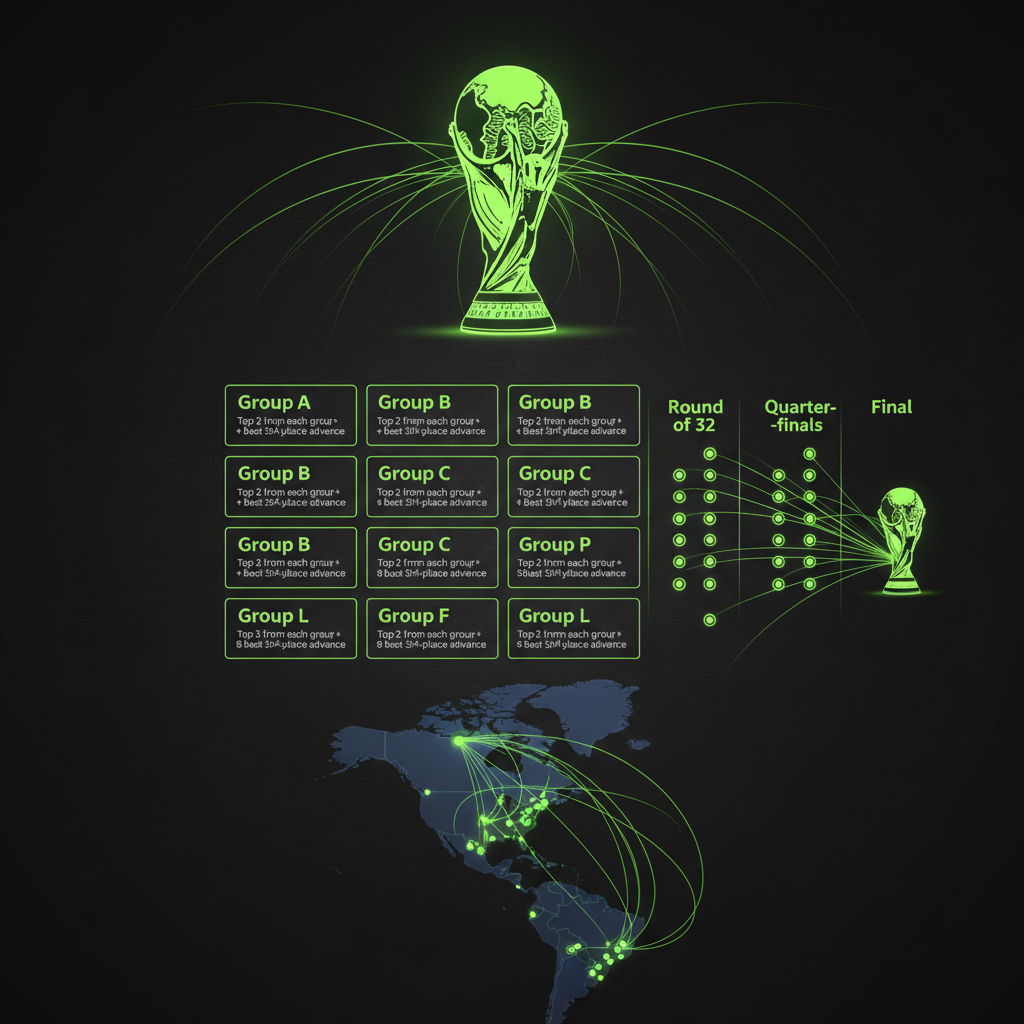
The first major change is in the group stage. Instead of the familiar eight groups, the 2026 tournament features 12 groups of four teams, labeled A through L. This structure keeps the traditional round-robin format, where every team plays each other once. However, the path to the knockout rounds is now more complex.
The Group Advancement Rule
- 1The top two teams from each of the 12 groups automatically qualify.
- 2They are joined by the eight best third-placed teams from across all groups.
This new rule means 32 of the 48 teams will advance, adding a layer of suspense that lasts until the final whistle of every group match. Teams finishing third will face a tense wait to see if their points and goal difference are enough to secure a spot.

The Biggest Knockout Bracket Ever: Introducing the Round of 32
Because 32 teams now advance, the tournament features an entirely new knockout stage: the Round of 32. This is arguably the biggest structural change in the World Cup’s modern era. Previously, the tournament jumped straight from the group stage to the Round of 16.
This extra elimination round has a significant impact on the tournament’s length and intensity. For instance, any team that reaches the semi-finals or the final will now play a total of eight matches, one more than the seven required in previous formats. This change demands even greater depth, endurance, and strategic planning from the world’s top national teams.
March Madness: How the Final Bracket Took Shape
March 2026 was a pivotal month for the tournament. It was when the hype truly ignited and, most importantly, when the final 48-team field was confirmed. The official “100 Days to Go” countdown began on March 3rd across all 16 host cities, signaling the home stretch.
The Final Tickets Punched
The biggest drama unfolded during the final qualification window. An Inter-Confederation Play-Off Tournament, held in Mexico, saw six teams battle for the last two World Cup berths. In the end, Congo DR and Iraq emerged victorious, with Iraq returning to the finals for the first time in 40 years.
Simultaneously, the UEFA play-offs concluded, with high-stakes matches determining Europe’s final representatives. Teams like Sweden, Bosnia and Herzegovina, Turkiye, and Czechia secured their spots, officially completing the 48-team lineup on March 31. The results solidified the bracket, turning placeholders into confirmed matchups.
Countdown and Global Hype
Beyond the pitch, March was a month of major marketing campaigns. The FIFA World Cup Trophy Tour began its journey across North America, while global sponsors launched their hero campaigns. Brands like Adidas and Lay’s rolled out advertisements featuring stars like Lionel Messi and David Beckham, amplifying the global excitement. These events, combined with the final qualifiers, created a perfect storm of anticipation for the June 11 kickoff.
Quick Stats
104 Matches
39 Days
48 Nations
Conclusion: A New Era for the World Cup
The 2026 FIFA World Cup represents a bold new chapter for football. With 104 matches over 39 days, the expanded 48-team format is bigger, longer, and more inclusive than ever before. The addition of a Round of 32 and the complex “best third-place” rule will undoubtedly create new storylines and unforgettable moments. More nations, particularly from Africa and Asia, have a chance to compete, reflecting the sport’s growing global reach. As the world turns its eyes to North America, one thing is certain: this redesigned tournament has changed everything.