
The dream of playing professional football burns bright for thousands of players globally. While academies are one route, a tougher, more rewarding path lies in the English non-league pyramid. This journey demands more than just talent; it requires strategy, self-promotion, and a deep understanding of what scouts *really* want. Forget what you think you know. Climbing the ladder from grassroots to the elite levels is a calculated process.
This guide provides a clear career roadmap. It breaks down each phase of the non-league system, showing you how to get noticed, master trials, and make the jump to the next level. Let’s begin your climb.
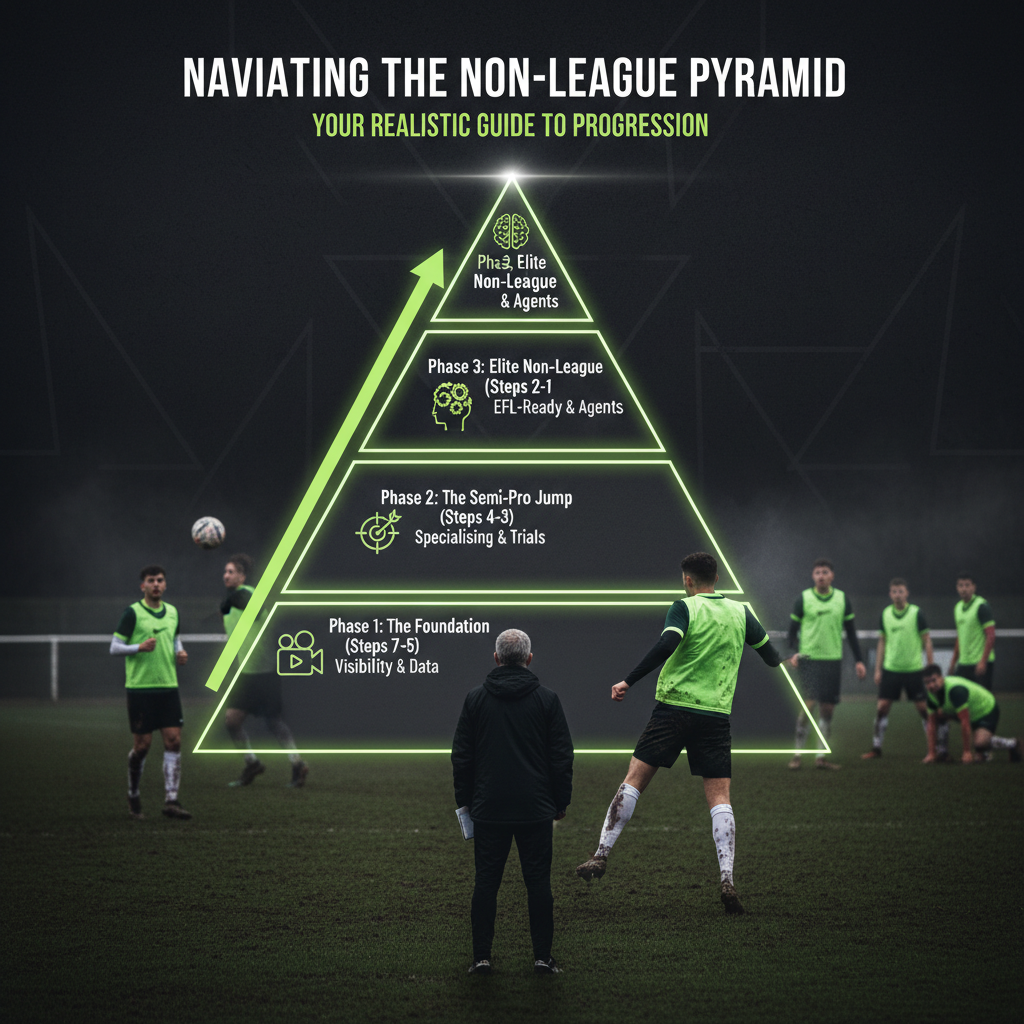
Phase 1: The Foundation (Steps 7–5)
At the grassroots level, you are essentially invisible until you make yourself seen. This phase is all about building your brand and collecting evidence. In these local and county divisions, managers and coaches are the primary recruiters, so you must bring your game directly to them.
Your Action Plan: Visibility and Data
First, you need to understand that without video, you don’t exist. You cannot get scouted at this level without clear, recorded proof of your abilities.

- Record Everything: Your top priority is to get your games filmed. Investing in a Veo camera or asking a friend to record is not a luxury; it is a necessity.
- Build Your CV: Create a simple, one-page football CV. It should include essential details: height, weight, dominant foot, and your primary and secondary positions.
- Get on Digital Platforms: Coaches at the next level use databases to find talent. Therefore, create detailed profiles on platforms designed for non-league visibility. Visit PitchScout. These sites act as your digital agent in the early stages.
- Network Smartly: The hub of non-league football is online, especially on X. Follow local clubs in the leagues above you. Engage with their posts and tag them in your highlight clips.
Phase 2: The Semi-Pro Jump (Steps 4–3)
When you reach this level, the game changes. Clubs begin to pay wages or expenses, and scouting becomes more formal. Scouts now look for players with a specific “DNA”—a combination of work rate, physical attributes, and technical skill that fits their team’s identity.

Specialising and Nailing the Trial
Success here is about targeting the right opportunity at the right time. The recruitment cycle is predictable, and you can use it to your advantage. Peak trial season is typically May and June, with clubs inviting the best players to pre-season training in July.
To secure that chance, your approach is crucial. Don’t just ask for a trial. Instead, when you email a manager, ask if you can “come in and train” for a couple of weeks. This simple change in language shows confidence and lowers the pressure on the coaching staff.
Phase 3: Elite Non-League & What Scouts Look For (Steps 2–1)
Welcome to the professional end of non-league football. The National League (Step 1) and its regional divisions (Step 2) are full of full-time clubs. Scouts from the English Football League (EFL) are constantly watching, looking for the next hidden gem.
Technical
Can you keep the ball under intense physical pressure? Your first touch must be flawless.
Tactical
Do you understand your role when your team doesn’t have the ball? Positional discipline is key.
Physical
Do you have the “engine” to recover and sprint repeatedly? Durability is non-negotiable.
Psychological
How do you react after a mistake? Scouts look for leaders who show resilience.
Getting Representation
Once you establish yourself at Step 2 or 3, you might consider an agent. A good intermediary has connections that you don’t. They can put your profile in front of key decision-makers. However, be cautious. A legitimate agent is registered with the FA and will never ask you for an upfront fee. Their payment comes from the contract they secure for you.
Mastering the Trial Day: Unwritten Rules
- Arrive Early: Punctuality shows professionalism. Being 30 minutes early is the standard.
- Win Your First Contact: Do something simple and effective in the first five minutes.
- Be Vocal: Communication is a massive green flag. Be an organizer.
- Control Your Body Language: Never show frustration. React positively to errors.

Conclusion: A Marathon, Not a Sprint
Climbing the non-league pyramid is a challenging but achievable goal. It requires a strategic and professional mindset from the very first step. By recording your games, creating a strong digital presence, targeting the right clubs, and understanding what scouts look for, you can turn your raw talent into a tangible career.
Remember to focus on consistent performance, intelligent networking, and a resilient attitude. Your journey up the ladder starts today.