More Than a Game: How 365-Day Stadiums Are Redefining Sports Business
The roar of the crowd on matchday is iconic. However, what if the real money is made when the stadium is silent? The global sports industry is undergoing a seismic shift. While dynamic new leagues capture the attention of digital-native audiences, the very ground they play on is being reimagined.
Modern stadiums are no longer just weekend destinations; they are transforming into bustling, year-round entertainment hubs. Consequently, this evolution is unlocking revenue streams that can dwarf the income from the actual games themselves. This strategic pivot is not just about profit; it’s about survival and thriving in a new era of sports and entertainment.
The Rise of New Sports and Fan-First Leagues
Today’s sports landscape is more vibrant and varied than ever. A new generation of emerging leagues is successfully challenging the old guard by understanding modern content consumption. They operate like tech startups, attracting significant investment and prioritizing digital engagement. Instead of relying solely on traditional broadcast deals, these leagues build communities online with short-form, interactive content.

This new wave includes a diverse range of sports, each finding its niche:

- ●Accessible Sports: Padel and Pickleball are exploding globally. Their social nature and low barrier to entry appeal to casual players and younger demographics.
- ●Hybrid Entertainment: Leagues like the King’s League blend professional football with influencer culture and video game mechanics, creating viral content that resonates with a fast-paced audience.
- ●Market Expansion: Major League Cricket (MLC) is strategically expanding into the U.S., while leagues like the Professional Women’s Hockey League (PWHL) are building strong momentum through elite talent and community focus.
- ●Olympic Boost: Flag Football is gaining global traction, fueled by its inclusion in the 2028 LA Olympics. For more on this growing sport, check out the NFL Flag Football blog.
The Billion-Dollar Problem: Underutilized Venues
Building a state-of-the-art stadium is a monumental investment, with costs for venues like SoFi Stadium soaring into the billions. Traditionally, these architectural marvels faced a glaring economic flaw: underutilization.
A typical football stadium, for instance, might only be in use for matches about 7.6% of the year. This leaves the venue empty and non-revenue-generating for the other 92.4% of the time. This economic pressure has forced a radical rethinking of what a stadium can and should be.
The 365-Day Hub: A New Economic Powerhouse
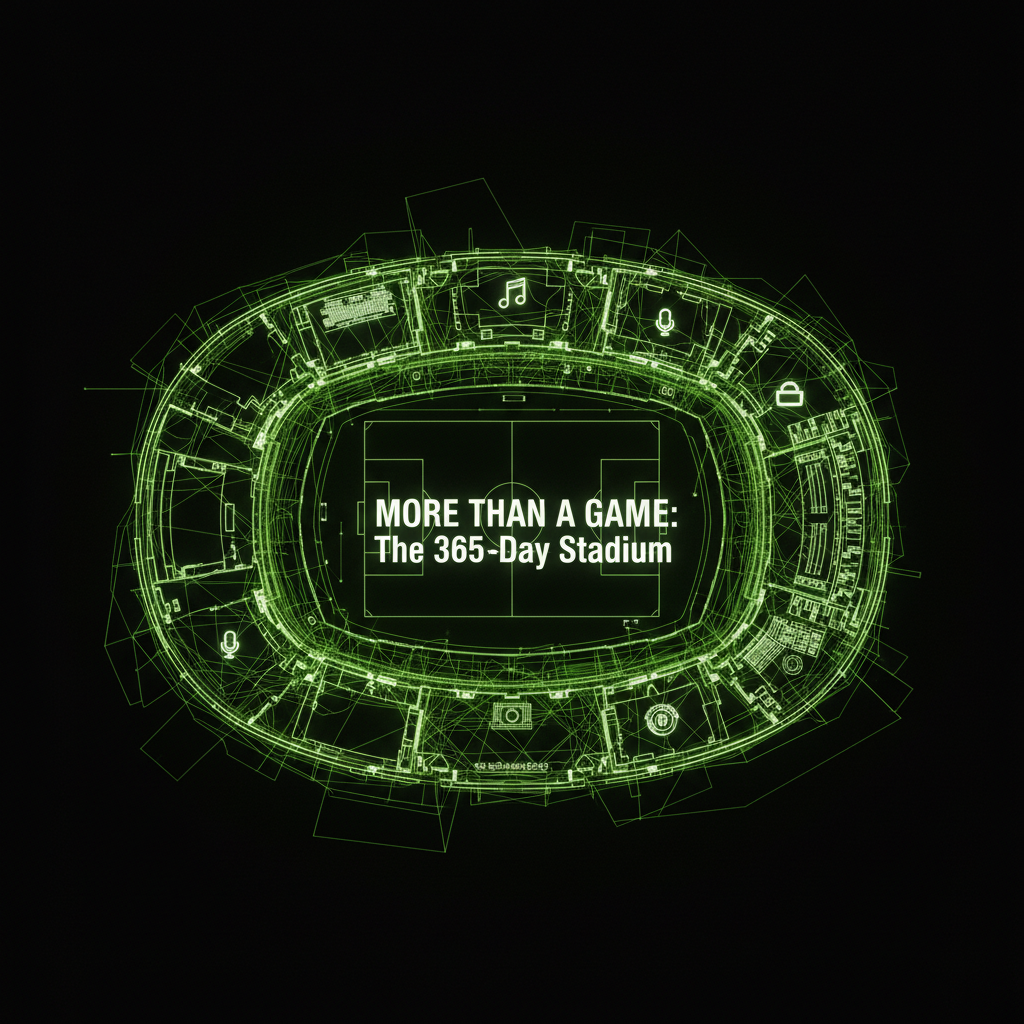
To solve the utilization puzzle, forward-thinking venues are transforming into multi-purpose, 365-day community and entertainment hubs. This strategy turns a seasonal asset into a consistent, year-round revenue generator.
“54 non-sporting events generated four times more revenue than 26 sporting events.”
— Kuala Lumpur Sports City Report
Case Study: Tottenham Hotspur Stadium
The Tottenham Hotspur Stadium in London is a masterclass in multi-purpose design. Beyond Premier League football, it has become a premier destination for a wide array of global events. It regularly hosts NFL games, major boxing matches, rugby, and world-famous music artists. Furthermore, the venue offers unique attractions like an F1-inspired karting experience. Discover more about their upcoming events on the official Tottenham Hotspur Stadium website.
Case Study: Real Madrid’s Santiago Bernabéu
Real Madrid is undertaking a breathtaking renovation of its iconic Santiago Bernabéu stadium. The project includes a retractable roof and a pitch that can be removed and stored, making the arena perfect for hosting events year-round. For example, a series of just four concerts by a single artist generated an estimated €18 million. This forward-thinking project is a core part of the club’s strategy, as detailed on the official Real Madrid C.F. website.
Unlocking Year-Round Potential
Live Entertainment
Hosting concerts and shows from major international artists.
Corporate and Business
State-of-the-art facilities for conferences and exhibitions.
Integrated Real Estate
Adjacent hotels, shopping centers, and restaurants.
Conclusion
The business of sports is evolving on two powerful fronts: the content and the arena. As emerging leagues innovate with digital-first approaches to engage a new generation of fans, modern stadiums are transforming from idle giants into dynamic, 365-day economic engines. By hosting everything from concerts to corporate conferences, these venues are not only securing their financial future but are also becoming integral parts of their communities. The lesson is clear: in the modern sports world, the game itself is just the beginning.