Filming live sports under the midday sun is a true test of any broadcaster’s skill. The harsh light creates a minefield of visual problems, from blinding lens glare to confusing on-screen artifacts. But with the right techniques and tools, you can turn these challenges into opportunities for crisp, professional-quality footage.
This guide will walk you through the practical steps for conquering sun glare on the pitch. Furthermore, we will dive into the essential troubleshooting skills that every broadcast engineer uses to diagnose and solve visual issues, ensuring your feed is flawless from camera to screen.
Beating the Sun: Positioning and Gear
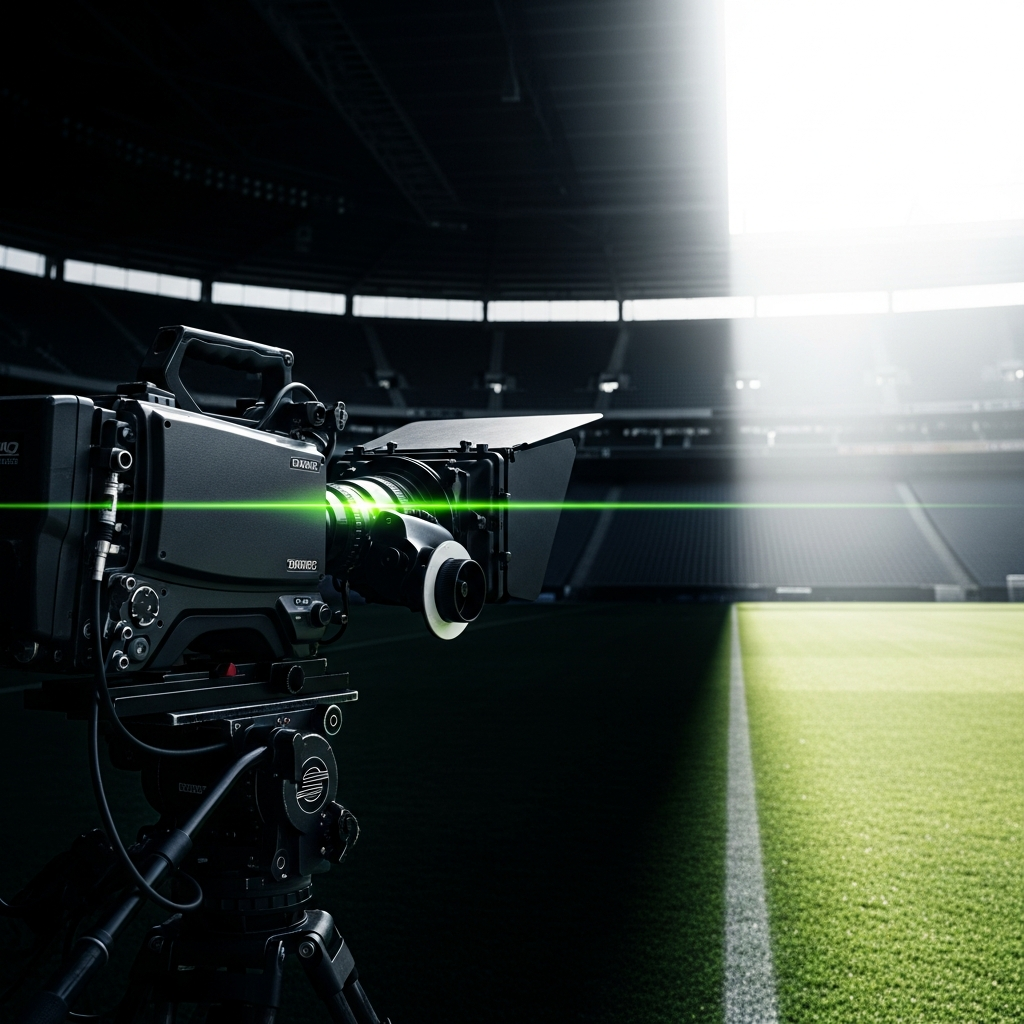
Your first line of defense against glare isn’t on your camera—it’s where you stand. Strategic positioning is the most critical factor in managing harsh midday light when filming field sports.

Find the Right Angle
- ●Keep the Sun Behind You: Prevent players from becoming silhouettes and ensure natural lighting.
- ●Use the Shadow Line: Shoot from the shade towards the sun to protect your sensor and monitor.
Essential Equipment
- ●Lens Hoods: Blocks stray light from causing hazy flare. Non-negotiable gear.
- ●ND & CPL Filters: Manage exposure and cut grass reflections for vivid colors.

Subjective Problems to Objective Solutions
When you see a visual problem like “pixelation” or “ghosting,” you need to move beyond what your eye sees and look at what the signal is doing. In today’s hybrid broadcast world (ST 2110), understanding the data is key.

Waveform Monitor
Measures brightness (Luminance). Crucial for managing Lumetri color highlights and shadows.
Vectorscope
Measures Chrominance. Ensures skin tones look natural and prevents color bleeding.
For a deeper dive into managing video signal quality, the SMPTE Journal offers extensive technical resources for field engineers.
Modern Workflows & AI
The broadcasting industry in 2026 relies heavily on new technology to solve old problems. Remote production (REMI) is now standard, allowing engineers to troubleshoot from thousands of miles away.
AI now handles most metadata tagging, making it easy to find specific clips. Agentic AI” can even auto-generate social media clips from a live feed. For filmmakers, these tech advancements are tied directly to camera settings. Visit official blogs like Sony or Canon for specifics.
Conclusion
Successfully broadcasting a midday sporting event comes down to two things: preparation and a systematic approach. By positioning yourself correctly and using the right filters, you can tame the harshest sun.
By using professional diagnostic tools and understanding common visual artifacts, you can quickly solve any problem that arises in the signal chain. These skills ensure that no matter the conditions, the final picture is vibrant and flawless.