Digital Psychology
The Silent Filter:
How Video Calls Change the Way We Connect
In a world dominated by video calls, we connect with faces on a screen more than ever. But are we truly connecting? Research shows that a staggering 55% to 90% of all communication is non-verbal.
Unfortunately, the camera acts as a filter, stripping away the essential cues that build trust and understanding. While we see a face, we miss the full story. This silent language is crucial, especially in professional and healthcare settings where clear communication is paramount.
The Cropped View: Hiding More Than We Realize
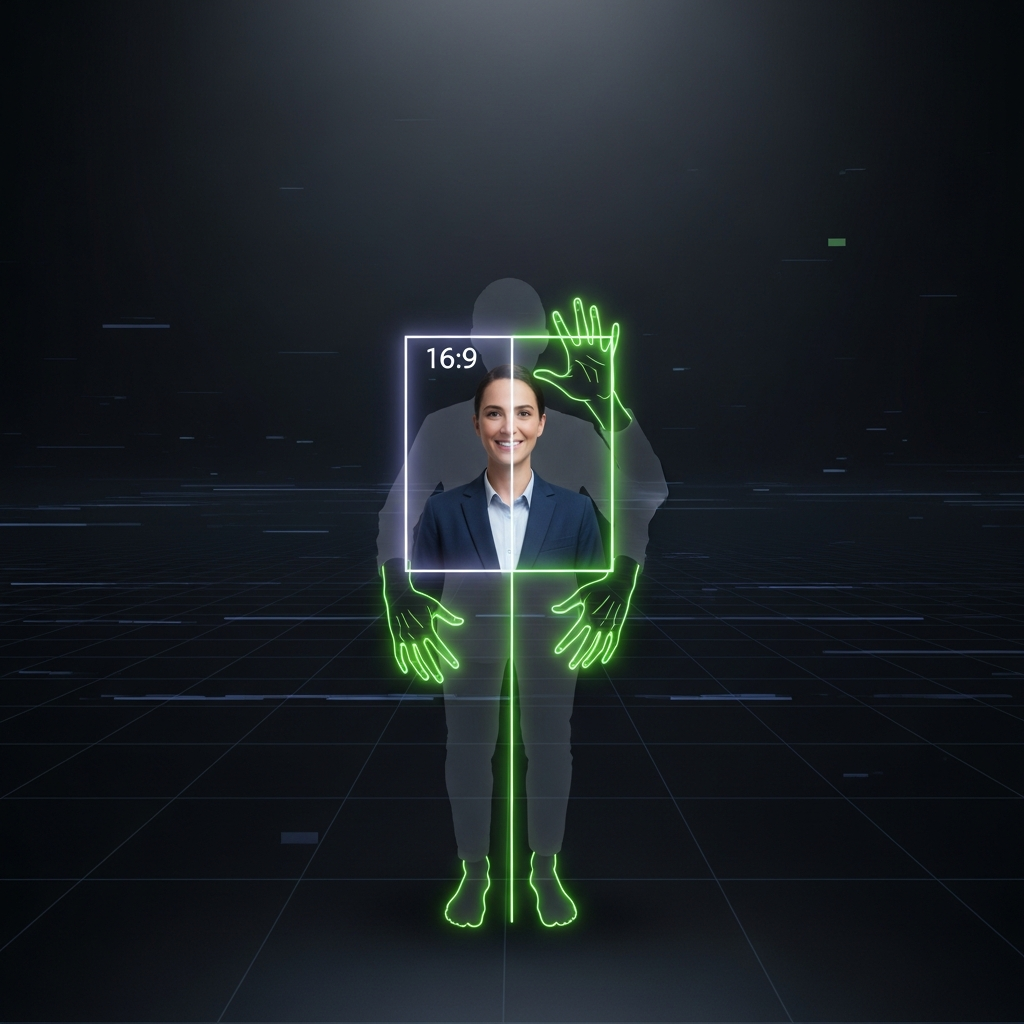
When we communicate in person, we subconsciously absorb information from a person’s entire physical state. On camera, however, we are usually limited to a “head and shoulders” view. This “cropped-frame” effect has significant consequences for clear communication.

The Loss of Hand Gestures
Hand gestures are not just decorative; they are “thought-shapers” that help our brains process and articulate language. When our hands are off-screen, a speaker can seem less persuasive or trustworthy. Consequently, the listener has to work much harder to grasp the speaker’s true intent.
The “Honest” Lower Body
Body language experts often say that our feet and legs are the most honest parts of our body because they are the hardest to control consciously. This “non-verbal leakage” is a powerful and reliable cue that is completely invisible on a video call.
The Unnatural Digital Space
Cameras dramatically distort our innate sense of personal space, also known as proxemics. This creates an awkwardness that our brains can’t easily ignore, affecting how we interact and build rapport.
The Gaze Mismatch
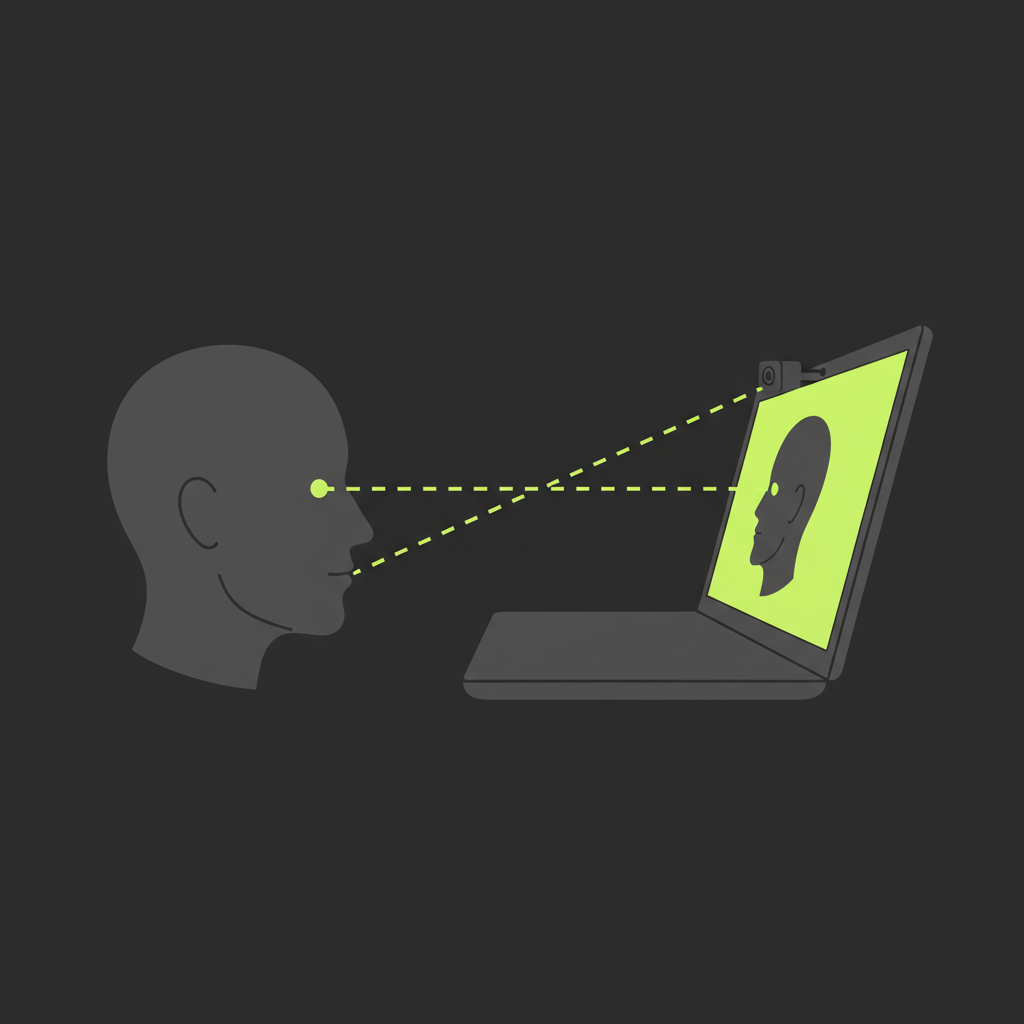
True eye contact is nearly impossible on a video call. To make it seem like you are looking at someone, you must stare directly into the camera lens. This conflict forces a choice: either you see them, or they see you making eye contact, but not both.
Psychological Impact
In a gallery view, the “hyper-gaze” effect makes it feel like multiple people are staring at you at once—a situation that triggers stress in real-world scenarios.
Lost in Translation: The Micro-Cues We Miss
Our brains contain “mirror neurons” that help us sync with others by mirroring their movements and emotions. This natural synchronization is a key part of building a connection, but technology often gets in the way.
Even a tiny 150-millisecond video delay, common on most platforms, is enough to disrupt this rhythm. In addition, crucial micro-expressions are often blurred or lost completely due to low frame rates.
The “On-Stage” Effect: Why We Feel So Drained
Have you ever wondered why video calls feel so exhausting? Seeing a small video of yourself on screen creates “mirror anxiety” and puts you on a virtual stage. Instead of interacting naturally, we begin to perform.
According to research from the Stanford Virtual Human Interaction Lab, this increased cognitive load is a primary cause of “Zoom Fatigue.” Our brains have to work overtime to process limited cues while simultaneously managing our own on-screen appearance.
Conclusion: More Than Words
Ultimately, words provide the data, but body language provides the truth. While technology connects us across distances, remembering what’s lost in translation helps us communicate more intentionally and value the irreplaceable richness of face-to-face interaction.