Europa League Results Simulator: Who Can Qualify? Permutations and How You Can Predict the Final Table
How Does the Europa League League Phase Work?
The new format places all 36 competing clubs into one giant league table. Instead of playing three opponents twice, each team now plays eight matches against eight different opponents—four at home and four away. After all teams have completed their eight games, the final league standings determine their European fate.
Pathways to the Knockout Rounds
The final ranking is everything. Unlike the old system, where only the top two from each group advanced, there are now three distinct outcomes for teams based on their position in the final table.
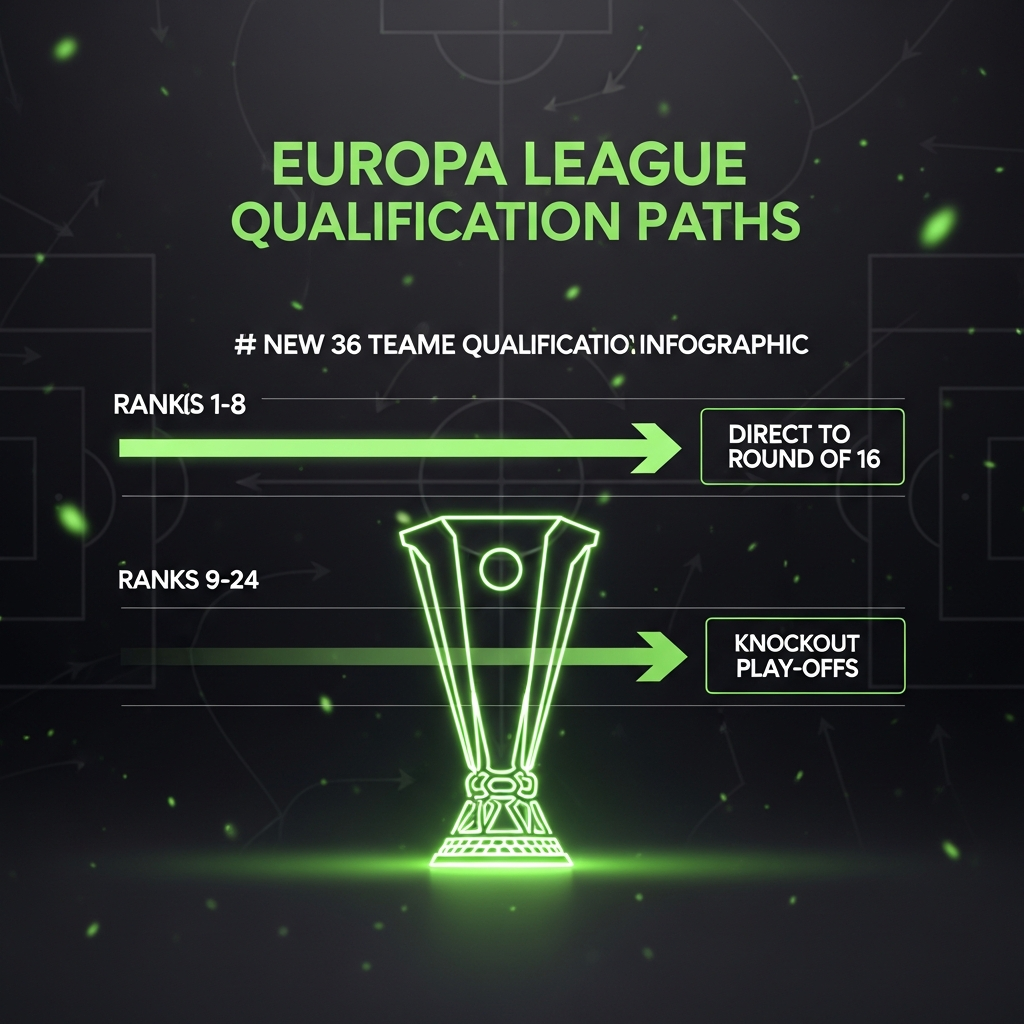
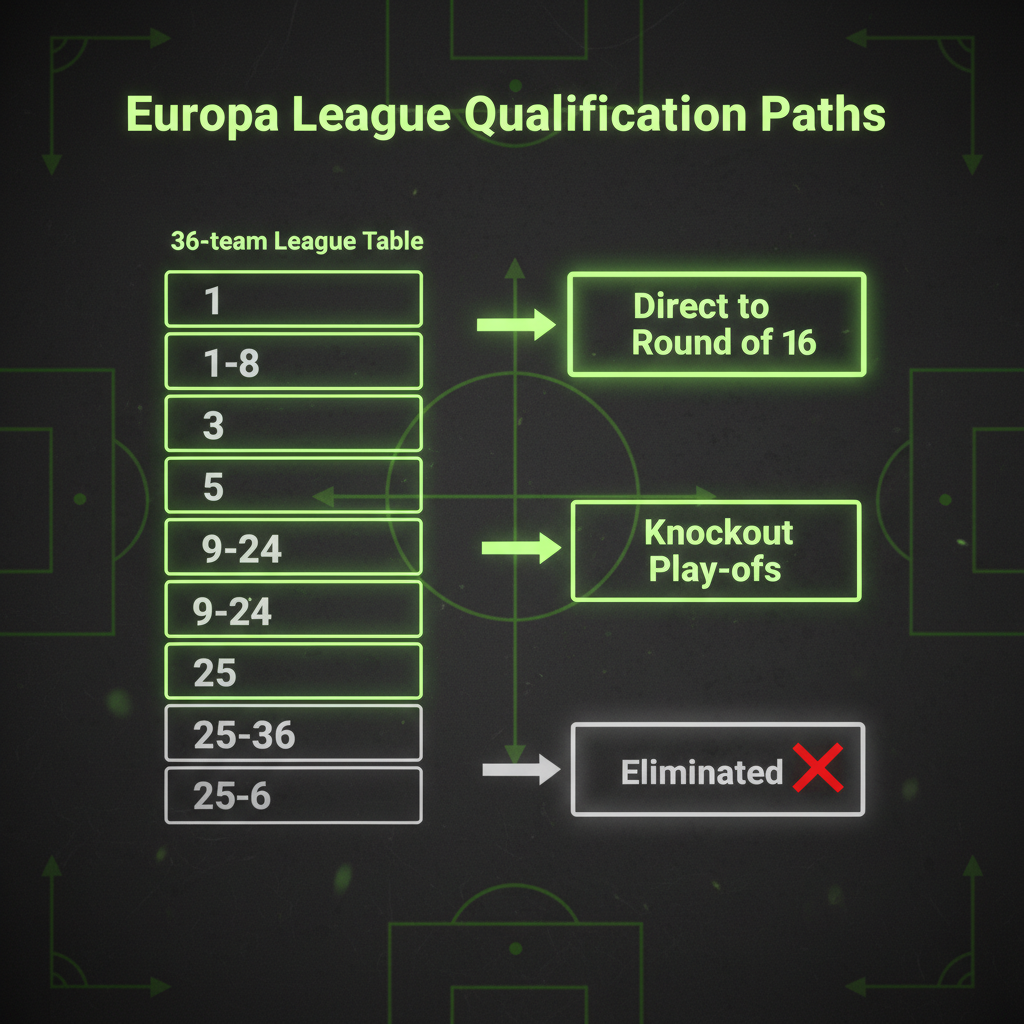
- Direct to Round of 16: The top eight teams are rewarded with automatic qualification for the Round of 16, skipping the next stage entirely.
- Knockout Play-offs: Teams finishing from 9th to 24th enter a knockout play-off round. Here, clubs ranked 9th-16th are seeded and face an unseeded team from the 17th-24th positions over two legs. The winners advance to join the top eight in the Round of 16.
- Elimination: For teams finishing 25th to 36th, the European journey ends. They are eliminated from all UEFA competitions for the season.

What Happens When Teams Are Level on Points?
With so many teams in one table, it’s almost certain that clubs will finish level on points. When this happens, a series of tie-breaking rules is applied to separate them. While there are many criteria, the first and most significant ones are usually enough to determine the final order.

Here are the primary tie-breakers:
- Superior goal difference across all league phase matches.
- A higher number of goals scored.
- A higher number of away goals scored.
- Higher number of wins.
- A higher number of away wins.
These rules highlight that simply winning isn’t always enough. The manner of the win—and even the results in losses—can have a massive impact on a team’s final standing.
How to Predict the Final Europa League Table
Predicting the final table involves more than just guessing match winners. You need to consider the vast number of permutations—the different combinations of results that can lead to various final standings. A single goal in one match can cause multiple teams to shuffle up or down the table.
Key Factors to Consider
To make an educated prediction, you must analyze several key factors that influence a team’s performance. These elements are crucial whether you’re using a simulator or just making your own calculations.
- Team Form: Look beyond simple win/loss records. Are they creating high-quality chances? Underlying metrics like expected goals (xG) can reveal if a team is over-performing or due for a change in fortune.
- Strength of Opponents: A team’s remaining fixtures are incredibly important. Facing top-ranked opponents is obviously tougher than playing teams near the bottom of the table.
- Home vs. Away Advantage: Playing in front of a home crowd is a proven advantage in European football. Therefore, consider where each of a team’s remaining games will be played.
- Squad Strength and Injuries: A deep squad can handle the congested schedule of domestic and European football. Conversely, key injuries can derail a team’s campaign.
- Motivation: In the final matchdays, a team’s motivation is critical. Are they fighting for a top-eight spot, trying to secure a play-off place, or already eliminated? This context heavily influences performance.

Your Crystal Ball: Using a Europa League Simulator
The easiest way to visualize all the potential permutations is by using a results simulator. These powerful tools allow you to input scores for upcoming matches and see how they impact the league table in real time.
Tips for Accurate Predictions
To get the most out of a simulator, follow these simple tips:
- Test Multiple Scenarios: Don’t just simulate your ideal outcome. Run different scenarios, such as a draw instead of a win for a key team, to understand the full range of possibilities.
- Track Live Dynamics: Use the simulator as the live matches unfold. Updating it with real-time scores can show you exactly what your team needs to do in the final minutes.
- Be Realistic: Ground your predictions in the factors mentioned earlier, like team form and opponent strength, rather than just wishful thinking.
Conclusion
The Europa League’s league phase has transformed the competition into a season-long marathon where every point, goal, and result matters. Understanding the qualification paths and tie-breaker rules is key to following the drama. By analyzing team form, fixture difficulty, and motivation, you can make sharp predictions. Moreover, with powerful tools like the Europa League results simulator, you can easily explore every possible permutation and see exactly what your team needs to do to qualify for the knockout rounds.