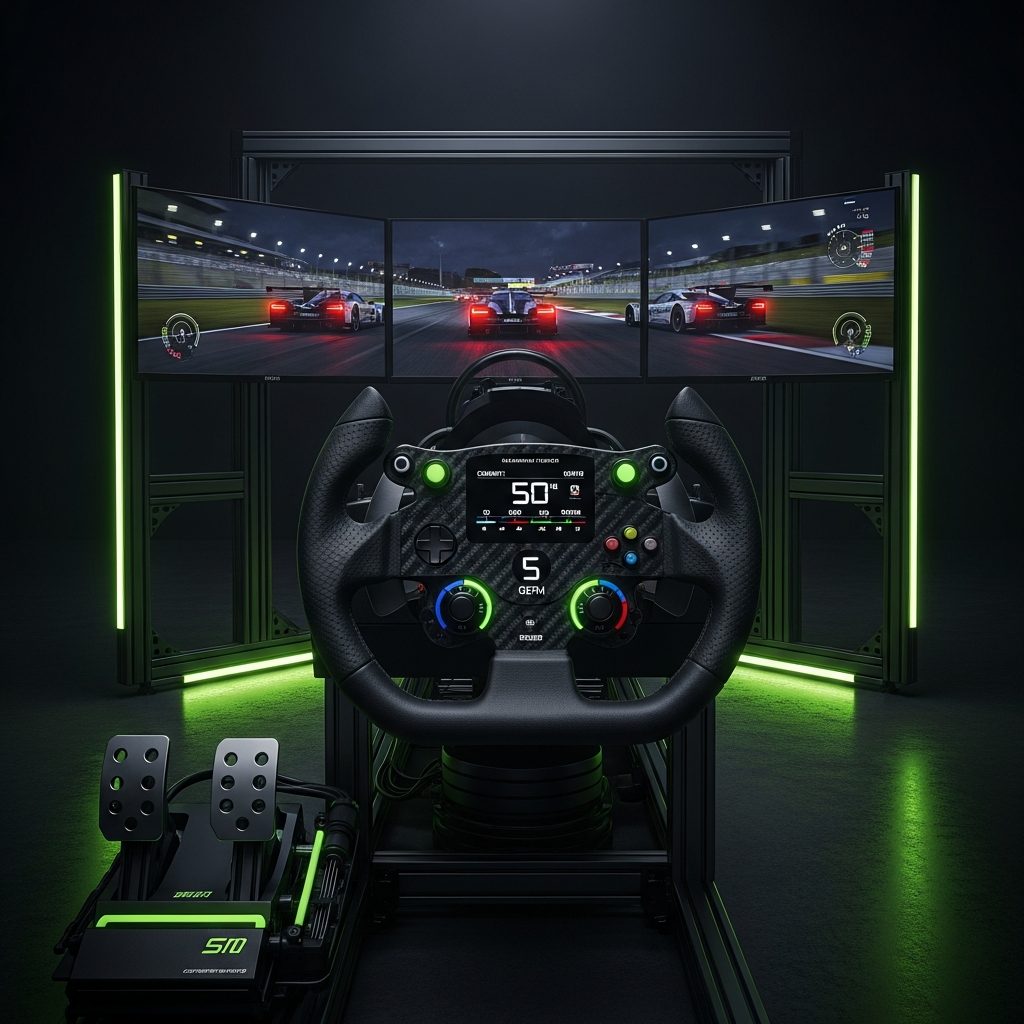
Sim racing in 2026 is no longer just a hobby; it has become a sophisticated digital twin of professional motorsport. Gone are the days of settling for shaky, gear-driven wheels.
Thanks to incredible innovation, entry-level direct drive technology is now the standard, while professional gear offers a level of immersion once thought impossible.
However, navigating this advanced new landscape can be daunting. What gear do you actually need? Should you spend $500 or $15,000? This guide breaks down how to build the ultimate sim racing setup for your needs, comparing two distinct paths: the budget-conscious champion and the no-compromise professional.

The Budget King: Performance for Under $1,000
The goal here is simple: get the most performance-per-dollar with entry-level direct drive power and pressure-sensitive braking. This setup will make you competitive in any online lobby without breaking the bank.
- Wheel Base & Rim: Your best options are the Asetek Initium Bundle (~$599) or the Moza R5 Bundle (~$450).
- Pedals: Choose the Fanatec CSL Pedals with the Load Cell Kit (~$200). Do not skip the load cell.
- Chassis: A heavy-duty wheel stand like the Next Level Racing Wheel Stand 2.0 (~$250) is the perfect solution.
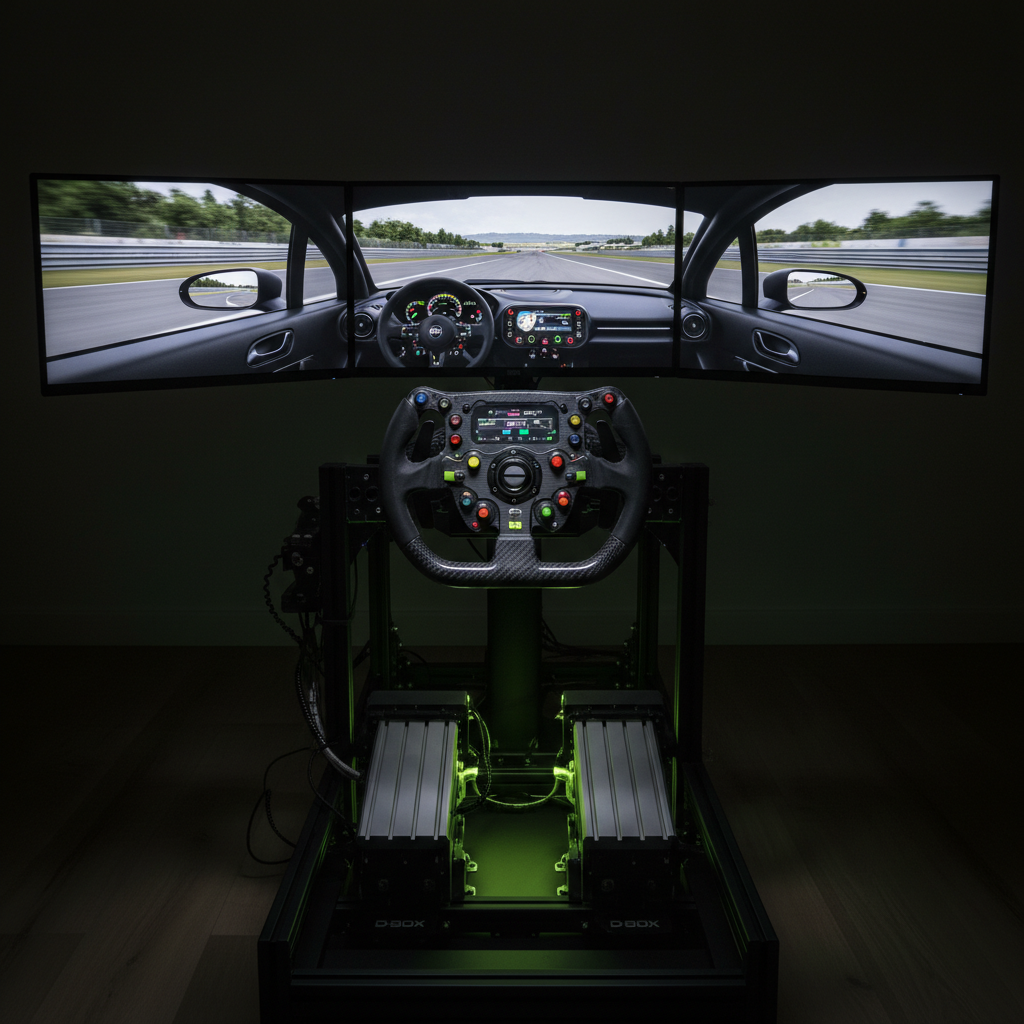
The Enthusiast’s Sweet Spot: The Pro-Level Feel
This is the “Goldilocks” zone for sim racers who want a setup that feels less like a game and more like a genuine training tool. Expect to invest between $3,000 and $5,000.
Core Components
- Simagic Alpha EVO (10-15Nm)
- Simagic P1000 pedals with Haptic Reactors
- Sim-Lab GT1 Pro Profile Rig
Immersion
- Samsung G9 49″ Ultrawide
- Meta Quest 3 for MR/VR
The Professional Rig: The No-Compromise Ultimate
For those seeking the absolute pinnacle of realism, this setup mirrors what professional F1 and NASCAR drivers use to prepare for race weekends. This is a significant investment, often exceeding $15,000.
A Simucube 3 Pro (25Nm) is the choice of the pros. This level of torque can replicate the 1:1 steering forces of a real race car without a power steering system.
Simucube ActivePedals are the undisputed endgame. These pedals have no springs; they are entirely motorized.
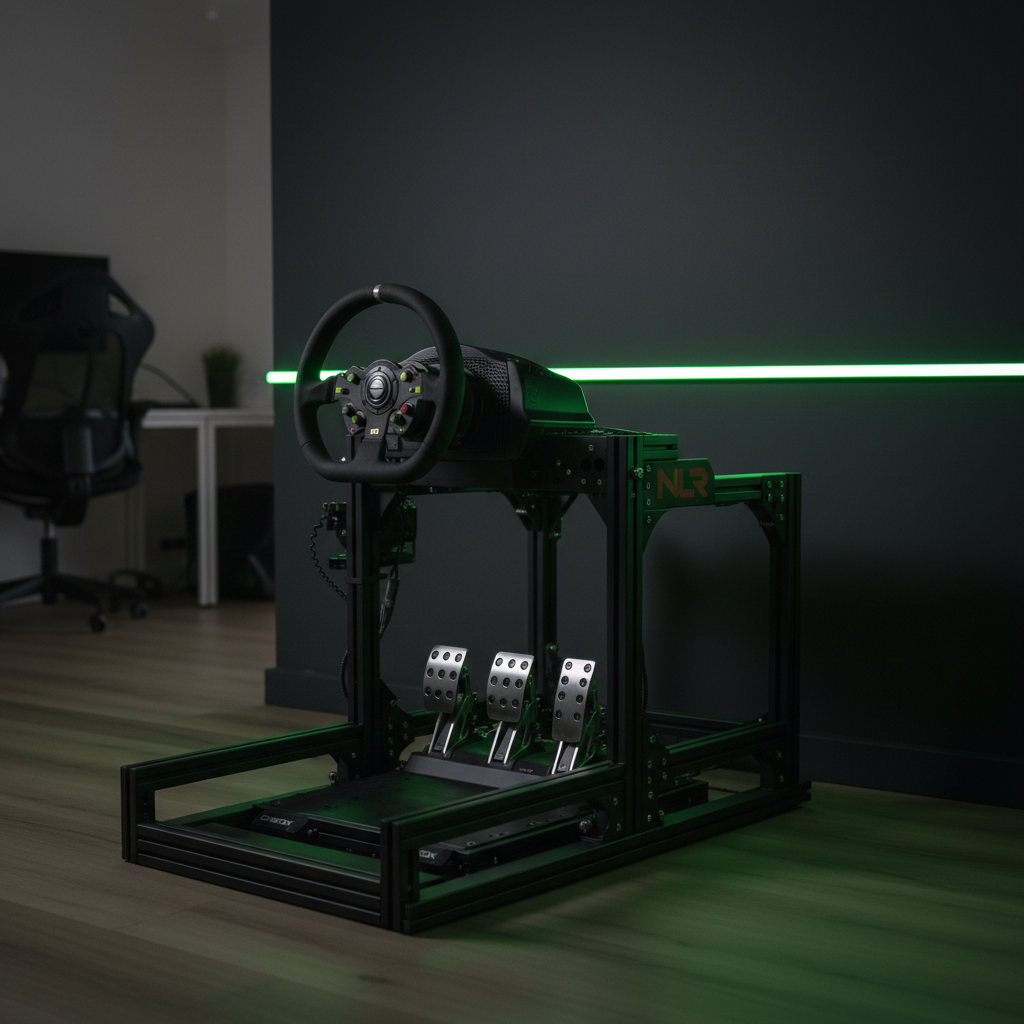
Total Immersion
Experience road texture, engine vibrations, and suspension travel with the D-BOX G5 motion system.
Braking
From load cells for muscle memory to Active Pedals for 1:1 telemetry simulation.
Force Feedback
Transition from general sliding cues to feeling exactly how much grip remains on each tire.
Rigidity
Heavy-duty aluminum structures ensure zero energy loss from your wheelbase to your hands.
Final Advice for Every Builder
Pedals First, Wheel Second
Braking is where lap time is found. A great load cell pedal set will make you more consistent than any fancy wheel rim.
A Rigid Cockpit is Non-Negotiable
Don’t mount a powerful wheel to a wobbly desk. Flex absorbs detail. A stable rig is your foundation.
Your PC is Part of the Rig
Maintain a stable 144+ FPS. Latency is the enemy of performance.