
AI in Sports: Better Calls, But at What Cost to the Game’s Soul?
Exploring the delicate balance between robotic precision and human passion in the digital sporting revolution.
Technology is changing sports faster than ever before. From the way we watch in the stands to the decisions made on the field, a digital revolution is underway. This transformation is creating incredibly immersive “phygital” experiences that blend our physical and digital worlds. At the same time, it’s introducing autonomous referees and AI officiating to eliminate human error.
However, this quest for perfection sparks a passionate debate. While technology promises fairer games, many fans and experts worry it could strip away the very human element that makes sports so compelling. Are we trading the “soul of the game” for robotic precision? This article explores both sides of this technological shift, from enhanced fan engagement to the deep ethical questions it raises.
The Rise of the “Phygital” Fan: More Than Just a Game
The line between being at a game and experiencing it online is blurring. This new reality is called “phygital,” a seamless mix of physical and digital interactions that is transforming what it means to be a fan.

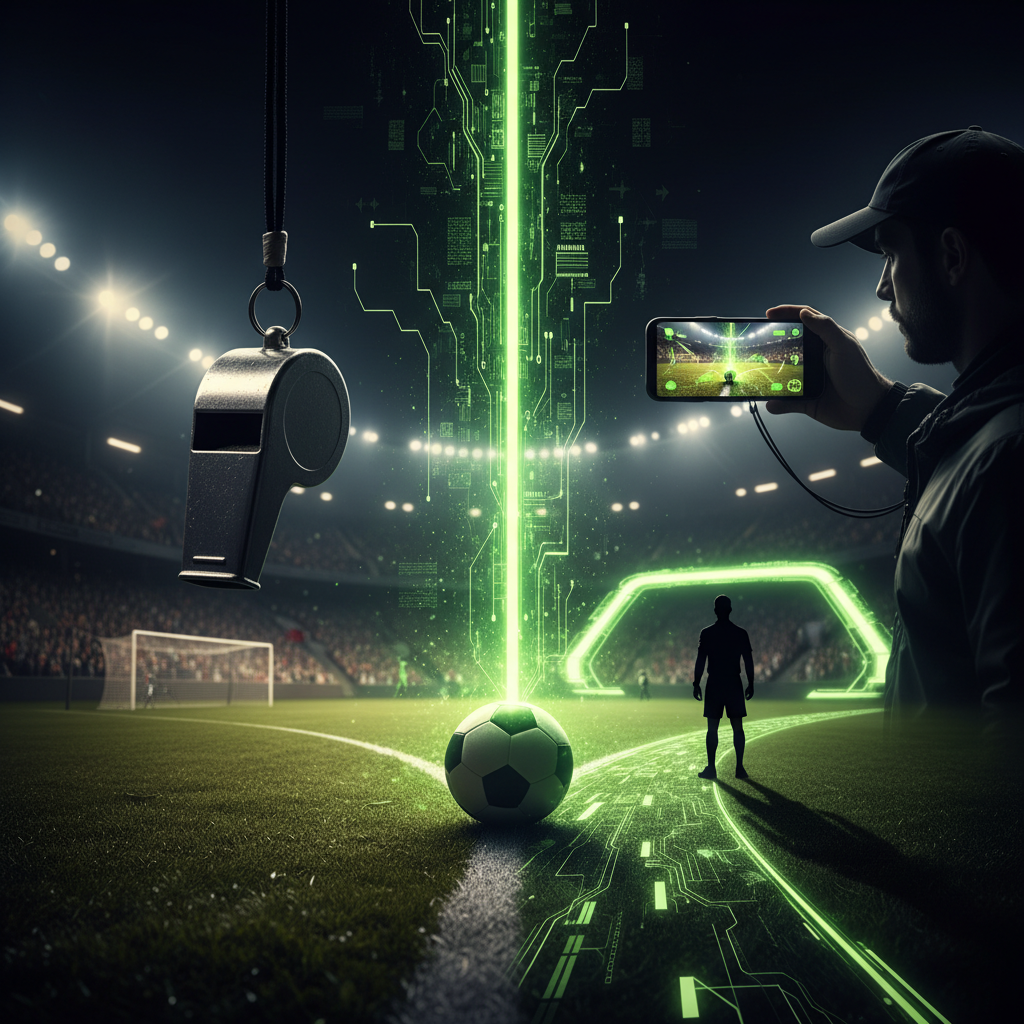
Immersive In-Stadium Tech
Your smartphone is now the key to a deeper sporting experience. Imagine pointing your phone at the field and seeing real-time player statistics pop up in augmented reality (AR). This is already happening.
Accessibility is also getting a major boost. Startups are creating tools to help fans with disabilities enjoy the game like never before. Visualfy, for example, sends mobile alerts for important sounds. Learn more about FC Barcelona’s accessibility initiatives.
Engaging Fans Beyond
- /Digital Collectibles: Ownership of match memorabilia via blockchain.
- /Gamified Fitness: Peloton-style global connectivity.
- /Personalized Content: 62% of fans prefer interactive digital experiences.
AI on the Field:
The End of Human Error?
Research suggests human referees get 10-15% of their calls wrong. AI aims to bring that number as close to zero as possible.
Soccer Precision
Semi-Automated Offside Technology (SAOT) tracks 29 points 50 times per second.

Tennis Accuracy
Hawk-Eye is accurate within 2.6mm, removing the need for human line judges.
Tournament Standard
NFL Evolution
Starting in 2026, virtual measurement technology will replace traditional chains.
The “Soul of the Game”:
An Ethical Crossroads
“Is technology killing spontaneity? The frequent stoppages for VAR reviews can disrupt the natural rhythm and excitement of a match, making the experience feel clinical rather than passionate.”
Algorithmic Bias
AI is only as good as the data it’s trained on. Hidden biases can be perpetuated at scale.
Accountability & Transparency
When an AI makes a critical error, who takes the fall? The ‘Black Box’ nature of algorithms creates distrust.

Finding the Balance for a Hybrid Future
Technology is undeniably shaping a new era for sports. Phygital experiences are making fandom more personal, interactive, and engaging than ever before. Simultaneously, AI officiating is delivering a level of fairness and accuracy that was once unimaginable.
Most experts agree that the ideal future is a hybrid model—one where AI serves as a powerful tool to assist, not replace, human officials. By embracing this collaboration, we can enjoy the benefits of technology without losing the human drama that makes us love sports in the first place.