Unplug to Win: Why Elite Teams Force Offline Hours
The radical strategy top-tier athletes are using to conquer social media-induced performance anxiety.
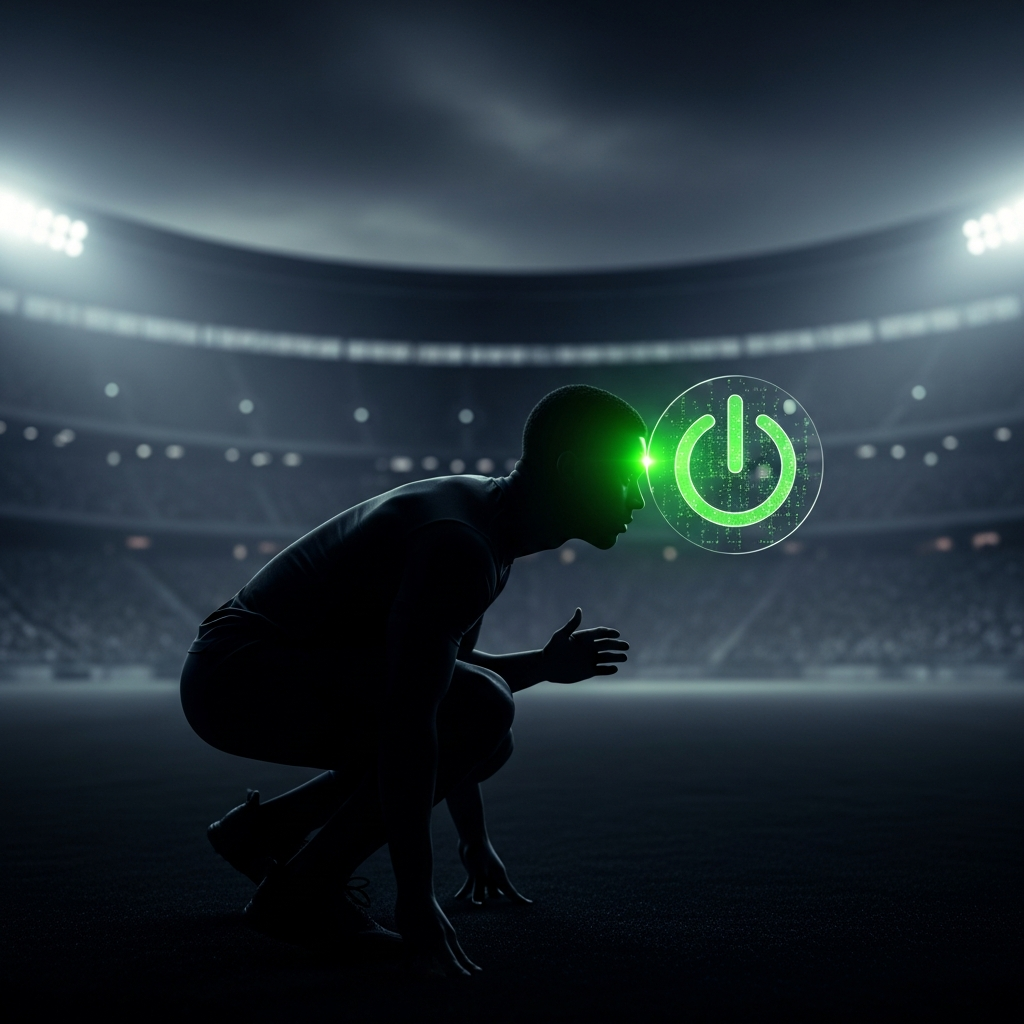
In the world of elite performance, the biggest opponent isn’t always on the field. It’s in the pocket. Constant digital connection has created a new, invisible challenge: social media-induced performance anxiety. Consequently, top-tier teams are now using a radical strategy to gain a competitive edge. They are forcing their players to go offline.
This isn’t just about wellness; it’s a performance tactic. In a landscape where every move is scrutinized online, a digital detox has become essential for mental toughness. Let’s explore why unplugging is the new key to winning and how

Unplug to Win: Why Elite Teams Force Offline Hours
In the world of elite performance, the biggest opponent isn’t always on the field. It’s in the pocket.
Constant digital connection has created a new, invisible challenge: social media-induced performance anxiety. Consequently, top-tier teams are now using a radical strategy to gain a competitive edge. They are forcing their players to go offline.
This isn’t just about wellness; it’s a performance tactic. In a landscape where every move is scrutinized online, a digital detox has become essential for mental toughness. Let’s explore why unplugging is the new key to winning and how you can apply these elite principles to your own professional life.
The Mental Cost of a Thousand Pings
High-performers face a unique kind of pressure online. The endless scroll is more than a distraction; it’s a direct drain on the cognitive resources needed to compete. This constant connectivity significantly impacts mental health and focus.
The Comparison Trap
Athletes constantly see the highlight reels of their rivals. This triggers “upward social comparison,” which can create feelings of inadequacy.
The “Second Game”
Performers feel they are playing two games at once: the actual job, and managing the digital narrative around it.
Cognitive Fatigue
Research shows that it takes an average of 23 minutes to fully refocus after a digital interruption, leading to slower decision-making.
This state of technostress, or mental exhaustion from information overload, is a recognized performance killer. It’s why the principles of digital wellness are now a core part of elite training.
The Locker Room Blackout: How Top Teams Do It
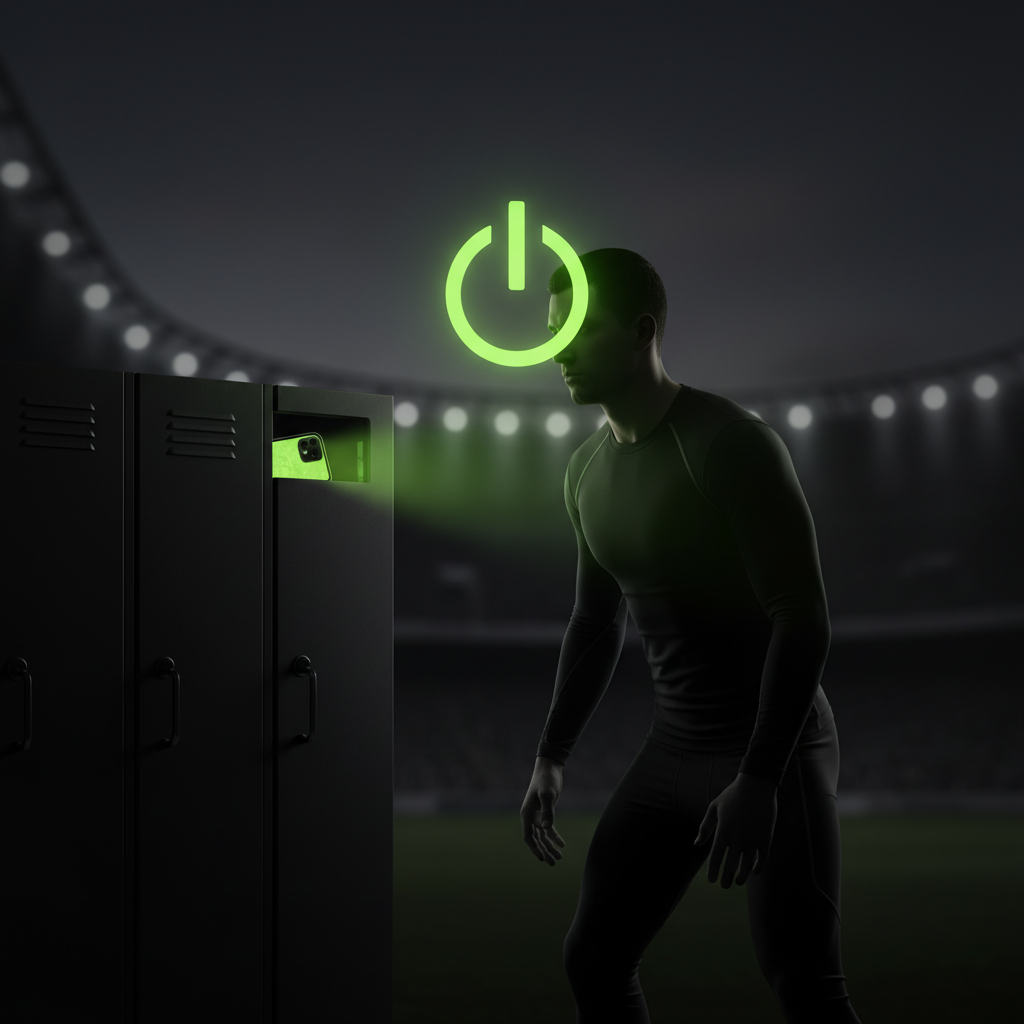
To combat this drain, teams are implementing strict “offline hours.” These aren’t suggestions; they are mandatory policies designed to protect the team’s collective focus and mental health. These strategies are proving to be highly effective.
For instance, during their 2019 championship run, the Texas Tech Basketball team used a nightly “phone bag” policy. Players handed over their devices before bed, forcing them to focus on recovery and team bonding. Similarly, the LA Angels instituted a clubhouse-wide cell phone ban during the 2024 season.
Even entire leagues are getting involved. In 2021, the whole English football community held a four-day social media blackout. While it was a protest, it powerfully showed how “going dark” could reset the mental environment for thousands of players. This proactive approach to mental health underscores a critical shift in performance culture.
Reclaiming Focus: The Professional’s Guide
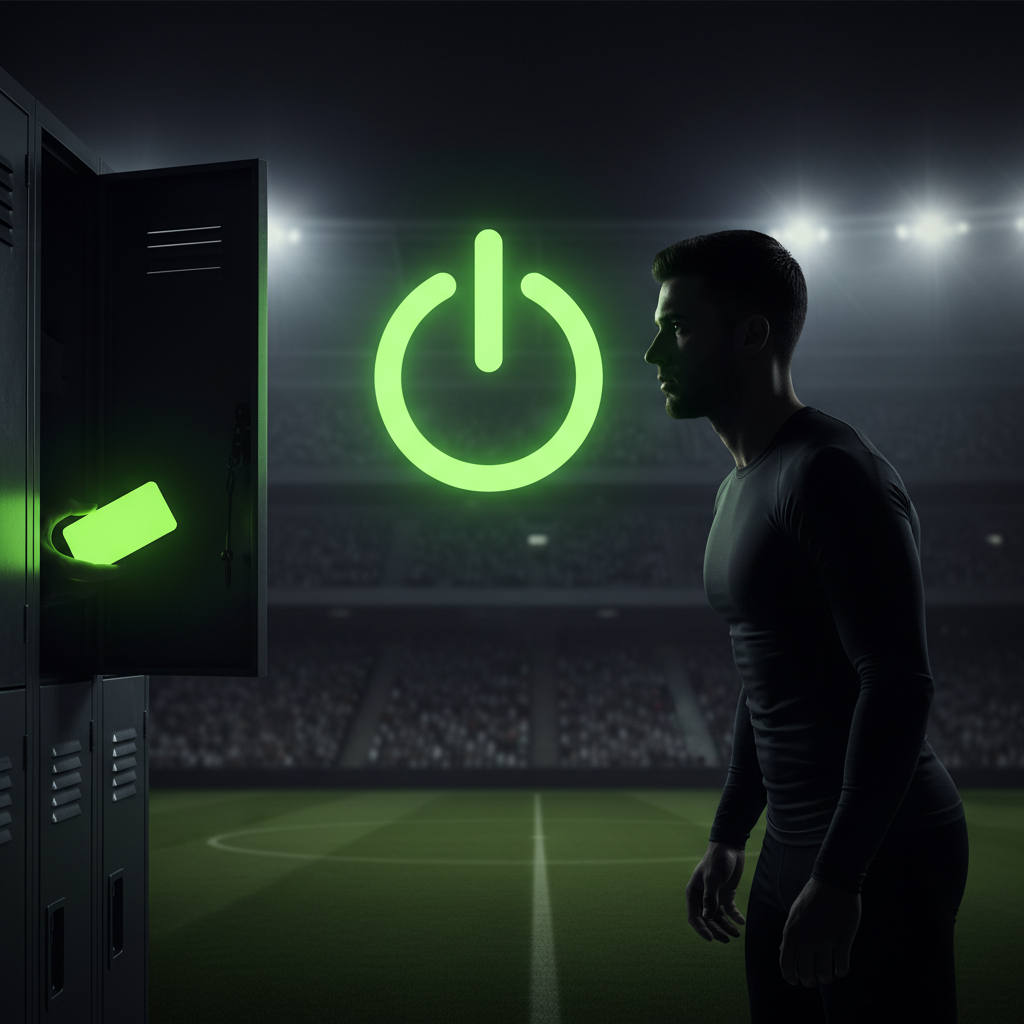
You don’t need to be a professional athlete to benefit from these tactics. The same principles that sharpen focus in the locker room can boost productivity and well-being in any high-stakes career. Integrating a professional digital detox is a practical step toward better performance.
Practical Strategies for Your Workday
- Batch Your Communications: Check emails and messages at set times, for example, at 10 AM and 3 PM. This stops you from living in a reactive state.
- Create “Phone-Free” Zones: Make your bedroom a tech-free space. Use a traditional alarm clock to avoid starting your day by reacting to a flood of notifications.
- Use Analog Tools: Try a physical notebook for brainstorming. This simple act breaks the habit of “tab-switching” that fragments your attention.
Set a digital curfew: Commit to no work-related screens for at least an hour before bed. This improves sleep quality, which is vital for decision-making. You can find more strategies for digital well-being from reputable health institutes.
Implementing these small changes helps you manage cognitive load and protect your mental energy for the tasks that truly matter. For those whose careers are deeply intertwined with their digital presence, insights from professionals who have mastered this balance can be invaluable.
Conclusion: Your Attention Is Your Greatest Asset
The move by elite teams to enforce offline hours reveals a simple truth: in an age of constant distraction, attention is our most valuable resource. Social media performance anxiety is a real and growing challenge to mental health and success. Therefore, protecting your focus is no longer a soft skill—it is a competitive necessity.
By intentionally creating boundaries with technology, we can reduce cognitive fatigue and improve our decision-making. Whether you are leading a company or a sports team, the lesson is clear. To perform at your best, you must first learn to unplug.