
Gone are the days of slapping a clunky, opaque logo onto your images. In 2026, protecting your high-value match photos—from sports to major events—requires a smarter, multi-layered strategy. Old-school watermarks are not only easy for AI to remove but can also cheapen the perceived value of your work. Today, professional photographers combine subtle visual branding with powerful, invisible security measures to truly safeguard their craft.
This guide will walk you through the modern best practices for watermarking, ensuring your images are protected, your brand looks professional, and your copyright holds up when it matters most.
The New Rules of Visible Watermarking
Your visible watermark is no longer just a security feature; it’s a branding tool. The goal is to be present but not distracting. Heavy, centered logos are out. Instead, the “Aesthetic First” approach prioritizes the viewing experience.


Key Principles for Modern Visible Watermarks:
- Opacity and Blend Mode: Keep the opacity low, typically between 15% and 30%. In Photoshop or Lightroom, use the “Soft Light” or “Overlay” blend modes. Consequently, this allows your watermark to adapt to the image’s tones, looking far more integrated and professional than a flat white or black logo.
- Typography: Choose clean, medium-weight sans-serif fonts like Montserrat or Inter. These remain legible even when the image is resized for social media. Avoid overly thin or decorative fonts that can become unreadable.
- Strategic Placement: The bottom-right corner is standard, but a more secure technique is to place the watermark over a complex texture within the image, such as grass, a jersey, or a detailed background. AI removal tools struggle to convincingly reconstruct these areas, making removal much more difficult. For client proof galleries, a repeating diagonal grid at very low opacity remains the most secure option.
Beyond the Visual: Invisible Forensic Tracking
While a visible watermark deters casual theft, a determined infringer can still crop or remove it. This is where the second layer of protection comes in: invisible watermarking and digital provenance. This technology embeds a signal directly into the pixels of your photo, creating a forensic fingerprint that survives edits.
Forensic Watermarks
Services like Digimarc and Imatag embed a unique ID that remains detectable after cropping or color changes.
Content Credentials (C2PA)
A “digital nutrition label” records authors and edits. Test your images at the Content Credentials Verify tool.
The Legal Backbone: Why Your Watermark is More Powerful Than You Think
A watermark is not just a logo; it’s legally recognized as Copyright Management Information (CMI) under laws like the U.S. Digital Millennium Copyright Act (DMCA). Removing or altering your watermark to hide infringement is illegal and carries significant penalties.
“Under U.S. Copyright Act Section 1202, someone who intentionally removes your CMI could be liable for statutory damages ranging from $2,500 to $25,000 per violation…”
— U.S. Copyright Office Guidelines
However, both the Professional Photographers of America (PPA) and the American Society of Media Photographers (ASMP) stress that a watermark is not a substitute for official copyright registration.
Automating Your Defense: Workflow and Tools
Protecting every image you create shouldn’t add hours to your workflow. By integrating these best practices into your export process, you can ensure consistent protection without the extra effort.
- Batch Processing: Use “Export Presets” in Adobe Lightroom or Capture One to automatically apply different watermarks.
- Cloud Proofing: Platforms like Pic-Time apply watermarks dynamically, keeping your hi-res masters safe.
- Automated Tracking: To find where your images are being used online, services like Pixsy are invaluable. They use reverse image matching to crawl the web and alert you when your photos appear on other sites.
Conclusion: A Multi-Layered Strategy
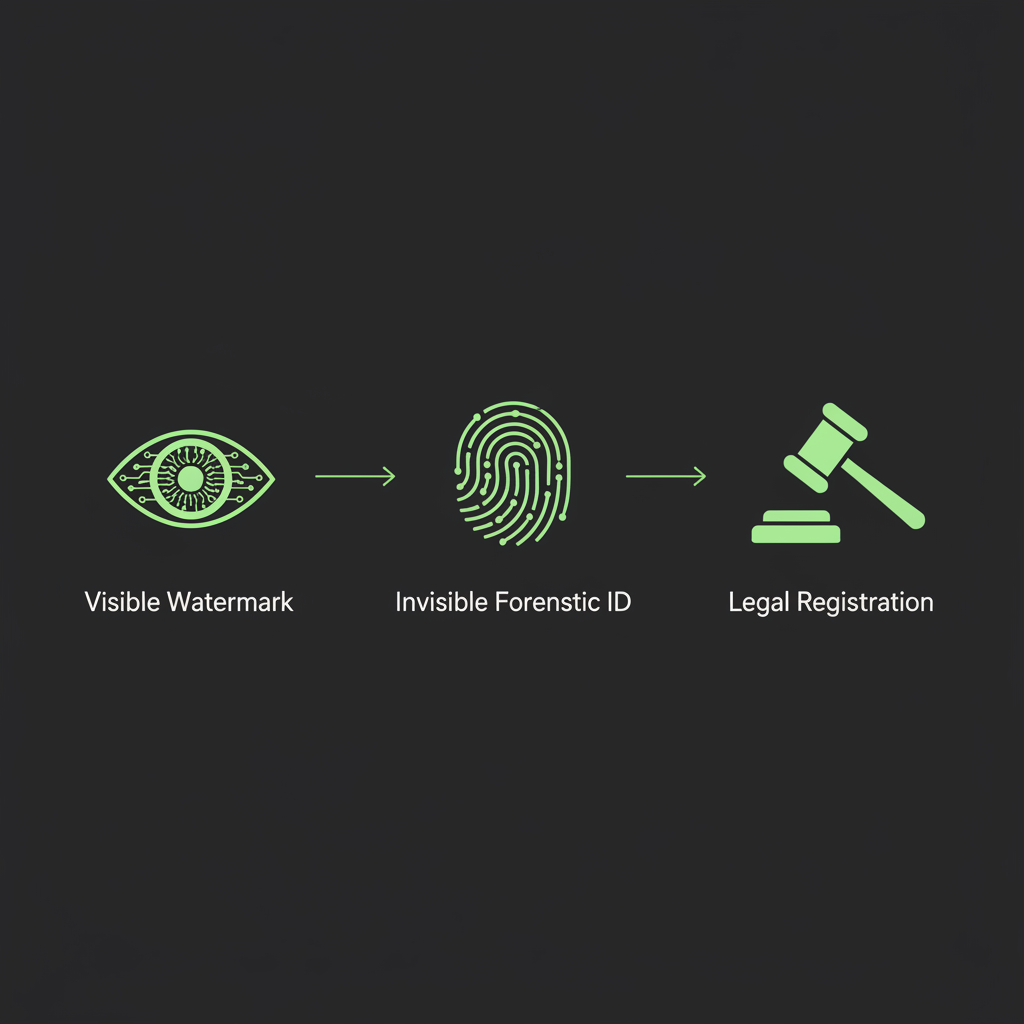
In 2026, effective image protection is about building layers of defense. It starts with a subtle, well-designed visible watermark that enhances your brand. Next, it’s reinforced by invisible forensic tracking and C2PA credentials that prove your authorship. Finally, it’s all backed by the legal power of copyright registration.
By adopting this hybrid approach, you not only deter theft but also equip yourself with the tools and evidence needed to defend your work’s value in a rapidly evolving digital world. Start implementing these strategies today to ensure your match photos are secure, professional, and profitable.