
Using payment apps for club finances offers incredible convenience. However, this ease of use can also introduce serious security and legal risks if not managed properly. From local sports teams in Africa to international community groups in the UK and the US, ensuring financial integrity is crucial. A simple mistake can lead to lost funds, tax complications, and a loss of member trust.
Fortunately, you can protect your organization’s money. This guide provides actionable steps and best practices for any club treasurer or board member. By combining the right tools with clear policies, you can manage your club’s finances safely and transparently.
The Foundation: Why Personal Accounts Are a Risk
The single most common mistake clubs make is using a treasurer’s personal Venmo, Cash App, or PayPal account. This creates a single point of failure and opens the door to numerous problems.

First, there are significant legal and tax risks. In many countries, including the US, tax authorities like the IRS have rules for reporting payments for “goods and services.” If club revenue flows into a personal account, the treasurer could be held personally liable for taxes on the club’s income.
- ●Open a dedicated Business Account. Use platforms like PayPal Business or a business profile on other apps.
- ●Use the club’s official identification number (like an EIN in the US) to register the account.
- ●This separates funds, simplifies accounting, and allows for multiple users with different permission levels.
Verified Business Security
Core Security Principles for Your Club’s Money
Beyond setting up the right account, you must actively manage its security. Modern apps have powerful features, but they are often not enabled by default. Implementing these core principles is essential for protecting your funds.
Implement Segregation of Duties (SOD)
Even in a small volunteer group, one person should not have complete control over the money. The person who collects funds should not be the only one who can spend or approve them. This is known as the “Four-Eyes Principle.”
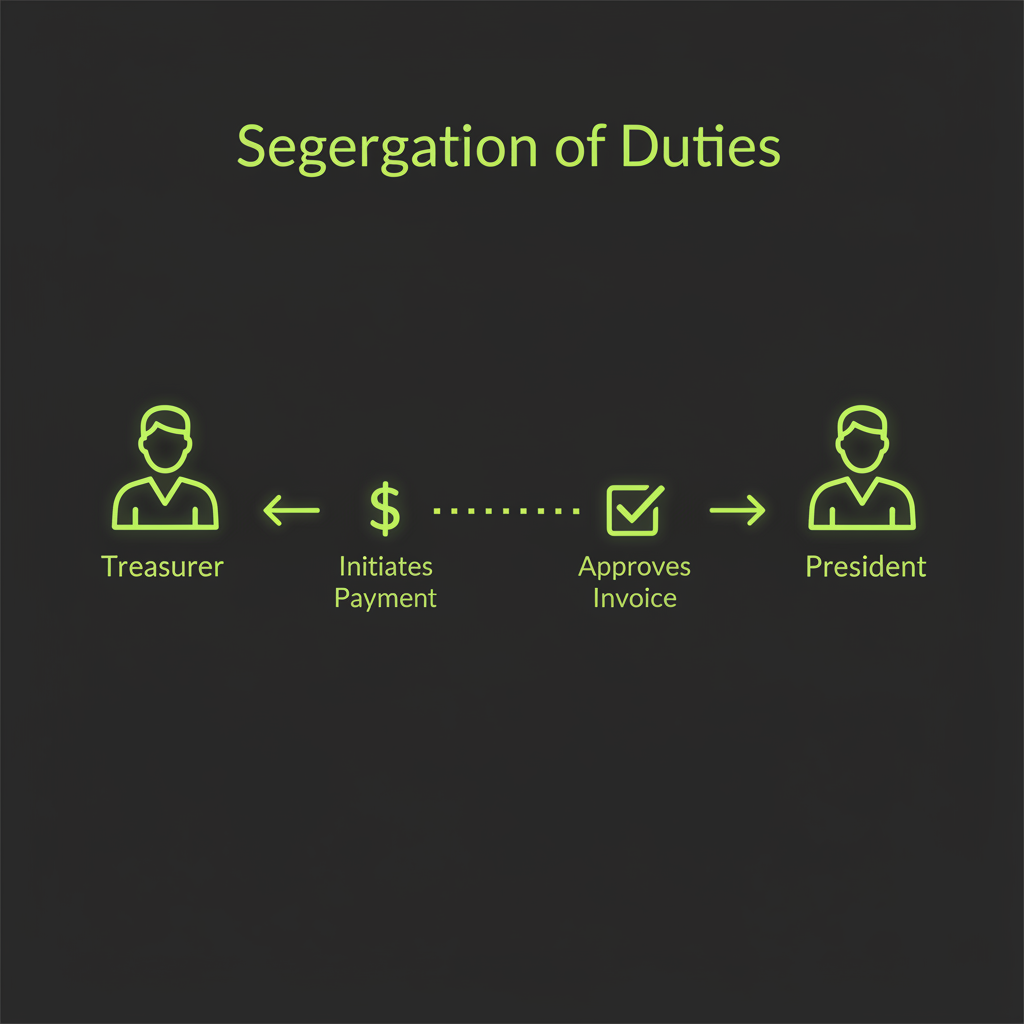
You can apply this by:
- Creating an Initiator vs. Approver system.
- Using view-only access for auditors.
- Performing regular reconciliations.
Configure Your App for Maximum Security
Take a few minutes to dive into your payment app’s settings. Enabling these features provides powerful layers of protection against unauthorized access.

Multi-Factor Authentication (MFA)
Mandatory second form of verification to block stolen password attempts.
Privacy Settings
Set visibility to “Private” to hide member financial habits from scammers.
Biometric Locks
Use FaceID or fingerprint scanning for an extra layer of local device security.
Understanding the Technology That Keeps You Safe
When you use a club management app like Mindbody or Zen Planner, they don’t store your credit card data themselves. Instead, they rely on specialized payment gateways like Stripe and PaySimple, which provide enterprise-grade security.
PCI DSS Level 1 Compliance
The highest level of security certification in the payment industry.
Tokenization
Sensitive card numbers are replaced with a unique, unusable “token.”
While both Stripe and PaySimple offer top-tier security, they have different strengths. Stripe excels with its AI-powered fraud detection tool, Stripe Radar, which is ideal for preventing sophisticated online fraud. In contrast, PaySimple focuses on simplifying compliance for smaller organizations.
Monthly Security Checklist
Verify Balances: Confirm app totals match your books.
Transfer to Bank: Move large sums to an insured bank account.
Review User Access: Remove former volunteers immediately.
Check Audit Trail: Match every payment to a receipt.
Conclusion
Managing your club’s finances with payment apps doesn’t have to be a source of stress. By moving away from personal accounts and establishing a dedicated business profile, you build a strong foundation. Discover PayPal Business Solutions.
From there, you can enhance security by implementing segregation of duties, configuring your app’s security settings, and creating a formal payment policy. By following these clear, practical steps, you can harness the convenience of modern technology while safeguarding your club’s financial future for years to come.