Courtside from Your Couch
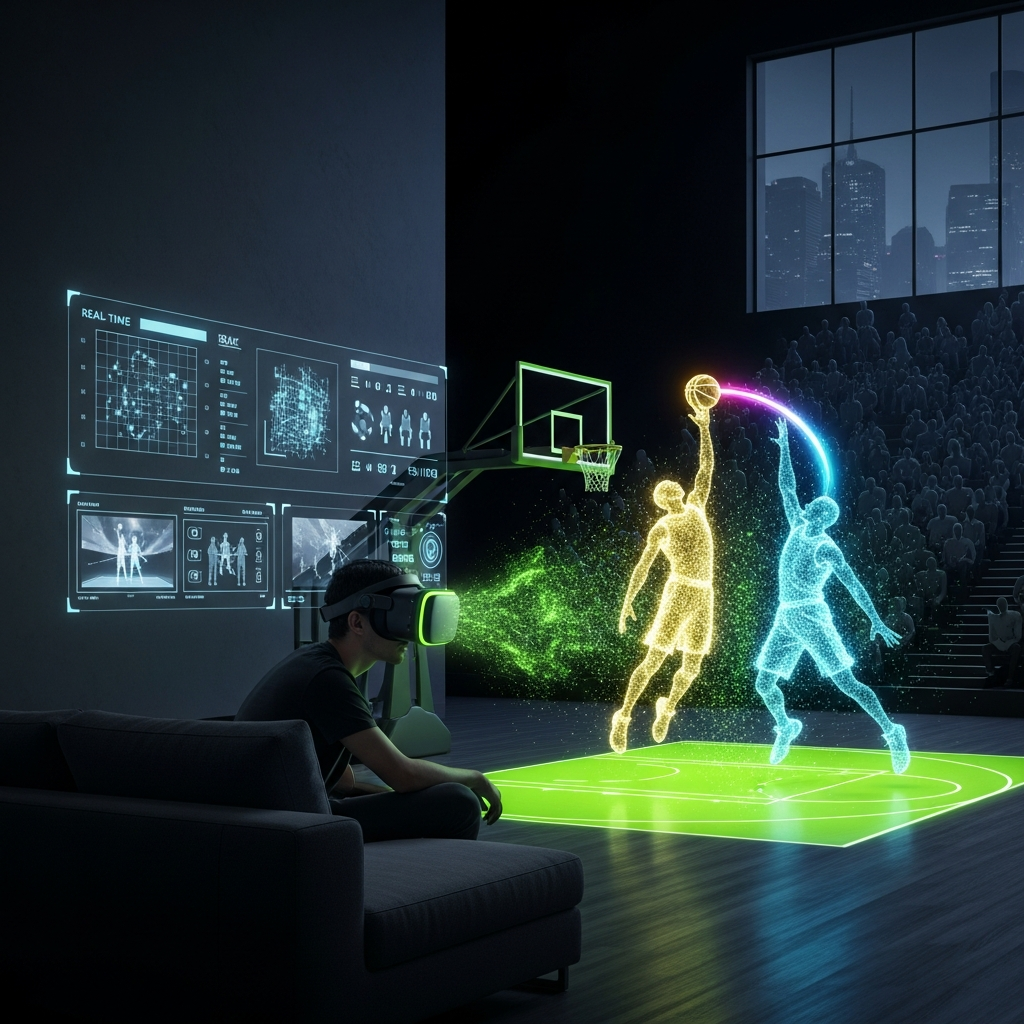
Imagine the electric atmosphere of a live game. The roar of the crowd, the squeak of sneakers on the court, and a view so close you can see the sweat on the players’ brows. Now, imagine experiencing all of that without leaving your living room.
This is no longer a futuristic fantasy; it’s the new reality of sports viewership. Virtual reality (VR) is rapidly transforming fan engagement, transporting enthusiasts from their homes straight to the best seats in the house. The metaverse is not just changing the game; it’s creating a whole new playing field for fans across the globe.
The New Frontier: Immersive VR Viewing
At its heart, the metaverse VR courtside experience is about presence. It leverages advanced technology to make you feel like you are truly there. By using VR headsets like the Meta Quest or Apple Vision Pro, fans are transported into a virtual stadium. This is made possible by state-of-the-art cameras, such as those capturing 180-degree 8K video, strategically placed around the physical venue.


Consequently, you are no longer a passive observer watching a flat screen. Instead, you are an active participant. You can turn your head to follow the action, switch between camera angles impossible in a real-world setting, and even explore behind-the-scenes areas. This level of immersion creates a deeper, more personal connection to the sport, making every play feel more immediate and exciting.
More Than a Game: The Benefits of a Metaverse Experience
The shift to virtual sports viewing offers a host of advantages that go far beyond a simple broadcast. It fundamentally redefines accessibility, community, and personalization for a global audience.
A Global Stadium for Everyone
One of the most powerful aspects of VR sports is its ability to break down barriers. Geographical distance and the high cost of tickets often prevent fans from attending live games. However, the metaverse eliminates these obstacles. A fan in Lagos, Nigeria, can virtually sit courtside for an NBA game in Los Angeles, sharing the experience with someone from London.
This enhanced accessibility opens up elite sports content to a much wider, international audience, creating a truly global fan community. As noted in a recent analysis on the topic, this evolution of fan engagement is bridging the gap between the bleachers and the metaverse [[Official Blog of Mike Golub]].
Socializing in the Virtual Stands
Engage with the Community:
- Meet up with friends in virtual lounges or stadium suites.
- Engage in live chat and voice conversations during the game.
- Participate in interactive mini-games, like virtual free-throw shootouts.
- Join a communal viewing experience to react to big plays together.
Platforms like Meta Horizon Worlds are creating these rich, interactive environments where the social aspect of being a fan is central to the experience.
Your Game, Your Way
Personalization is another key benefit. The metaverse allows you to tailor your viewing experience to your exact preferences. You can choose your preferred camera angle, pull up real-time player stats and highlights on demand, and customize your avatar to show off your team spirit. This level of control deepens the connection between fans and their favorite teams, making the experience more engaging and memorable.

Pioneers of the Virtual Pitch
Major sports leagues are already embracing this technology. The NBA has been a trailblazer, partnering with Meta and Apple to offer live, immersive games in stunning 180-degree VR. Fans can access these broadcasts through apps like Xtadium, getting a front-row seat to the action.
It’s not just basketball, either. Premier League football club Manchester City is collaborating with Sony to build a digital twin of its Etihad Stadium. These initiatives demonstrate how sports properties are actively exploring new commercial opportunities in these virtual worlds, a trend confirmed by industry observers [[Euromonitor.com Analysis]].
Hurdles on the Path to Primetime
Of course, the technology is still evolving. Widespread adoption faces a few challenges. The cost of high-quality VR headsets can be a barrier for some, and a stable, high-speed internet connection is essential for a smooth experience. Furthermore, some users may experience discomfort during extended use.
While many platforms are developing robust social features, the experience is still being perfected to feel as seamless as a real-world gathering. Despite these hurdles, the immense potential for deeper fan engagement and new revenue streams continues to drive innovation in this exciting space [[Antier Solutions Insights]].
The Future is Courtside
The era of passive sports viewing is coming to an end. Fan engagement in the metaverse is transforming how we experience live events, making them more immersive, interactive, and accessible than ever before. While challenges remain, the pace of technological advancement is rapid. Soon, putting on a headset to sit courtside for the biggest game of the year will be as common as turning on the TV. The virtual revolution is here, and it’s giving every fan the best seat in the house.