Beyond the Jumbotron
How Phygital Tech is merging physical and digital worlds to redefine the fan experience.
A new era is dawning, one where the physical and digital worlds merge to create something entirely new: the “phygital” fan experience. Leagues across the globe, from the NBA to Formula 1, are transforming their venues into interactive hubs. Consequently, they are bringing fans closer to the action than ever before through holographic replays, augmented reality, and revolutionary smart stadium technology.
The Rise of Volumetric Video: Seeing the Game in 3D
Forget watching a replay on a flat Jumbotron. The biggest leap forward is “volumetric” video, which uses multiple high-speed cameras to capture action in three dimensions. This data creates a 3D digital version of the game, allowing you to see plays from impossible angles. It’s no longer just a broadcast; it’s an immersive environment.
MLB’s Gameday 3D: Your Personal Director’s Chair
Major League Baseball is a clear leader in this space. Using data from Hawk-Eye cameras and their Statcast system, the MLB Gameday 3D feature offers fans a fully rendered, real-time model of the game. For instance, you can virtually “fly” around the stadium to follow the arc of a home run. You can also stand “behind the plate” in the app to truly appreciate the speed of a 100mph fastball.

NBA Tabletop Views and F1 Ghost Cars
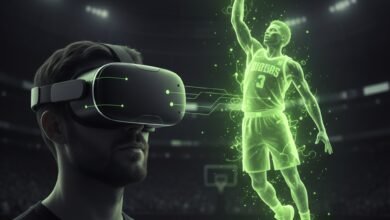
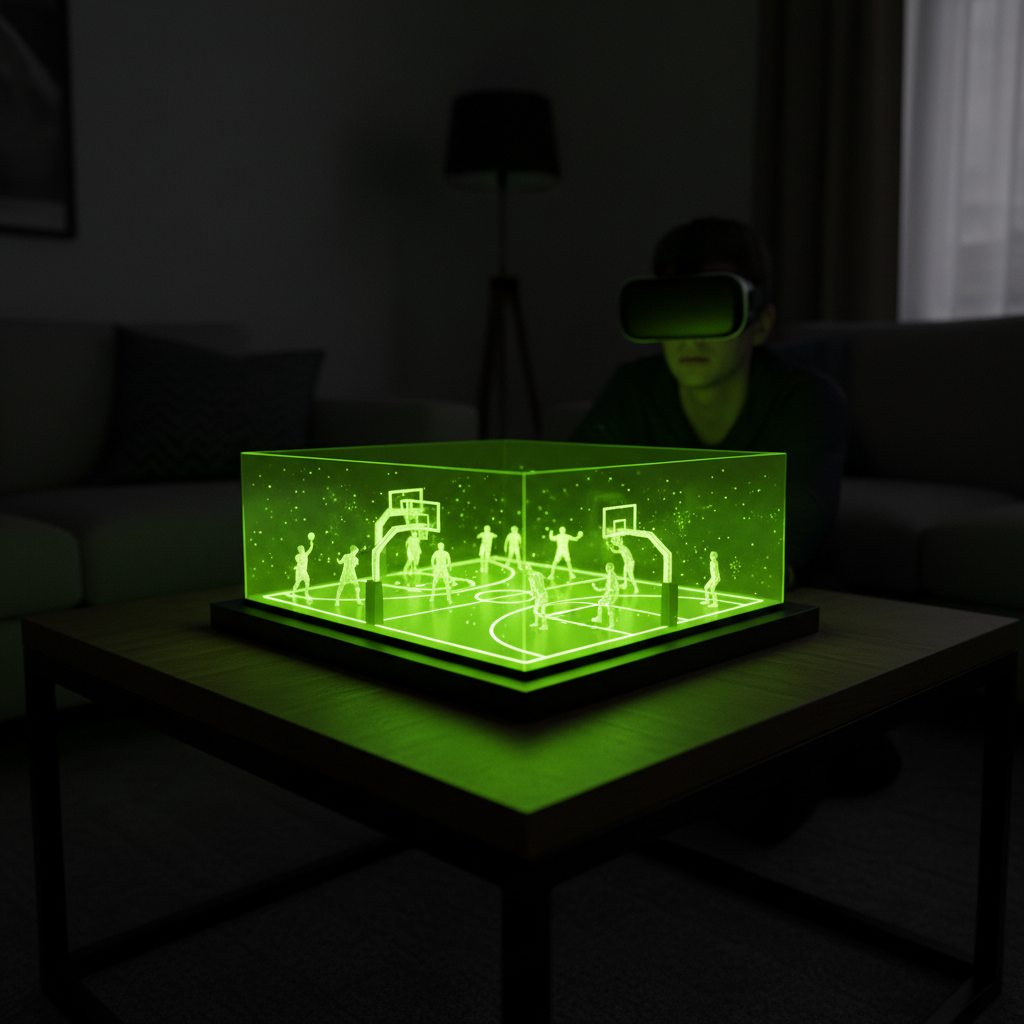
The NBA has also embraced this new dimension. With the Apple Vision Pro, fans can now use a “Tabletop” view. This feature projects a live, miniature 3D diorama of the court onto your coffee table. You can literally walk around the holographic players as they execute plays in real-time.
Meanwhile, Formula 1 uses augmented reality (AR) for incredible qualifying insights. During replays, you can see a translucent “ghost car” of one driver’s lap overlaid on another’s. This visual tool shows you precisely where a driver like Max Verstappen gained a crucial tenth of a second on a rival.
The Engine Room: Inside the “Smart Stadium” Infrastructure
Powering these incredible phygital experiences requires a massive technological upgrade behind the scenes. Stadiums are no longer just concrete bowls; they are high-bandwidth “living laboratories” designed for data.
Beyond Wi-Fi: Private 5G and Edge Computing
Traditional stadium Wi-Fi simply can’t handle the load of 50,000 fans all trying to stream 3D data at once. Therefore, new venues like the LA Clippers’ Intuit Dome are being built with private 5G networks and edge computing. This powerful combination allows for processing massive amounts of data with almost zero lag, making instant, multi-angle replays a reality for every fan in the building.
AI-Powered Insights and Frictionless Access
Smart stadiums also use technology to make the fan experience smoother and more engaging.
-
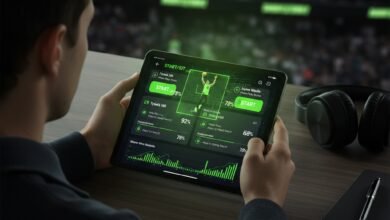
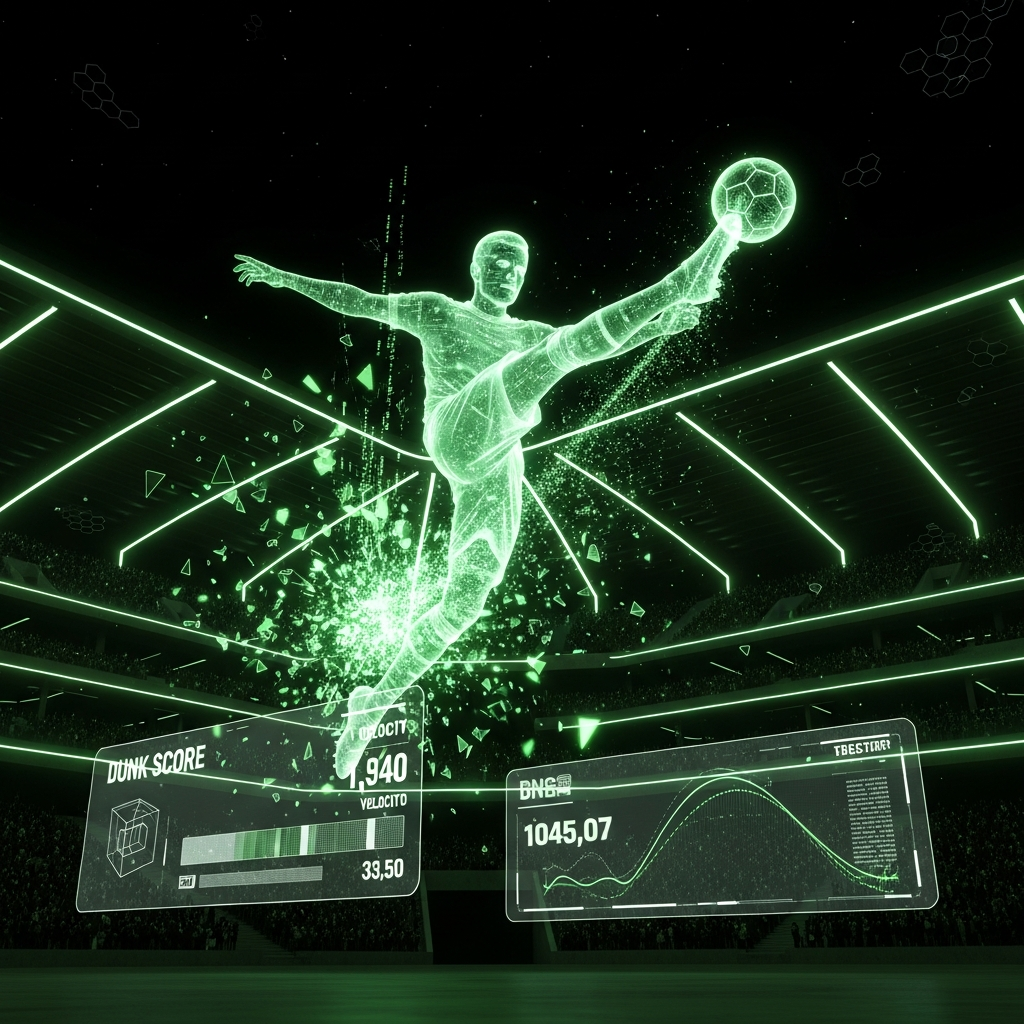
Gaming-Style StatsThe NBA’s “Dunk Score” uses AI and pose-tracking to instantly calculate a player’s jump height and force.
-
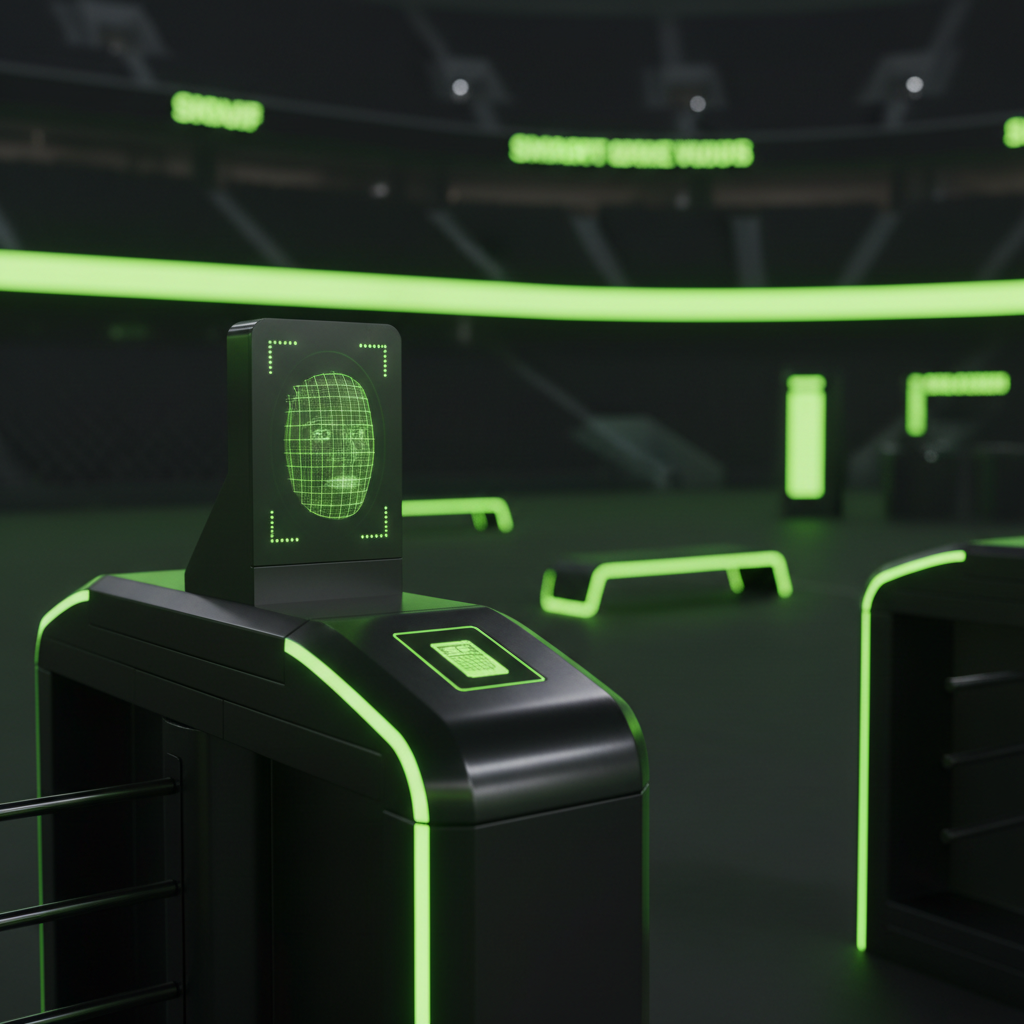
Frictionless EntryModern venues use biometrics where your face becomes your ticket, creating a seamless flow from the gate to your seat.
More Than a Game: Phygital Engagement and Collectibles
The phygital revolution extends beyond the 90 minutes of play. It creates new layers of interaction, history, and ownership for fans. Teams are now building “Digital Twins,” or virtual replicas of their stadiums, where fans can gather and interact.
For example, Manchester City, in partnership with Sony, offers a “digital twin” of their jersey to fans who buy the physical version. This allows their avatar to wear the same kit in the virtual Etihad Stadium. Similarly, Panini’s latest Premier League collections include “Holo Giant” cards. When scanned with a smartphone, these cards trigger 3D holographic highlights of the featured player.
The Future is Phygital
The line between attending a game and interacting with it digitally is disappearing. The phygital experience is creating a richer, more personalized, and more immersive era for sports fans everywhere. From holographic replays that put you on the field to smart stadiums that cater to your every need, the way we watch and engage with live sports has changed forever. This fusion of the physical and digital is not just a trend; it is the new standard.