Nigeria-Morocco: A Strategic Partnership Shaping Africa’s Future

The relationship between Nigeria and Morocco has evolved from diplomatic distance to a robust strategic partnership, driven by ambitious economic projects and a shared vision for Africa’s future, particularly since 2016. This collaboration exemplifies South-South cooperation and serves as a model for continental progress.
Strategic Economic Alliance: Energy and Agriculture
The core of the Nigeria-Morocco partnership lies in two transformative projects: the Nigeria-Morocco Gas Pipeline (NMGP) and OCP Group’s fertilizer investments in Nigeria.
Nigeria-Morocco Gas Pipeline (NMGP)
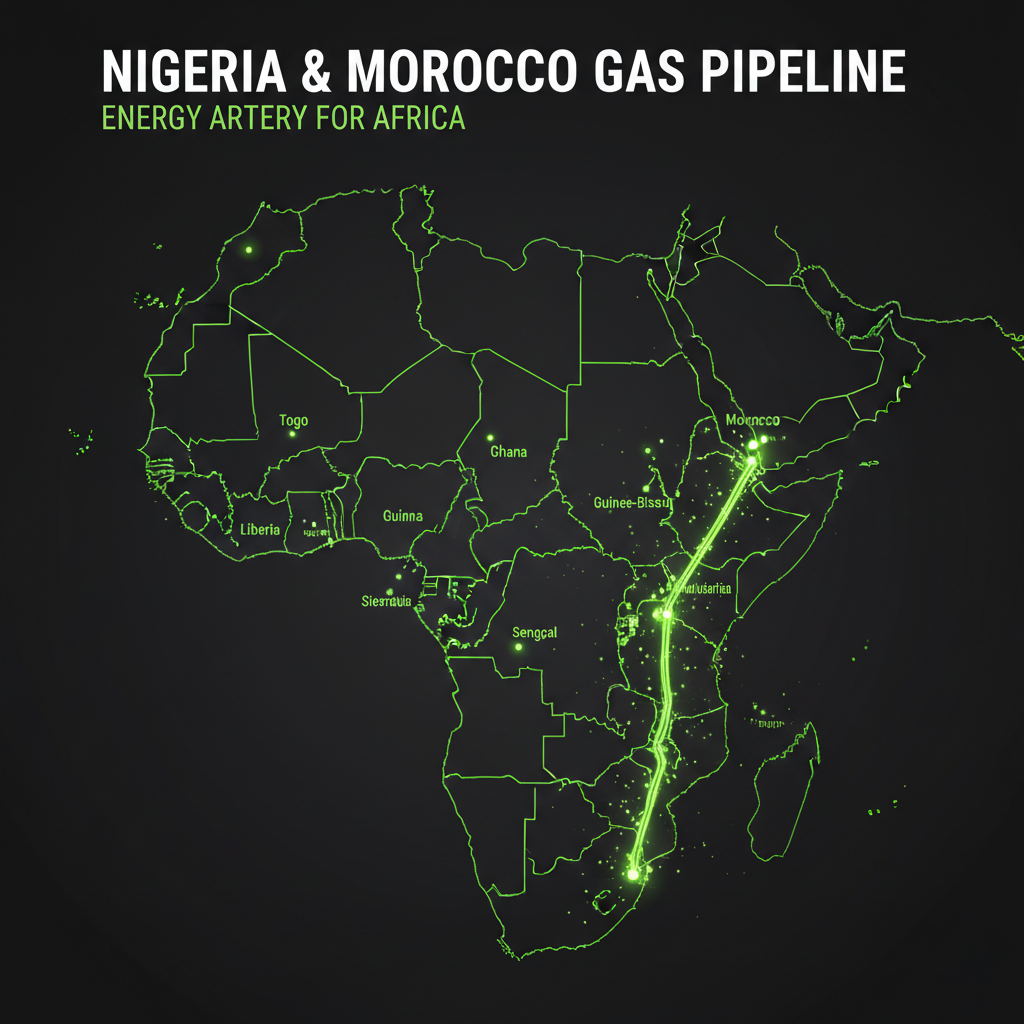
- Description: A nearly 6,000-kilometer “energy artery” designed to connect Nigeria’s gas reserves to thirteen West African nations, extending to Morocco and linking to Europe.
- Scope: Intended to transport 15 to 30 billion cubic meters of natural gas annually, benefiting approximately 400 million people with enhanced energy access.
- Progress:
- • Technical and engineering design studies were completed by 2025.
- • An intergovernmental agreement was approved by the Economic Community of West African States (ECOWAS) in late 2024.
- • Construction is scheduled to commence in 2025.
- • A final investment decision is anticipated by the end of 2025.
- Financing: The project has an estimated cost of $25 billion and has secured commitments from international financiers, including the Islamic Development Bank (IsDB), the OPEC Fund, and the European Investment Bank.
- Objectives: To monetize Nigeria’s gas reserves, reduce gas flaring, and provide a stable energy source for the region.
OCP Group’s Fertilizer Investment
- Investor: Morocco’s state-owned OCP Group.
- Investment Amount: Over $1.5 billion committed to Nigeria’s agricultural sector.
- Project: Construction of a world-class ammonia and fertilizer plant in Akwa Ibom State, utilizing Nigerian gas and Moroccan phosphate.
- Impact:
- • Increased Production Capacity: Three new mega fertilizer blending plants in Kaduna, Ogun, and Sokoto states have added 500,000 metric tonnes to Nigeria’s annual fertilizer production.
- • Economic Transformation: The Akwa Ibom complex is projected to produce 1 million tons of phosphate fertilizers annually, positioning Nigeria as a major producer and potential exporter, shifting it from a net importer.
- • Farmer Support: These facilities serve as knowledge hubs, offering training and soil analysis to farmers, with the potential to increase yields by up to 85%.
Expanding Trade and Investment
Beyond flagship projects, the economic relationship is diversifying:

- Bilateral Trade (2023):
- • Morocco’s exports to Nigeria: $112 million (primarily fertilizers and processed fish).
- • Nigeria’s exports to Morocco: $40.9 million (including bran and float glass).
- Trade Potential: Officials estimate that addressing trade barriers could increase annual trade volume to $2.5 billion.
- New Investments: Moroccan agencies are exploring over $10 billion in investments in Nigeria’s Kano State, focusing on renewable energy and solid minerals.
- Renewable Energy Collaboration: The Moroccan Agency for Sustainable Energy (MASEN) is supporting Kano’s initiative to generate 2,000 megawatts of solar power.
Political and Security Partnership
Economic ties are complemented by strengthened political and security cooperation:
- African Unity: Both nations champion initiatives promoting African unity, peace, and development.
- High-Level Engagements: A significant engagement was the visit by King Mohammed VI to Nigeria in 2016.
- Security Collaboration:
- • Commitment to deeper security cooperation, particularly concerning terrorism and extremism in the Sahel region.
- • Sharing of expertise and conducting joint training exercises.
- • The Moroccan Royal Armed Forces have provided specialized counter-terrorism training to the Nigerian Air Force.
- Western Sahara Diplomacy: Nigeria has historically supported the Sahrawi Arab Democratic Republic (SADR) but has adopted a more neutral public stance as its relationship with Morocco has grown, balancing foreign policy principles with pragmatic alliance building.
Deep-Rooted Cultural and Religious Connections
The partnership is underpinned by centuries of historical interaction:
- Historical Ties: The ancient Trans-Saharan Trade Routes facilitated exchanges of goods, culture, and religion, leading to the introduction of Islam to Nigeria and lasting cultural influences.
- Shared Islamic Identity: The Tijaniyya Sufi order, founded in Morocco, connects millions in both nations.
- Religious Diplomacy: Morocco provides scholarships and training to Nigerian imams in its institutes, promoting a moderate interpretation of Islam and strengthening people-to-people connections.
Conclusion
The Nigeria-Morocco relationship is a multi-layered strategic partnership that leverages economic strengths in energy and food security, addresses regional political and security challenges, and builds upon deep historical and cultural ties. This collaboration is presented as a key driver for a more integrated, prosperous, and stable African continent, built by Africans for Africans.