The Two-Sided Coin:
Is Facial Recognition the Future of Stadium Entry?
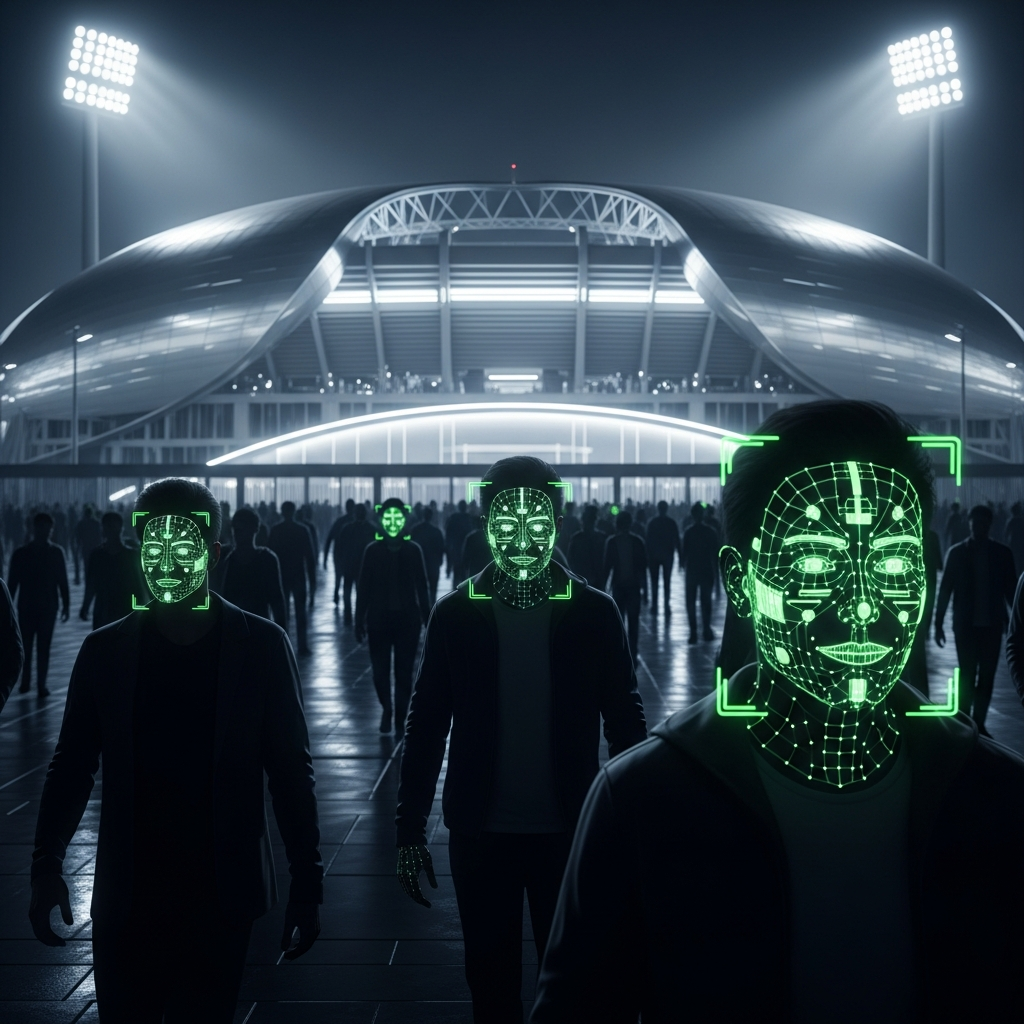
Imagine walking up to a stadium, the buzz of the crowd electric in the air. Instead of fumbling for a ticket or phone, you simply walk through the gate. A seamless, quick, and secure entry.
This isn’t science fiction; it’s the reality offered by “walk-through” facial recognition technology. This innovation promises to revolutionize the fan experience. However, beneath the surface of this convenience lies a complex debate. While biometric security offers significant advantages, it also raises critical questions about privacy, bias, and data protection. Consequently, stadiums worldwide are grappling with this double-edged sword. Is this the future of sports events, or a step too far?
01The Upside: A Faster, Safer Fan Experience
Advocates for facial recognition highlight its potential to transform stadium operations for the better. The benefits are compelling, focusing on efficiency and, most importantly, safety.

Streamlining Entry
Long lines are a classic pain point for event-goers. Facial recognition technology directly addresses this issue. Creating a hands-free entry system, it eliminates the need for manual ticket scans or ID checks.
Proactive Security
These systems can instantly identify individuals who pose a threat. For example, they can flag persons on a watchlist, known hooligans, or those with previous bans.
Furthermore, the technology aids in post-event investigations, providing a clear record to identify anyone responsible for offenses during an event.
02The Downside: Privacy, Bias, and Trust
Despite the clear benefits, the move towards biometric entry is fraught with serious concerns. These challenges center on personal data, algorithmic fairness, and the very nature of surveillance in public spaces.
Risk Factors
- •Data Breaches & Identity Theft
- •Algorithmic Bias (False Positives)
- •Lack of Informed Consent
Major Privacy and Data Security Risks
Your face is a unique piece of biometric data. Unlike a password, you cannot change it. The collection and storage of this sensitive information raises huge privacy flags. Stadiums must navigate these rules carefully. For an in-depth analysis of these legal challenges, consider reading reports from legal tech experts.
The Problem of Algorithmic Bias
Facial recognition technology is not perfect. Studies have shown that some algorithms are less accurate when identifying women and people of color. This bias can lead to a higher rate of “false positives,” where the system incorrectly flags an innocent person. You can find further discussion on this technology’s impact in official security industry reports.
Surveillance and Eroding Trust
For many, the widespread use of facial recognition feels like a step towards constant surveillance. This can create a sense of unease and foster distrust between fans and the organizations running the events. The balance between security and freedom is delicate, and many feel this technology tips the scales too far in one direction.
Conclusion: Finding the Right Balance
Facial recognition offers a tantalizing vision for the future of stadium entry—one that is faster, more convenient, and potentially safer. The ability to reduce queues and proactively identify threats is a powerful argument for its adoption.
However, these benefits cannot overshadow the significant ethical hurdles. The risks to personal privacy, the potential for algorithmic bias, and the erosion of public trust are profound concerns that must be addressed with transparency and robust regulation.
As this technology becomes more common, the conversation must continue. Finding a path forward requires a balanced approach that embraces innovation while fiercely protecting individual rights. Stakeholders, including official sports leagues, are actively debating this path forward. Ultimately, the future of the “phygital” fan experience depends on it.