“The recruiting world moves fast. In fact, a college scout might only spend 30 to 60 seconds looking at your profile for the first time.”
That’s not a lot of time to make an impression. So, how do you stand out? Your player profile and highlight reel are your digital handshake, and they need to be perfect.
This isn’t about listing every single achievement. Instead, it’s about ruthless data selection. This guide will show you exactly which stats matter, how to frame them for maximum impact, and how to build a profile that grabs a recruiter’s attention and doesn’t let go.
The Non-Negotiables: Your First Impression
Before a coach ever watches your film, they check a few key filters. Think of these as the gatekeepers to your profile. If this information is missing or unclear, they will likely move on without a second thought. Consequently, you must include these basics.

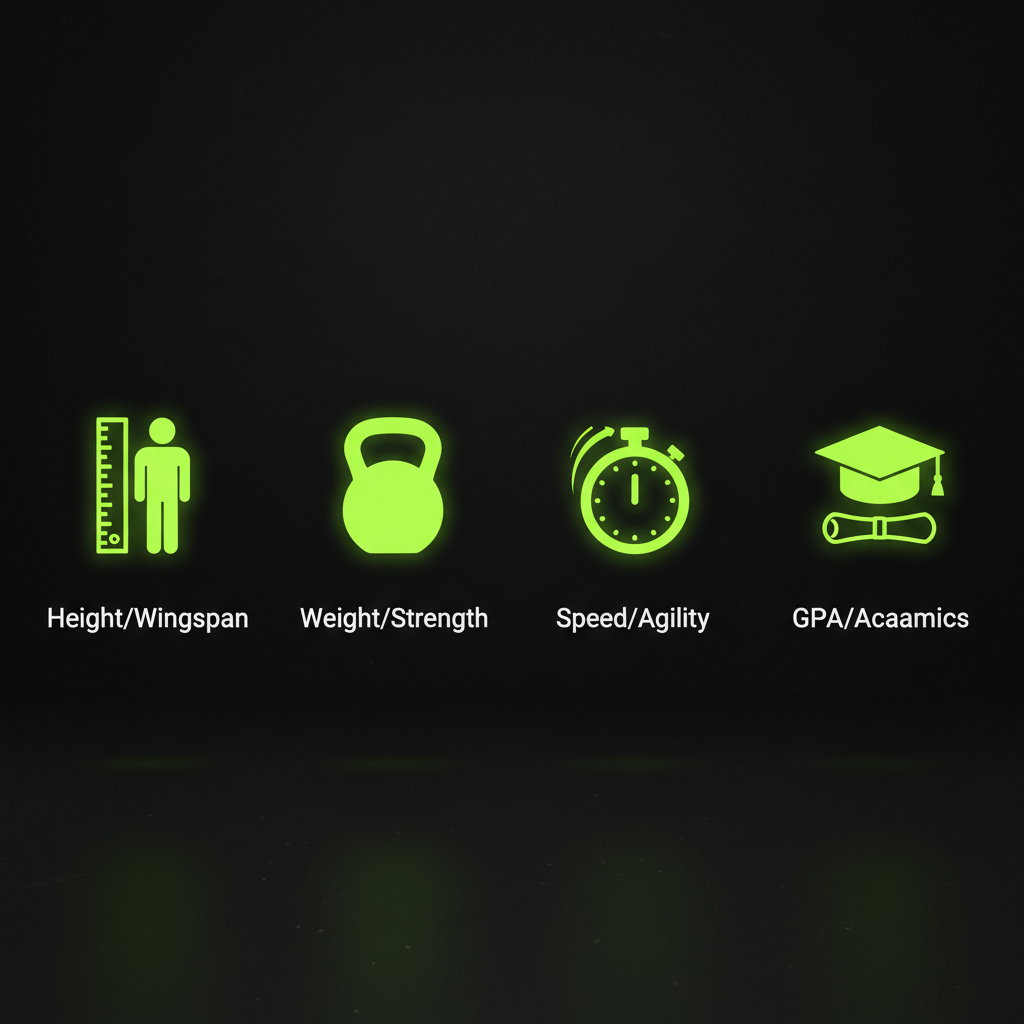
Your profile must clearly display:
- Physical Measurables: Your height and weight are essential. For sports like basketball or volleyball, your wingspan and vertical jump are also crucial.
- Athletic Benchmarks: Include verified times for tests relevant to your sport. This could be a 40-yard dash for football or soccer, or 10m/30m sprint times.
- Academics: Don’t forget your GPA and any standardized test scores (like the SAT/ACT). Coaches avoid academic risks, so strong grades make you a much safer bet. Learn more about NCAA academic eligibility standards.
- Contextual Info: This seems simple, but it’s often missed. List your graduation year, your jersey number (which must match your video), and clear contact info for yourself and your head coach.
Choose “Money Stats” for Your Position
Volume is not as impressive as relevance. A coach recruiting a defensive midfielder in soccer doesn’t primarily care about your goals scored. They want to see stats that prove you can excel in your specific role at the next level. Therefore, you need to be selective.
For example, think about your position’s main job:
- A soccer striker should highlight Goals per Game, Shots on Target %, and even advanced metrics like Expected Goals (xG).
- A basketball point guard needs to feature their Assist-to-Turnover Ratio and 3-Point Shooting Percentage.
- A volleyball hitter will grab attention with a high Hitting Percentage (efficiency) and Kills per Set.
Look at your own position and ask: what are the 2-3 most important statistics that define success? Focus on those.
Show Impact, Not Just Volume
This is where many athletes miss the mark. Simply stating “50 touchdowns” or “1000 kills” lacks context. Scouts value efficiency and performance under pressure far more than raw totals. To show your true impact, you should reframe your data.
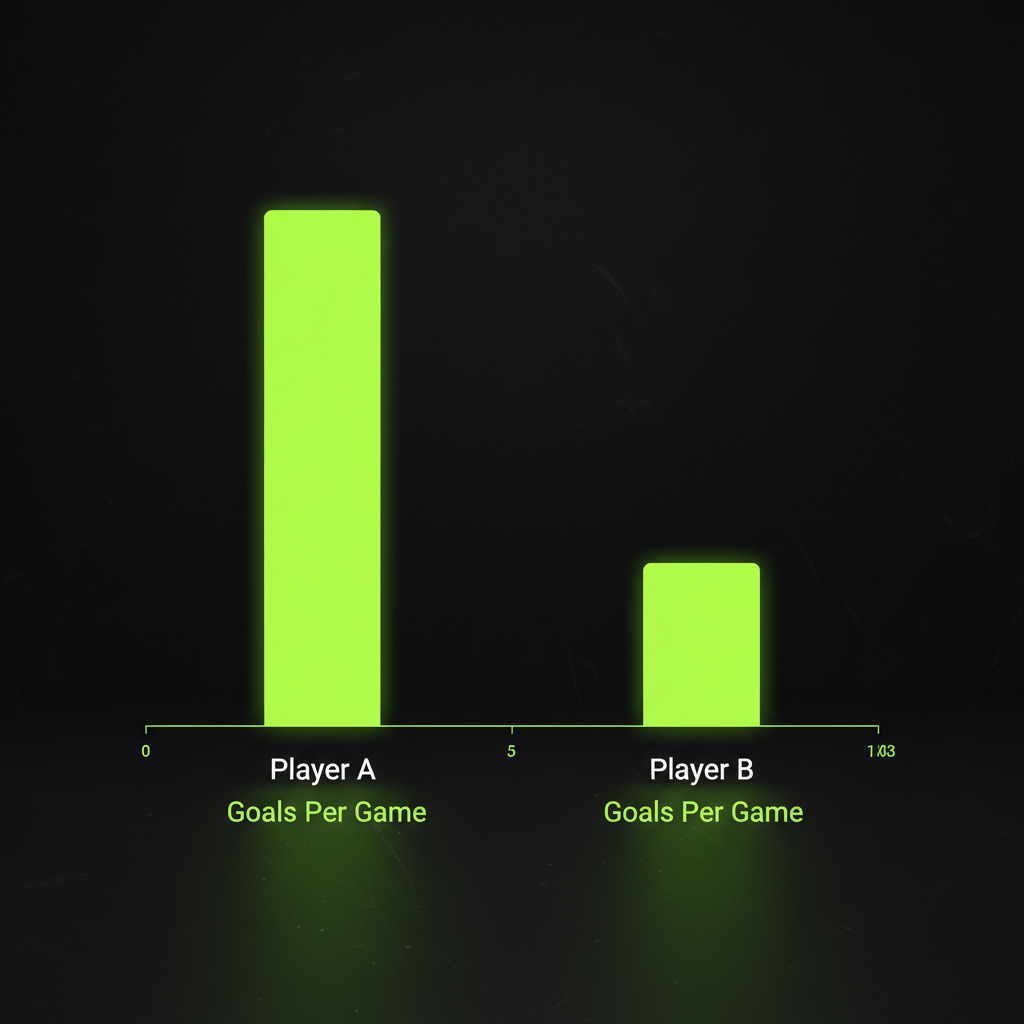
The “Per Game” Rule
Productivity is key. For instance, a soccer striker who scored 10 goals in 5 games (2.0 per game) is much more impressive than one who scored 20 goals in 20 games (1.0 per game). If you were highly effective in a limited time, always use per-game or per-set metrics.
Leverage Advanced Analytics
If you have access to platforms like Hudl or Veo, use the advanced data they provide. It shows a deeper understanding of the game.
Instead of
“I am a good passer.”
Use
“85% Pass Completion in the Final Third.”
This specific, data-backed claim is significantly more powerful.
Highlight High-Level Competition
Did you play your best against the best? Coaches need to know you can perform when the competition gets tougher. If you played against top-ranked opponents or in elite leagues, feature your stats from those specific games. It proves your skills translate to a higher level.
Make Your Highlight Reel a Data Story
Your highlight reel shouldn’t just be a random collection of plays. It needs to tell a story, with your stats providing the narration. Think of it as an infographic in motion. Production quality should be clean and simple; avoid flashy transitions or loud music, as coaches often watch on mute.
The “First 30 Seconds” Rule
Put your absolute best 3-4 plays right at the start to hook them immediately. If you don’t grab them now, they won’t see the rest.
- The Title Card: Begin your video with a clear slide. It should show your name, position, graduation year, GPA, and 1-3 of your most impressive stats or awards.
- Use Text Overlays: Add small, non-intrusive text at the bottom of a clip to provide context. For example, “Goal vs. #1 Ranked Team” or “Game-Winning Block in 3rd Set.
- Group Your Clips: Don’t just show plays chronologically. Instead, group them by skill. Show a few clips of your great passing, then a few of your defensive plays, and so on. This helps scouts mentally check off the boxes they’re looking for.
Conclusion
Building a powerful player profile is not about having the most stats; it’s about having the right stats presented in the right way. By focusing on the non-negotiable basics, selecting position-relevant “money stats,” and framing your achievements to highlight impact and efficiency, you take control of your narrative. Remember, you have less than a minute to make your case. Make every second, and every stat, count.