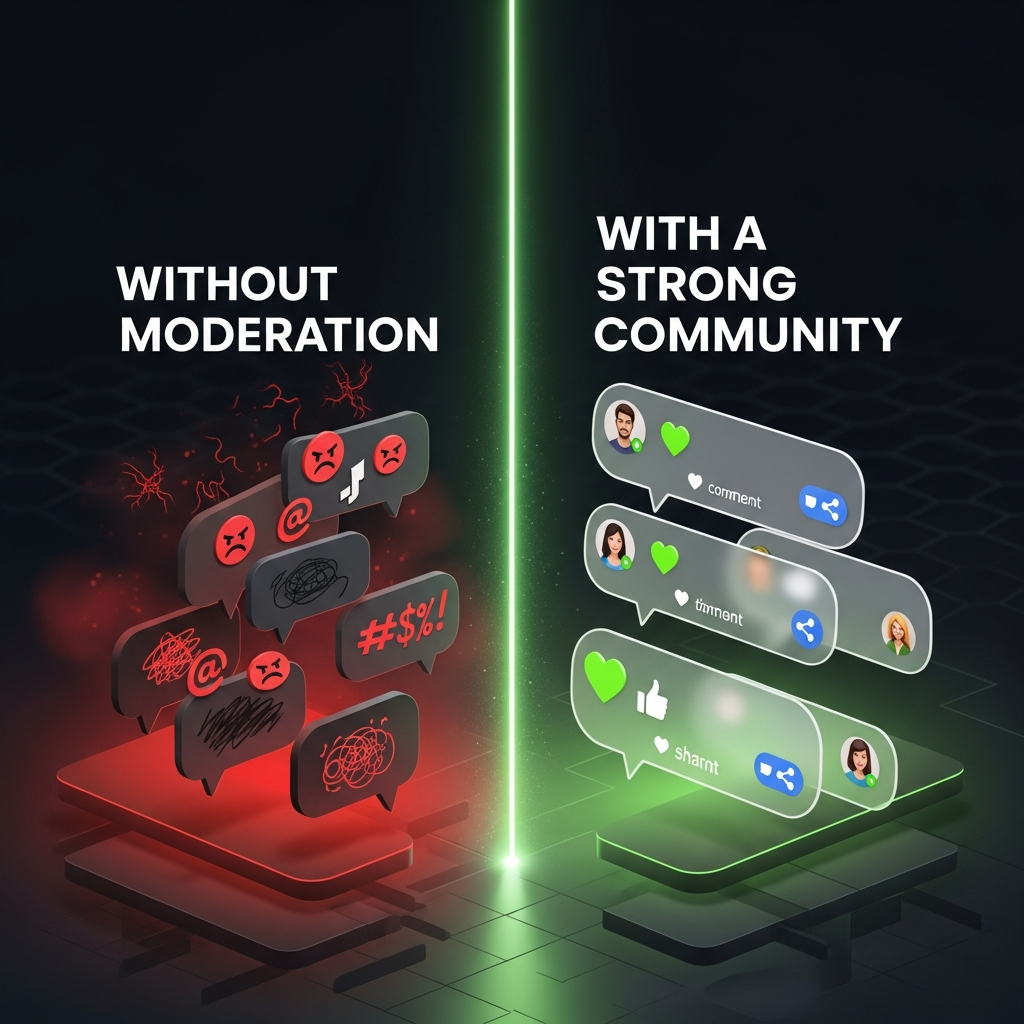
How to Beat the Trolls and Grow Your Amateur Club’s Facebook Page
Running an amateur club’s social media is a passion project. You celebrate the wins, share team news, and build a community. However, that passion can quickly turn to frustration when trolls appear in your comment section.
Dealing with them is not just about damage control; it’s a crucial part of your social media growth strategy. In 2026, growth is driven by satisfaction, not just arguments. This guide will show you how to handle trolls effectively, protect your community, and foster real, positive growth.
The First 60 Seconds: Your Immediate Troll Response Protocol
When a negative comment appears, your first instinct might be to argue or delete it. Resisting this urge is your first victory. Trolls thrive on emotional reactions and public arguments, which unfortunately boost their comments’ visibility in the Facebook algorithm. Instead, you should follow a simple, professional protocol.
Hide, Don’t Delete
The most powerful tool at your disposal is the “Hide” button. When you hide a comment, it becomes invisible to everyone except the person who posted it and their friends. This is incredibly effective because the troll often doesn’t realize they’ve been moderated. Consequently, they don’t get the satisfaction of a reaction or feel the need to create a new account to complain about being silenced. It neutralizes the threat without escalating the situation.

Use the One-Response Rule
Sometimes, a troll makes a point that seems partially valid, designed to trap you in a debate. For instance, they might say, “This club is a joke, you never start games on time.” The best approach is the one-response rule.
Professional Response Template:
“Hi there, we aim to start all matches at 10 AM as per the official schedule. For specific feedback, feel free to email us at our official club address.”
After that, do not engage further. You have addressed the point publicly and professionally. Any subsequent replies from the troll should be hidden immediately.
Proactive Defense: Automate Your Moderation
Why fight every battle manually when Facebook provides tools to build a fortress? The “New Pages Experience” offers a powerful feature called Moderation Assist, which can automatically handle trolls for you. You can find this in your Professional Dashboard.
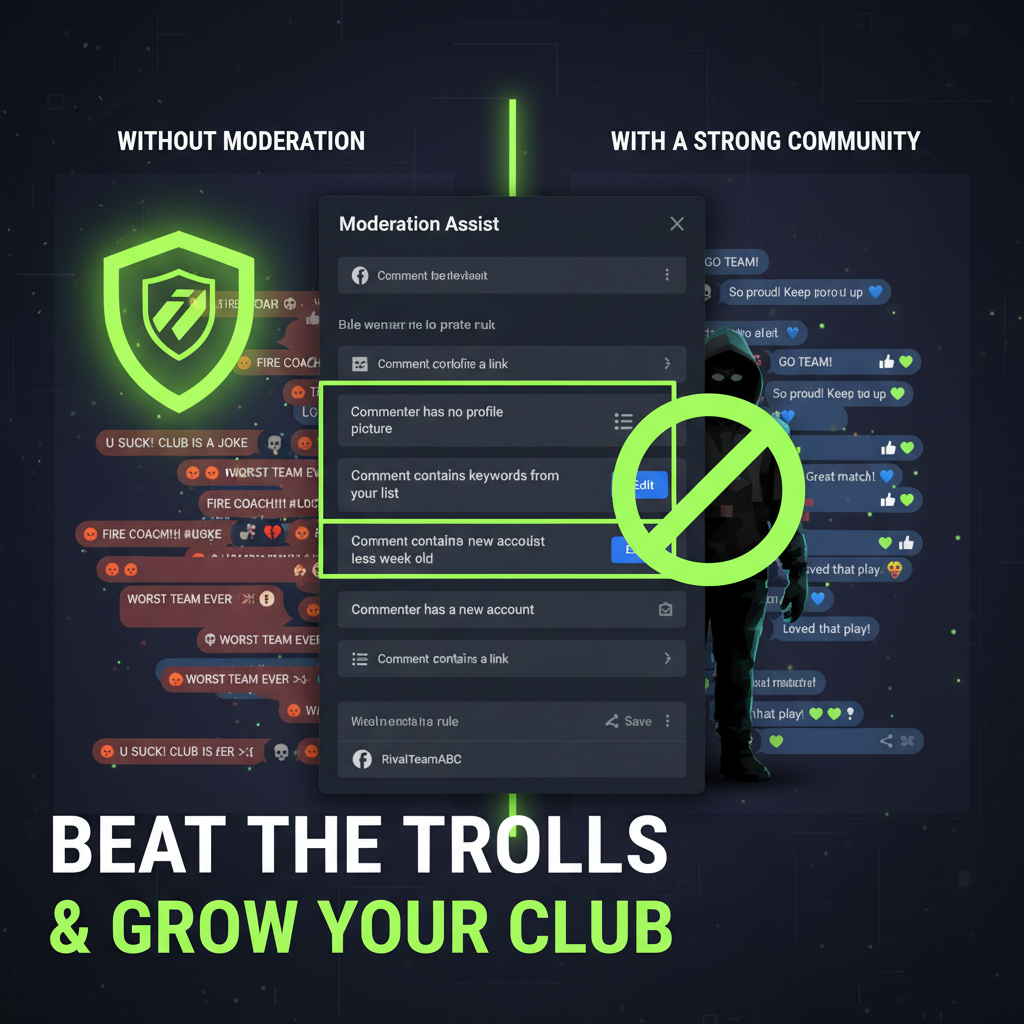
- Filter New Accounts: Automatically hide comments from accounts that are less than a week old.
- Block Profile Pictures: Hide comments from users who don’t have a profile picture, a common sign of a throwaway troll account.
- Block Links: Prevent spam by automatically hiding any comments that contain a link.
- Create Keyword Lists: Add common insults, swear words, and even the names of rival clubs to a blocklist.
Additionally, you should navigate to your Page Settings and set the Profanity Filter to “Strong.”
From Audience to Community: The Ultimate Troll Repellent
A disconnected audience is fertile ground for trolls. Conversely, a strong, engaged community is your best defense. The most successful club pages in 2026 are shifting their focus from chasing public engagement to building genuine, community-led loyalty.
Establish Clear House Rules
Your authority to moderate comes from clear, public guidelines. Pin a “Community Guidelines” post to the top of your page. Crucially, add a line that says: “We reserve the right to hide comments or ban users who violate the spirit of our community.”
Mobilize Your Allies
Your loyal members are your greatest asset. Encourage them to share positive stories. You can learn more about fostering positive online spaces from community-building experts like those at the Sprout Social blog.
The 2026 Growth Mindset: Satisfaction Over Engagement
The social media landscape has changed. Algorithms no longer reward raw engagement (likes and comments) alone. Today, they prioritize satisfaction metrics—primarily “Saves” and “Shares.”
When you allow trolls to dominate your comment section, your content becomes “argument-worthy” but not “save-worthy.” For inspiration on creating engaging sports content, checking out how major teams like Manchester United manage their official blog can provide excellent ideas.
Conclusion: Play the Long Game
Managing trolls on your amateur club’s Facebook page is less about winning individual arguments and more about building a resilient, positive community. By using Facebook’s tools proactively, responding strategically, and focusing on content that your true supporters value, you do more than just silence the negativity. You create a space where your community can grow and thrive.