Level Up: How Phygital Tech is Gamifying Sports
The fusion of physical action and digital engagement is transforming our workouts into epic quests.
The roar of the crowd in a packed stadium and the satisfying ping of a new personal best on your phone might feel worlds apart. However, they are becoming two sides of the same coin. A powerful shift is underway in how we experience both professional sports and personal fitness. This is the rise of the “phygital” world, a seamless blend of physical action and digital engagement.
This trend is not just about watching the game; it’s about living it. Furthermore, it’s transforming our workouts from chores into epic quests. Apps like Strava and Zwift are at the forefront, using sophisticated game-like mechanics to keep us engaged in cardio. Let’s explore how this phygital revolution is changing the game for fans and athletes alike.

The “Phygital” Revolution
So, what exactly is the “phygital” fan experience? In short, it’s the fusion of the physical and digital worlds to create a more immersive, personal, and connected environment for sports lovers. The experience is no longer confined to 90 minutes in a stadium seat. Instead, technology now extends the excitement, allowing organizations to connect with their audience on a much deeper level, wherever they are.
Key Technologies
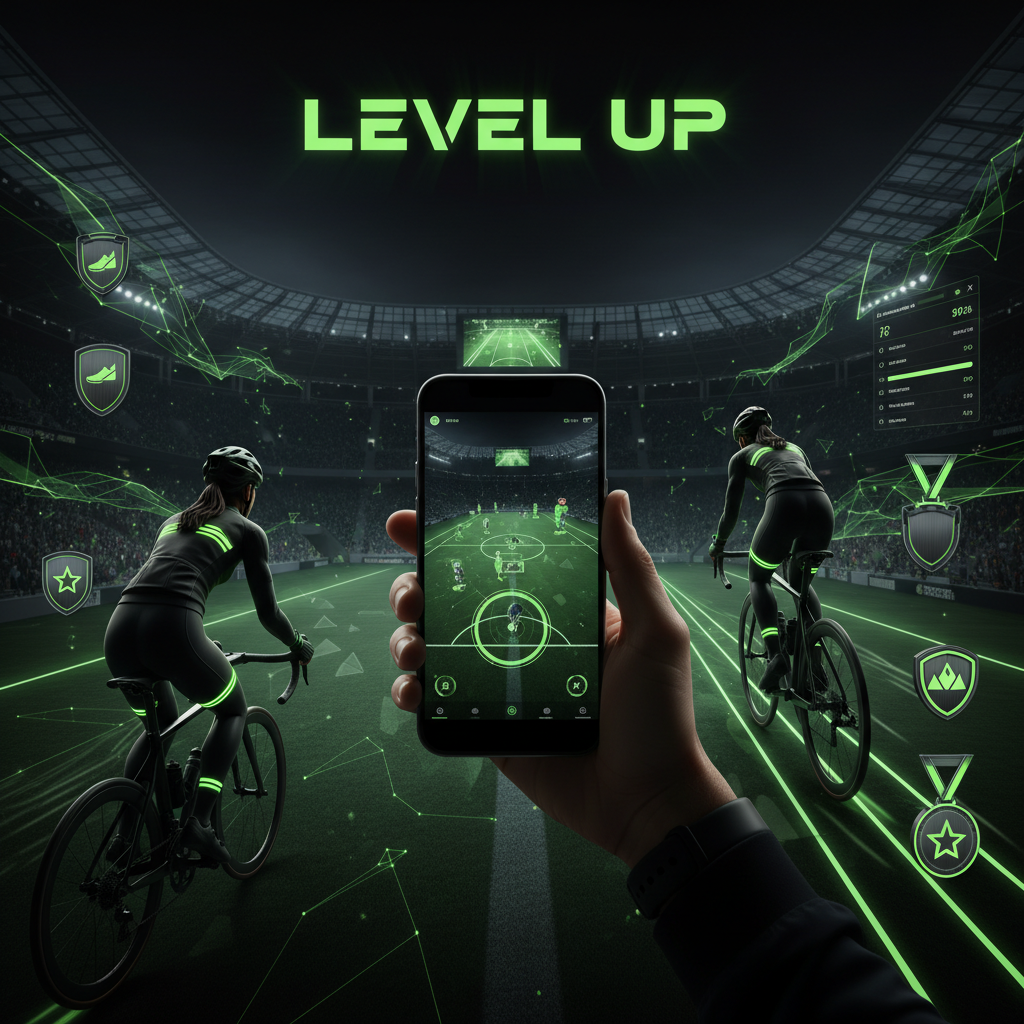
Several key technologies are driving this transformation. For instance, Augmented Reality (AR) can overlay live statistics onto the field through your smartphone. Virtual Reality (VR), on the other hand, can transport you to a courtside seat or give you a virtual stadium tour from your living room.
Gamification: Your Personal Experience
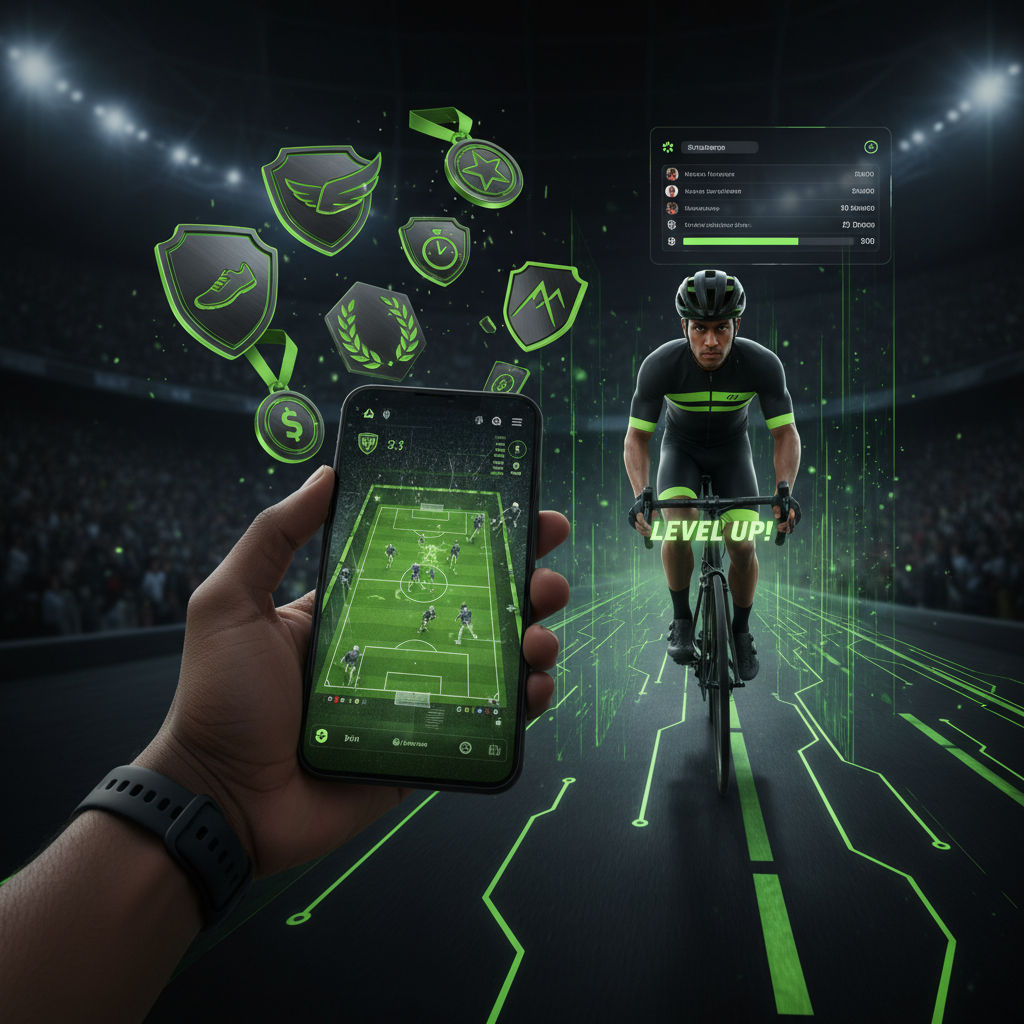
Just as technology reshapes the fan experience, it’s also revolutionizing personal fitness. This is where gamification comes in. It’s the process of applying game-design elements to non-game contexts, like your daily run or bike ride. Consequently, it turns exercise into a rewarding and interactive challenge.
- Badges: Virtual trophies for reaching milestones.
- Leaderboards: Competing with the global community.
- Streaks: Rewarding consistency for healthy habits.
Strava’s Social Competition
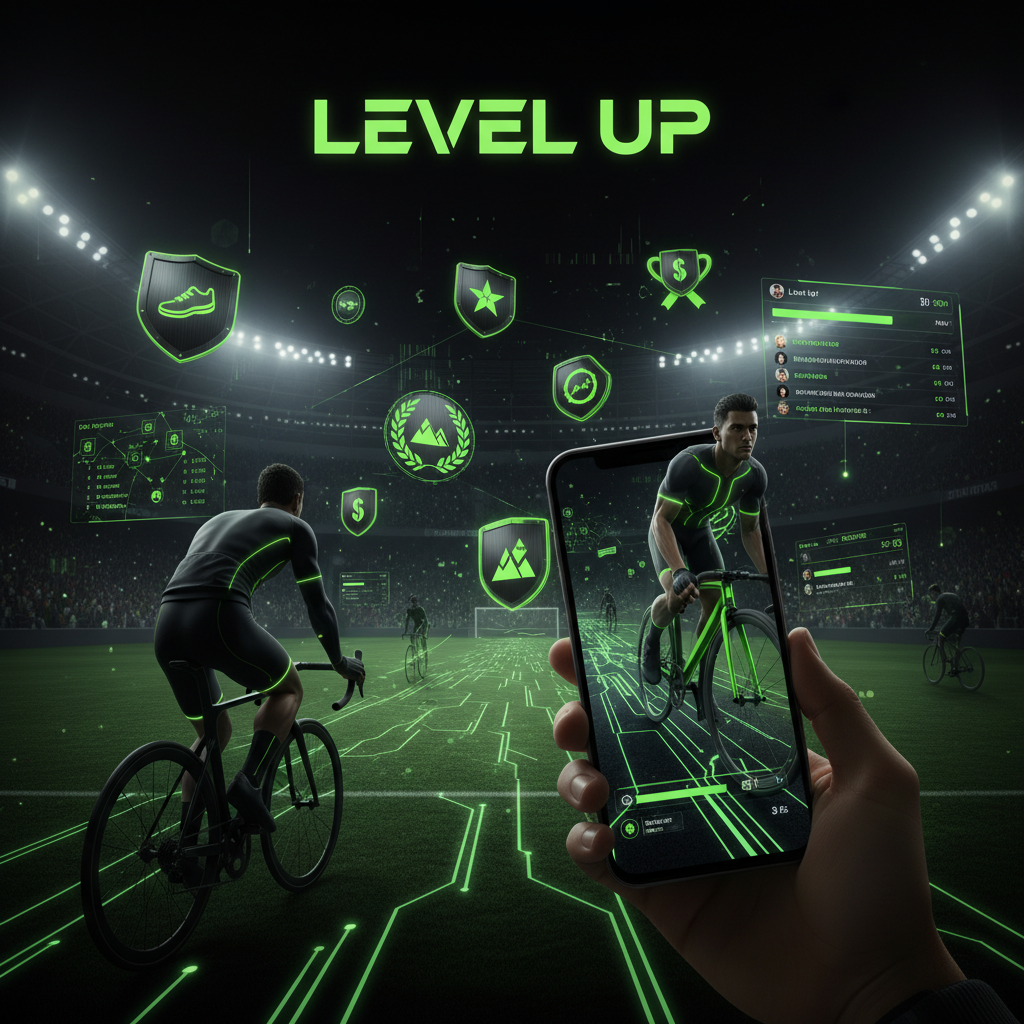
Strava has masterfully built a global community by turning individual exercise into a social competition. The app’s success hinges on a few core gamified features that keep users deeply engaged. The most famous feature is “Segments.” These are user-created stretches of road where athletes compete for the fastest time.
Crucially, the platform is built around social interaction. Giving and receiving “Kudos” on an activity acts as powerful social validation.
Zwift’s Virtual RPG World
If Strava is a social competition, then Zwift is a full-fledged fitness Role-Playing Game (RPG). Zwift makes indoor training exciting by immersing cyclists and runners in a virtual world. Users create a digital avatar that represents them in beautifully rendered landscapes like the futuristic Watopia.
The RPG elements are clear from the start. As you ride, you earn Experience Points (XP) that allow you to level up. Leveling up unlocks new virtual gear, such as faster bikes and stylish jerseys.
The Psychology of Success
Why are these game-like features so effective? The answer lies in human psychology. Gamification taps into our fundamental needs for achievement, competition, and social connection. By blending intrinsic satisfaction with extrinsic rewards like badges, we reinforce healthy habits that last.
The Future is Interactive
The line between the physical and digital worlds in sports is blurring. The phygital revolution is creating a more dynamic, data-rich, and engaging future for fans in the stadium. At the same time, gamification is doing the same for our personal fitness journeys.