The Best Microphones for Crowd Noise & Referee Whistles
The roar of the crowd. The sharp blast of a whistle. Master the sound of the stadium.
The roar of the crowd after a last-minute goal. The sharp, piercing blast of a referee’s whistle. These sounds are the heartbeat of any sports broadcast. In fact, they transport viewers from their couches directly into the stadium.
But capturing this audio chaos with clarity is a massive technical challenge. It requires specialized equipment designed to handle everything from deafening cheers to split-second, high-frequency transients.

This guide reviews the industry-standard audio equipment for 2025-2026. We will explore the best microphones for isolating on-field action, immersing the audience in crowd noise, and ensuring every referee’s communication is crystal clear. Consequently, you’ll understand what it takes to produce world-class sports audio.
The Zoom Lens of Sound: Capturing Whistles and On-Field Action
Getting a clean recording of a referee’s whistle or a quarterback’s call from the sidelines is incredibly difficult. These sounds are not only distant but also extremely loud and sharp, which can easily distort audio. Therefore, broadcasters rely on highly directional microphones that can “zoom in” on the action.
Top Picks for On-Field Audio
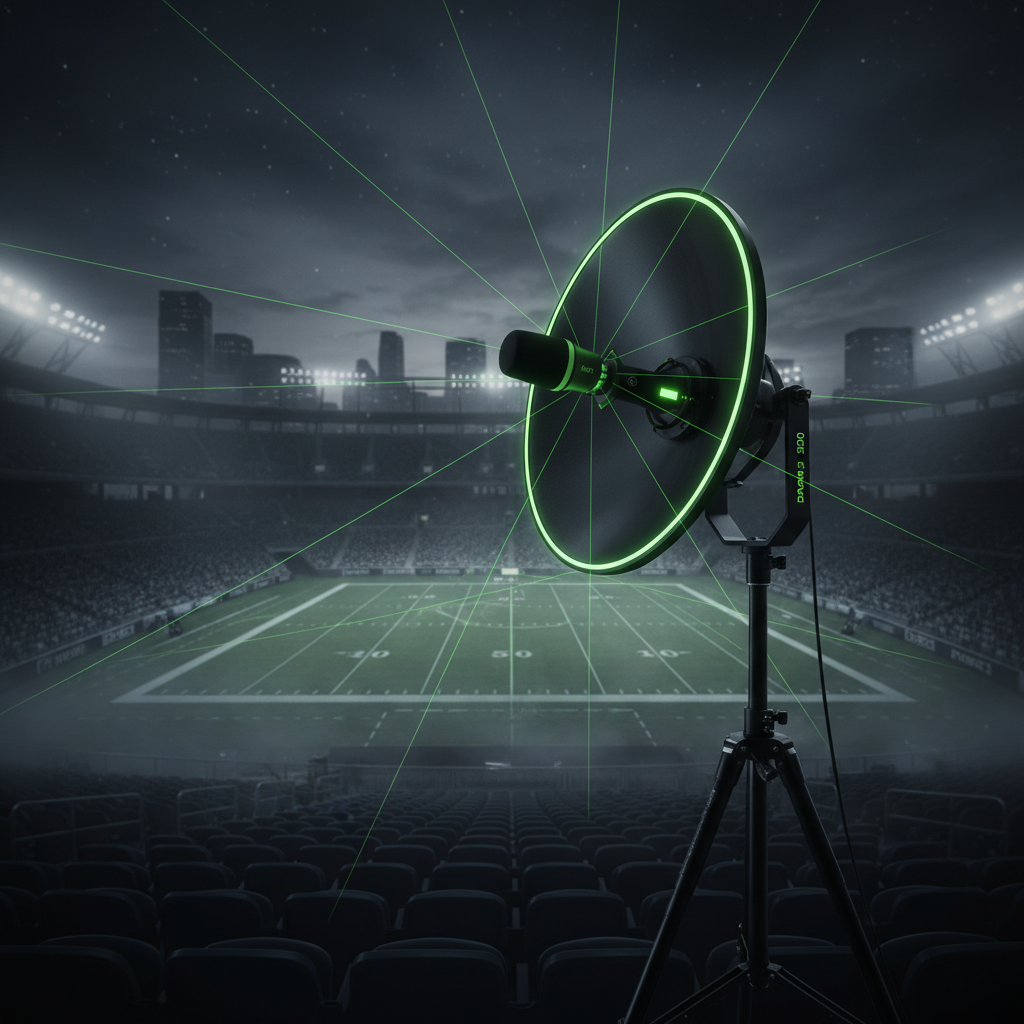
- Klover MiK 26 (Parabolic): Often seen on the sidelines of NFL and major league soccer games, this 26-inch parabolic dish is the king of long-distance capture. It acts like an acoustic telescope, focusing sound from up to 600 feet away.
- Sennheiser MKH 8070 (Long Shotgun): This microphone is a true workhorse, famous for its reliability in any weather. Its moisture-resistant design makes it perfect for rainy UK football matches.
- Audio-Technica BP28L (Large-Diaphragm Shotgun): A newer favorite in broadcasting, offering the reach of a shotgun with the rich “body” of a large diaphragm.
Building the Atmosphere: Immersive Crowd Ambience
The sound of the crowd is essential for conveying the emotion of the game. The goal is complete immersion, making the home viewer feel the energy of being in the stands. To achieve this, engineers use specific microphones designed to capture a wide, natural, and coherent soundscape.
The Gold Standards for Stadium Atmosphere
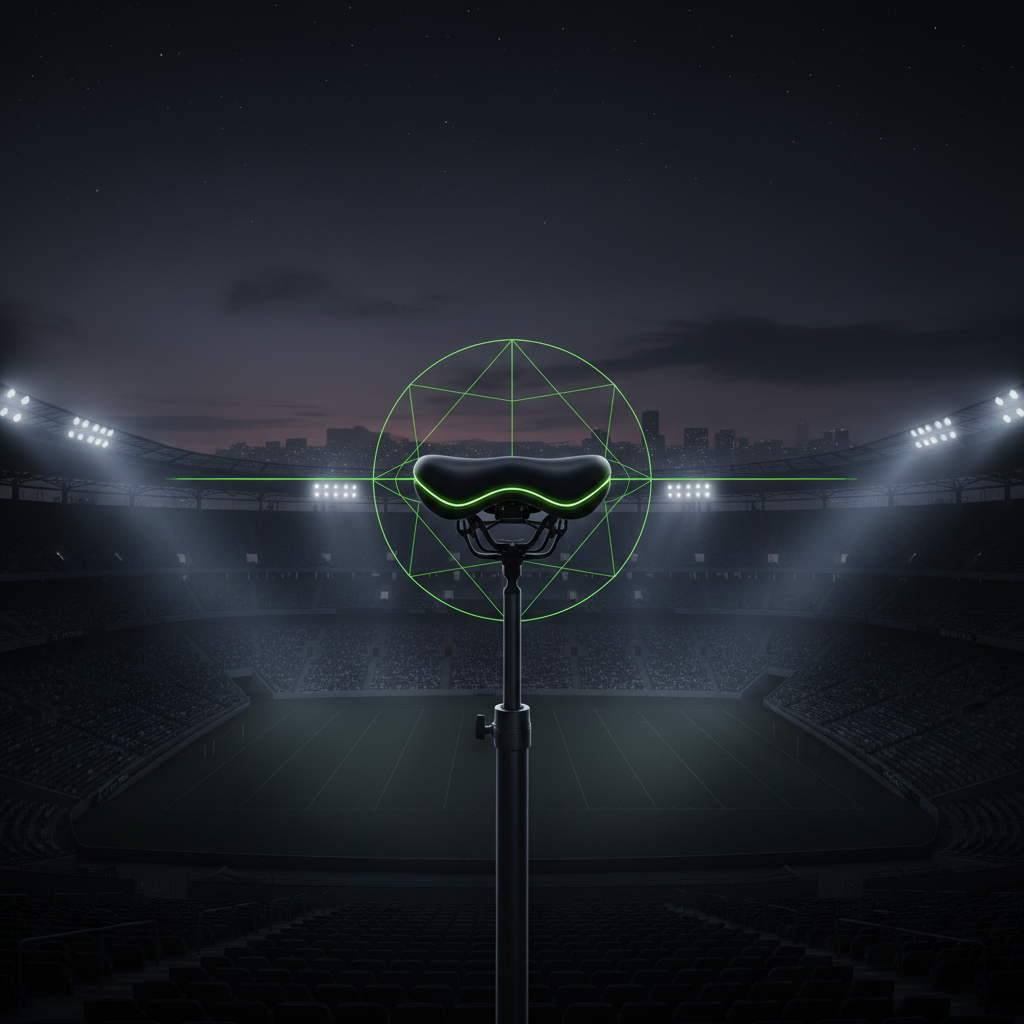
- DPA 5100 (Mobile Surround): Known affectionately as the “bicycle seat,” this captures five separate microphone capsules in a single, phase-coherent atmosphere.
- Schoeps ORTF Outdoor Set: A classic stereo configuration that creates a wide, realistic image, translating beautifully to home cinema systems.
- Audio-Technica BP4029 (Stereo Shotgun): A versatile “Mid-Side” mic that allows engineers to adjust stereo width post-capture.
Clear Communication: The Referee’s Lifeline
Modern officiating in sports like football, rugby, and American football relies on constant, clear communication between the on-field crew. Referees need wireless systems that are not only crystal clear but also tough enough to withstand sweat, rain, and physical impact.
These systems must filter out the overwhelming stadium roar so that only the referees’ voices are transmitted.
Elite Choices for Referee Comms
Shure Axient Digital with TwinPlex Lavaliers: This is the top-tier system used in most professional leagues. The Axient system is incredibly smart; it can detect radio interference and automatically switch to a clean frequency without anyone noticing.
Vokkero VARSITY II: This is a purpose-built intercom system that allows multiple referees to speak simultaneously (full-duplex). Its standout feature is its advanced noise-gating, which only activates the microphone when a person speaks.
Pro Tip: How to Avoid the Dreaded “Whistle Clip”
Even with the best microphone, a referee’s whistle can create a nasty digital distortion known as “clipping.” Professional engineers use three primary defenses:
Use a Pad
Activate -10dB or -20dB pads on the mic or preamp to reduce signal level instantly.
Limiter
Use a fast-acting “brickwall limiter” to act as a safety barrier against spikes.
Notch Filter
Apply a precise EQ filter between 2kHz and 4kHz to soften piercing frequencies.
Conclusion
Capturing broadcast-quality audio for live sports is both an art and a science. It requires a deep understanding of acoustics and a toolkit of highly specialized microphones. From the long-range precision of a parabolic dish to the immersive sweep of a surround microphone, each piece of gear plays a vital role. By choosing the right tool for each specific job—be it a single whistle or a roaring stadium—broadcasters can create a powerful and engaging experience that puts the viewer right in the middle of the action.