A strategic guide for older athletes transitioning from the power of tennis to the precision of pickleball.
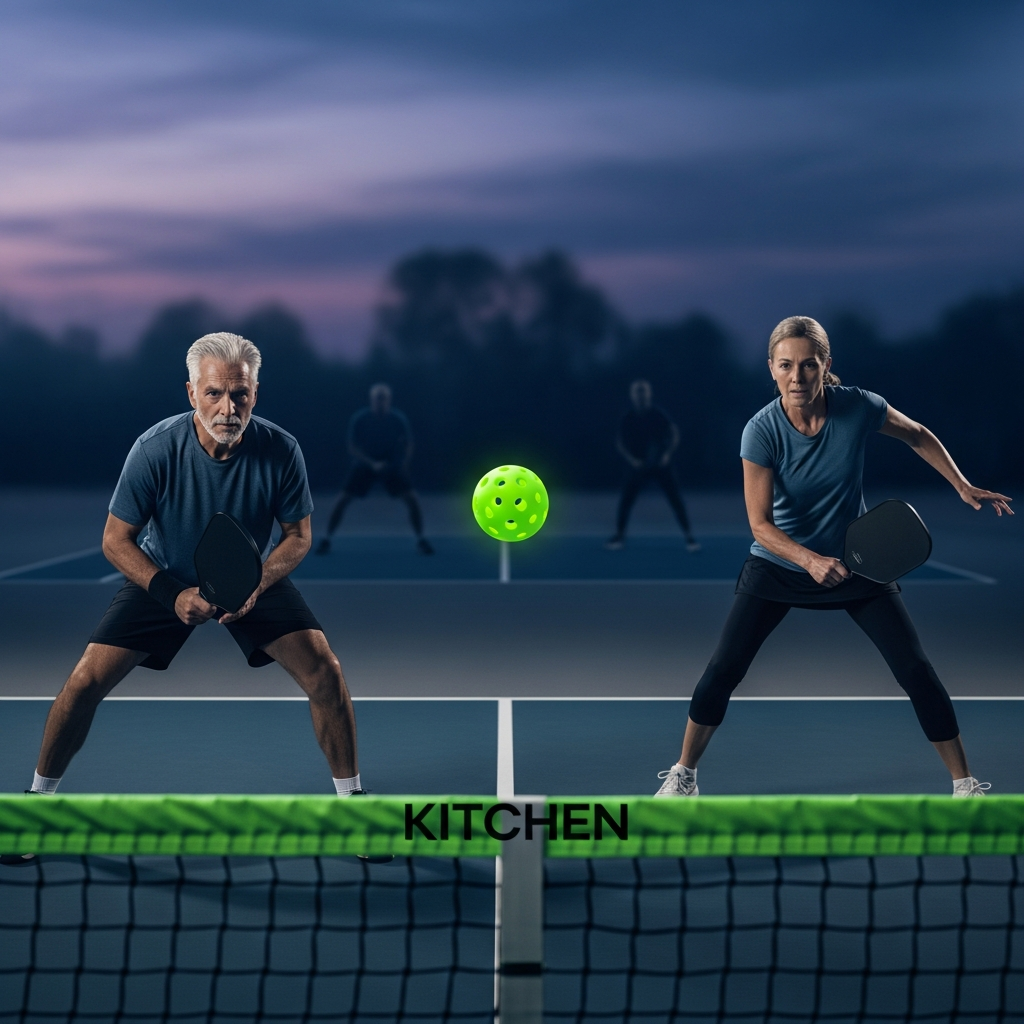
Making the switch from tennis to pickleball? You’re in good company. Many seasoned tennis players are discovering the unique thrill of this fast-growing sport.
Your years of court sense, hand-eye coordination, and competitive spirit give you a significant head start. However, succeeding in pickleball requires more than just bringing your tennis game to a smaller court.
This transition is all about strategy. For older athletes, especially, it’s a brilliant shift from a power-centric game to one that rewards patience, placement, and precision. This guide will walk you through the key strategic adjustments to help you not only play well but also dominate the pickleball court while minimizing strain on your body.
Embrace Brains Over Brawn: Strategy First
The most significant difference between the two sports is the court size. A pickleball court is much smaller (20×44 feet) than a tennis court (36×78 feet), which fundamentally changes the game. Raw power and blistering speed become less important. Consequently, this is a huge advantage for experienced players who can rely on their court IQ.
Instead of trying to overpower opponents, focus on out-thinking them. This is high-IQ pickleball, where anticipation and clever shot placement win points.
- Control the Pace: Use soft shots and dinks to slow the game down and force your opponents into making mistakes.
- Conserve Your Energy: Aim for efficient, high-percentage shots. You don’t need to chase down every ball; smart positioning means you won’t have to.
- Play Smarter, Not Harder: As detailed in Smart Pickleball Strategies for players over 40, experience and tactics often triumph over youthful athleticism.
Master the Kitchen: Your New Command Center
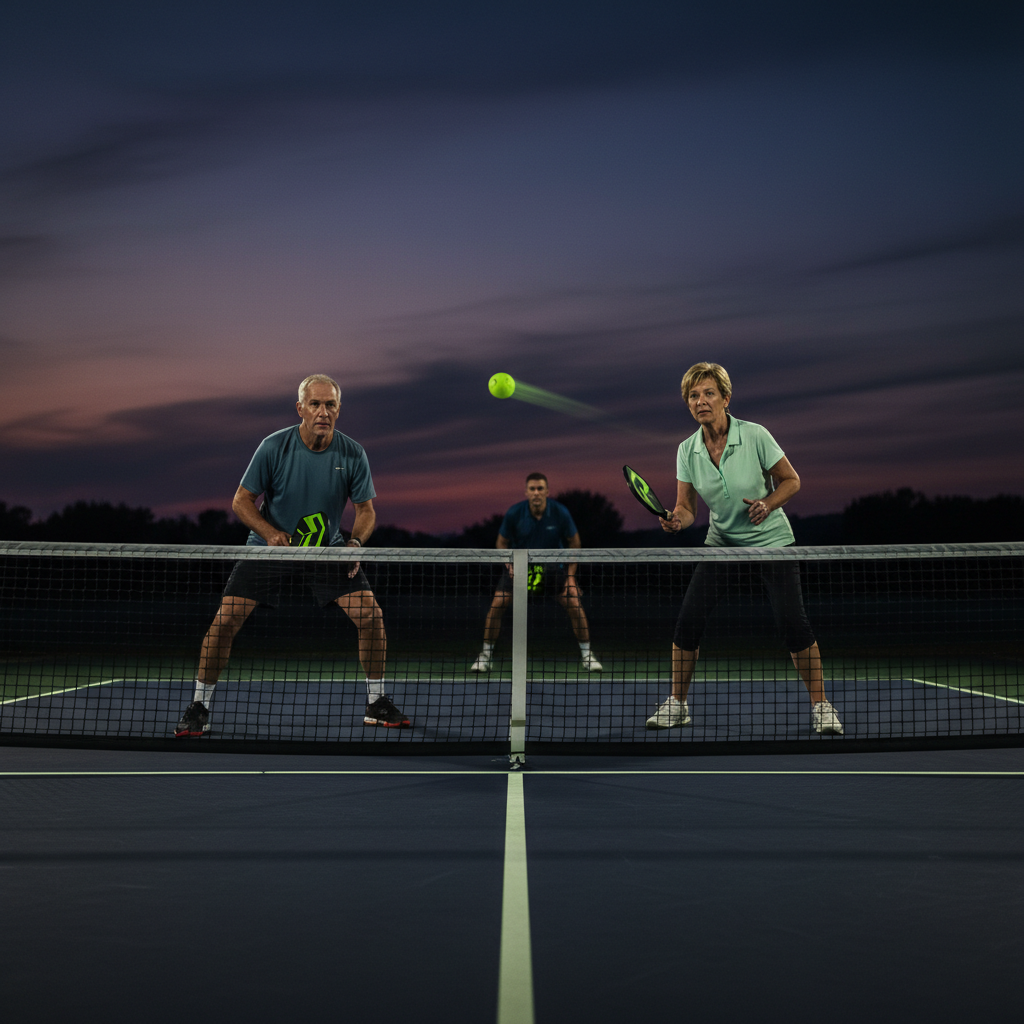
In pickleball, the seven-foot area on either side of the net is called the Non-Volley Zone (NVZ), or “the kitchen.” You cannot hit a volley (a shot out of the air) while your feet are in this zone. This single rule defines pickleball strategy.
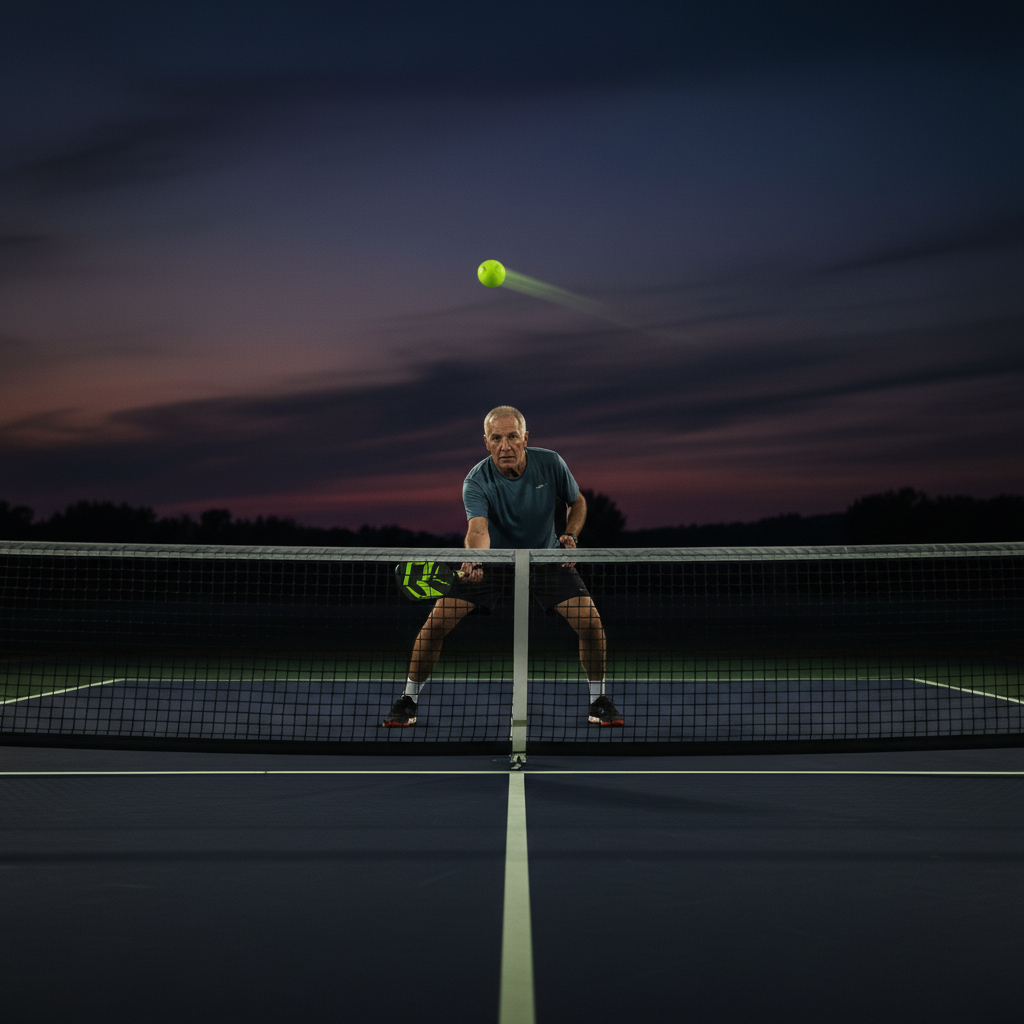
Your primary goal in any doubles rally is to get to the kitchen line with your partner and hold that position. From the NVZ line, you can control the point, cut off angles, and put pressure on your opponents. In contrast to tennis doubles, where one player might stay back, pickleball demands both players advance together. Move in tandem with your partner to close gaps and present a united front.
Footwork at the Kitchen Line
Movement at the NVZ is crucial. Use quick, short, lateral steps and stay light on the balls of your feet. Instead of taking a big step back to hit a dink, practice a slight rocking motion to maintain your offensive position without faulting.
Adapt Your Strokes for Finesse and Control
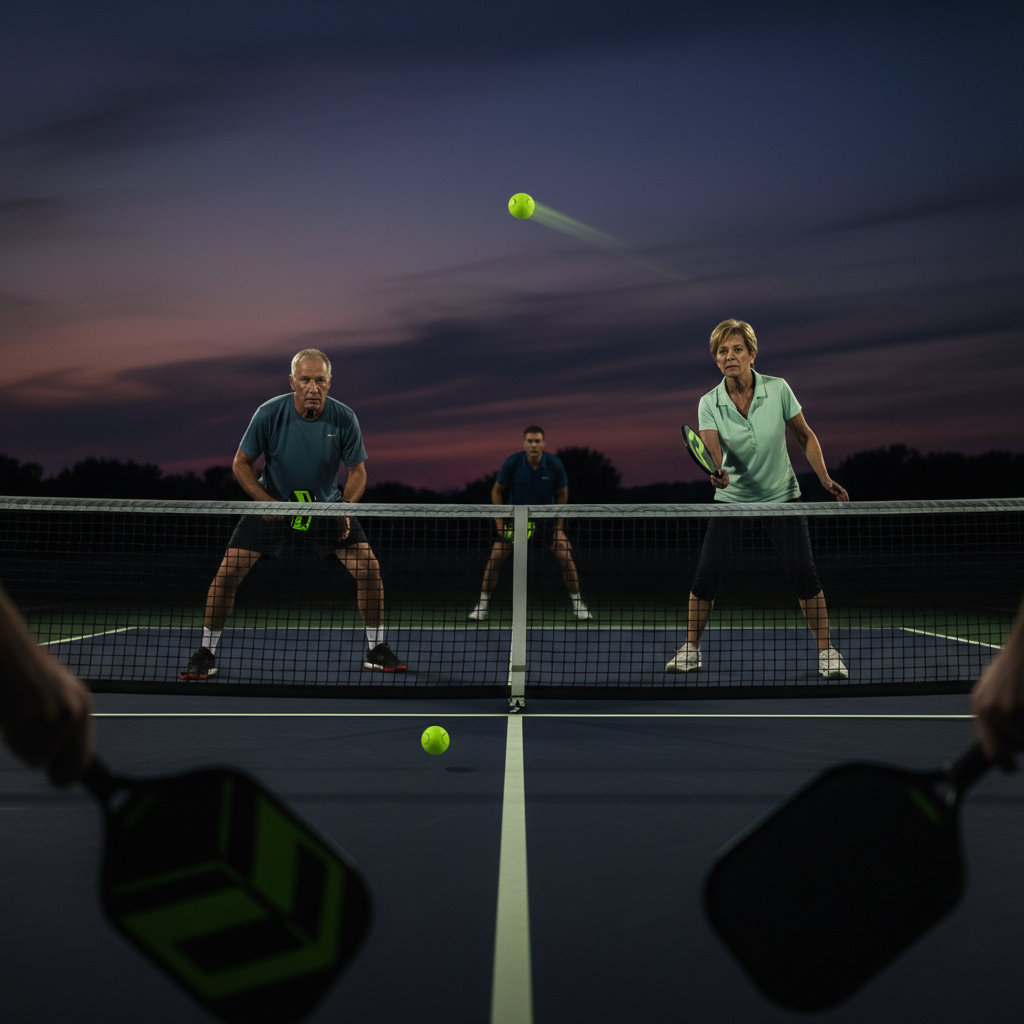
Your tennis strokes are an excellent foundation, but they need some fine-tuning for pickleball’s lighter wiffle ball and compact court.
Shorten Your Backswing
Long, flowing tennis groundstrokes generate too much power for the pickleball court. Because the distances are shorter, a compact, controlled motion is far more effective. Shorten your backswing on all shots, from drives to dinks, for better accuracy.
Rethink Your Volleys
Tennis players often use a slice volley at the net. In pickleball, however, a punch volley with a little topspin is more aggressive. It makes the ball dip at your opponent’s feet, creating a much tougher return.
Serve for Placement, Not Power
The pickleball serve is underhand and serves to start the point, not to win it outright. Therefore, focus on placing your serve deep into the court, especially to your opponent’s backhand. For a deeper dive into adapting your skills, see this guide for crossover athletes.
The Soft Game is Your Superpower
The most critical adjustment for tennis players is embracing the soft game. Dinks and third shot drops are the keys to high-level pickleball.
Dinking
The art of hitting un-attackable shots. A patient drinking rally is like a chess match. Bend your knees to get low, and keep your shots soft and precise.
Third Shot Drop
Arguably the most important shot. Neutralizes the returning team’s advantage and gives your team time to advance to the NVZ line.
Optimize Footwork and Your Ready Position
Pickleball requires different movement patterns than tennis. The smaller court demands rapid, short steps and excellent lateral agility. Focus on quick transitions from the baseline to the kitchen.
The Mental Shift: Patience Wins Points
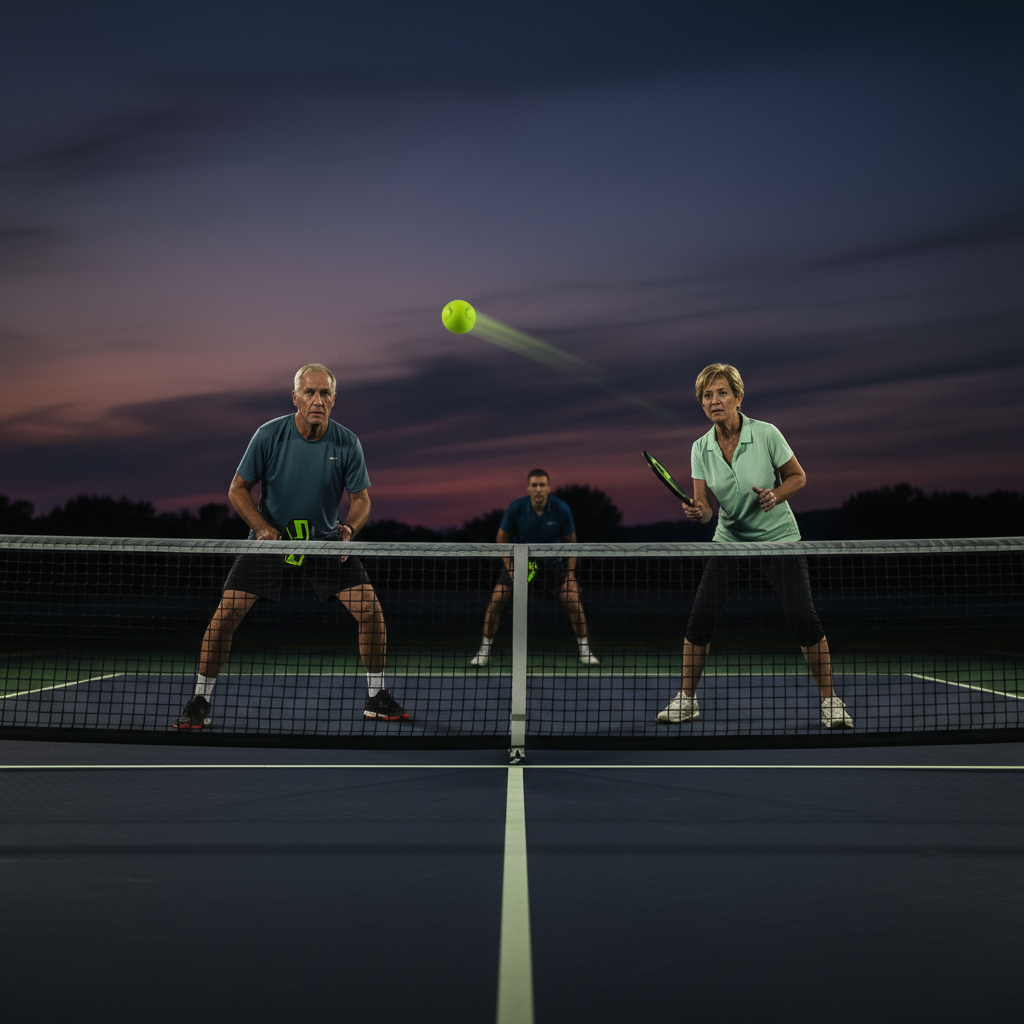
Finally, transitioning to pickleball requires a mental adjustment. While tennis can often be won with a few powerful shots, pickleball points are constructed with patience.
Learn to love the long dinking rallies. Absorb your opponent’s power rather than trying to match it. A well-placed block or a soft dink is often a better response to a hard drive than trying to hit it back even harder. Many concrete tips can help you make the jump from an intermediate to an advanced player.
Conclusion
Your tennis background is a powerful asset on the pickleball court. By adapting your game to favor strategy, mastering the kitchen, refining your strokes for control, and embracing a patient mindset, you can become a formidable player. Enjoy the new challenge, the vibrant community, and the unique strategic depth that pickleball offers. Welcome to your new favorite sport.