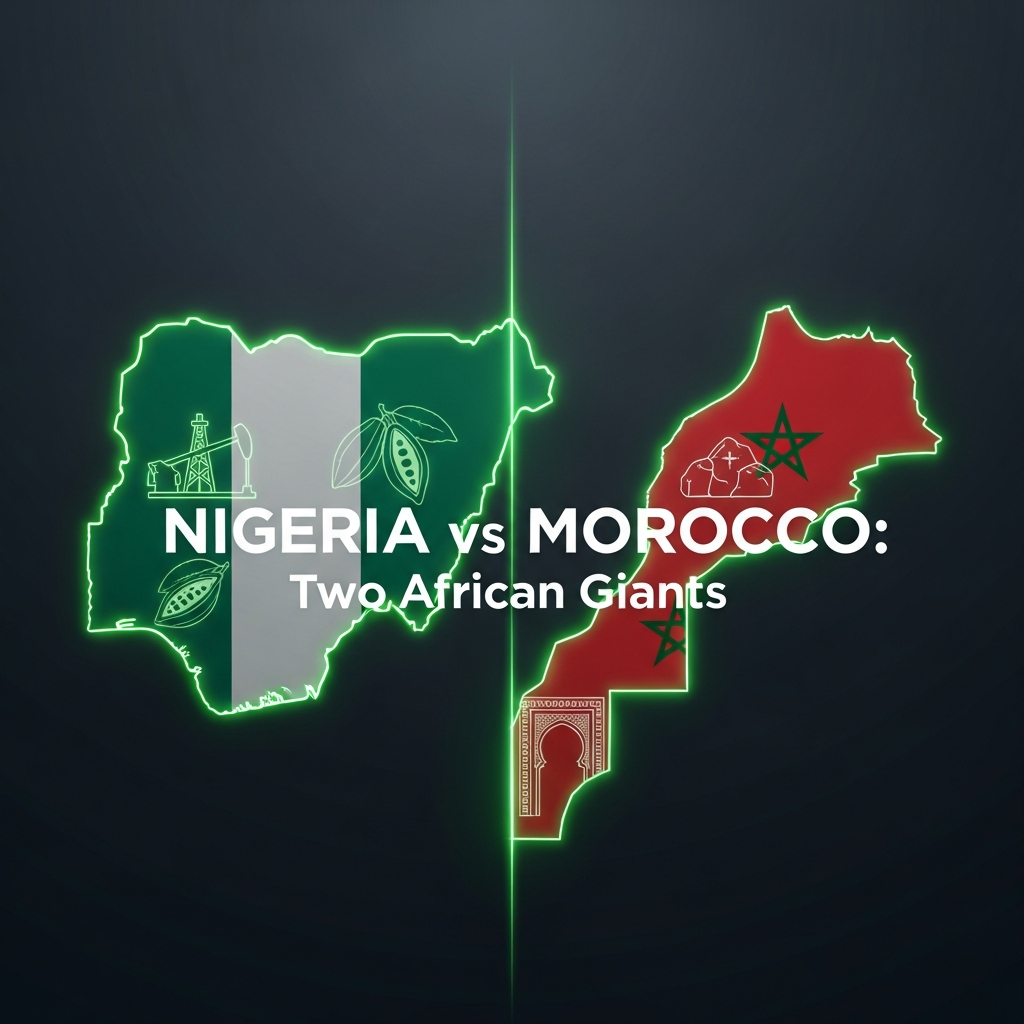
Nigeria vs. Morocco: A Tale of Two African Powerhouses
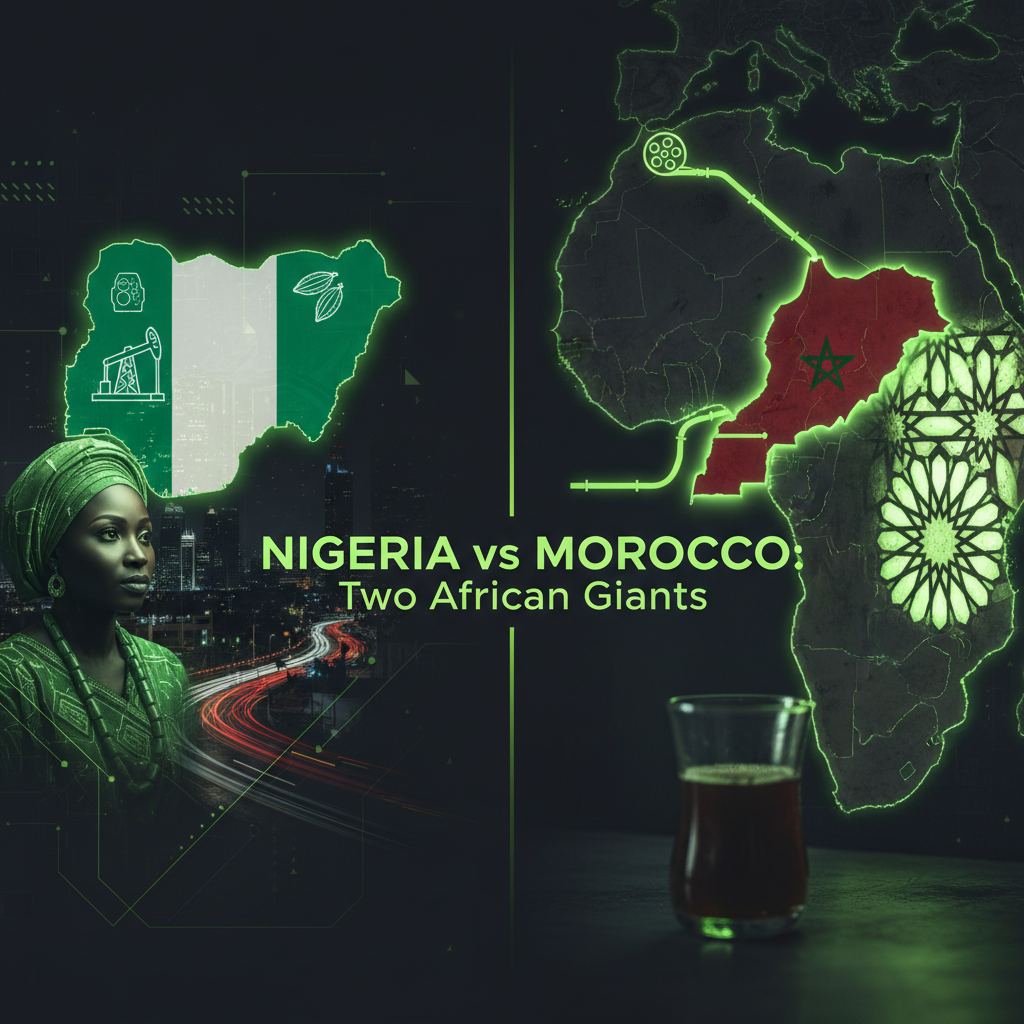
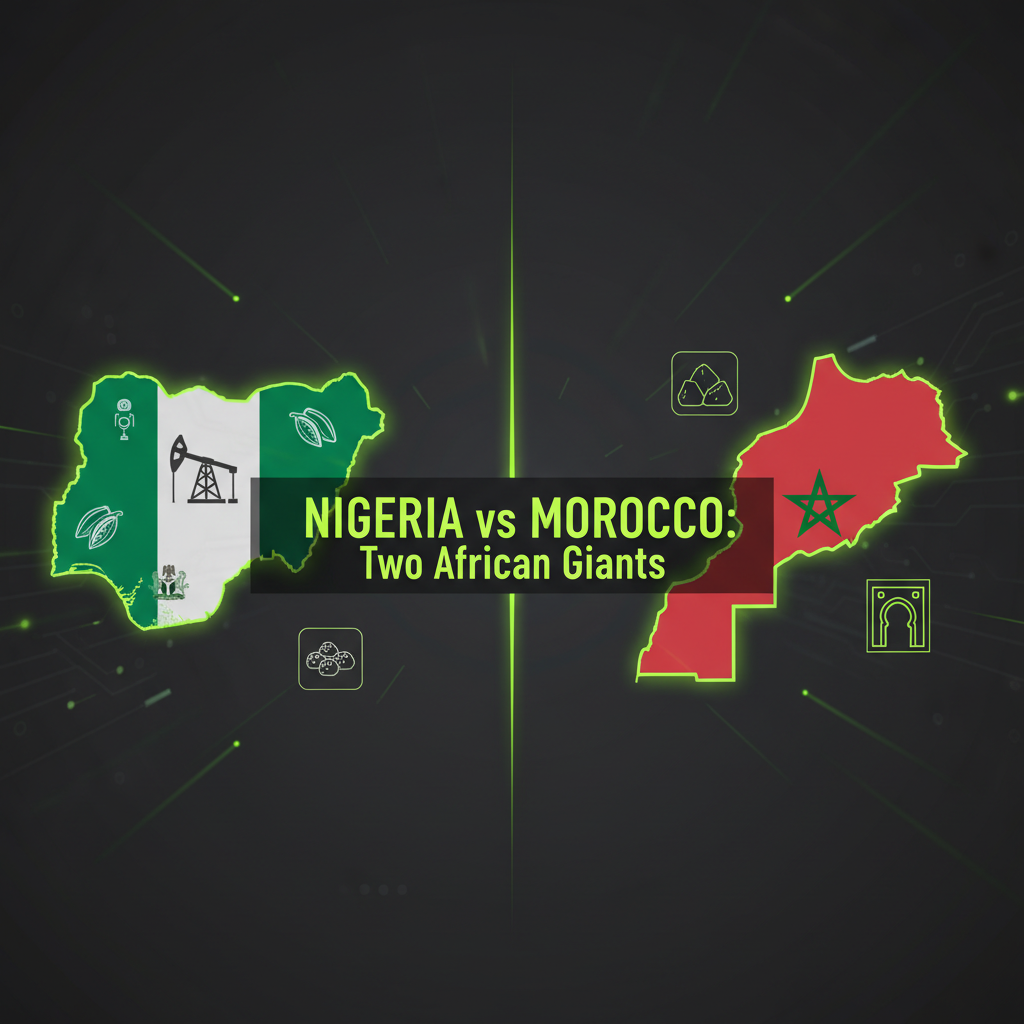
Nigeria and Morocco stand as two of Africa’s most influential nations, each with a unique story and a powerful presence on the continent. Nigeria, the “Giant of Africa,” pulses with the energy of West Africa’s most populous country. In contrast, Morocco, the “Gateway to Africa,” offers a rich blend of North African, Arab, and European cultures. While distinct in geography, governance, and culture, these two powerhouses are forging an ever-deepening partnership. This post explores the key characteristics of each nation and the growing relationship that is shaping the future of the continent.
At a Glance: Nigeria and Morocco
Understanding these two nations begins with their core identities. Both are regional leaders, yet they operate on vastly different scales and systems. Consequently, their paths, while separate, are becoming increasingly intertwined.
- Nigeria: A federal republic in West Africa with a population exceeding 200 million. Its capital is Abuja, the official language is English, and the currency is the Naira (₦).
- Morocco: A constitutional monarchy in North Africa with around 38 million people. Its capital is Rabat, the official languages are Arabic and Berber, and the currency is the Dirham (MAD).
Nigeria: The Giant of Africa
Nigeria’s nickname is well-earned. Its sheer demographic weight and economic output make it a pivotal player not just in Africa, but on the global stage.

People and Politics
Nigeria is a mosaic of over 250 ethnic groups, creating an incredibly diverse cultural landscape. The three largest groups—the Hausa-Fulani, Igbo, and Yoruba—shape much of the national identity. This diversity is managed through a federal republic system modeled on the U.S. Constitution. Therefore, power is divided between the President, a bicameral National Assembly, and the judiciary, ensuring a structured approach to governing this complex nation.
Economic Powerhouse
The Nigerian economy is a lower-middle-income, mixed market that is continuously evolving. For decades, crude oil has been the dominant force, accounting for over 75% of export earnings. However, the country is actively working to diversify. For instance, agriculture remains a massive employer, contributing significantly to the GDP with crops like cassava, yams, and cocoa. In addition, the services and digital sectors are booming, powered by a young, dynamic population. The world-renowned film industry, “Nollywood,” is another major cultural and economic export. Despite these strengths, challenges like infrastructure deficits remain a focus for development [Nigerian Economic Agency Report].
Morocco: The Gateway to Africa
Positioned at the crossroads of Africa and Europe, Morocco leverages its strategic location and rich history to build a modern, open economy.
People and Politics
Morocco’s culture is a captivating blend of Arab, Berber, African, and European influences. This heritage is visible everywhere, from its architecture and music to its languages. The nation operates as a semi-constitutional monarchy. The King holds significant executive and religious authority as head of state, while a Prime Minister serves as the head of government, working alongside a bicameral Parliament. This system has guided the country through steady modernization.
Diverse Economic Drivers
Morocco’s market-oriented economy is notably diverse. It is a world leader in phosphates, holding 75% of global reserves, which forms a cornerstone of its exports. However, the economy is not reliant on a single sector. Agriculture is vital, producing citrus fruits, olives, and barley. Furthermore, tourism thrives on the country’s unique culture and landscapes. Manufacturing is also a rapidly growing area, particularly in the automotive and aerospace industries, making it a key business hub for the region. The European Union stands as its largest trading partner, highlighting its strong international ties [Morocco Investment Portal].
A Deepening Partnership
While historically cordial, the relationship between Nigeria and Morocco has entered a new, dynamic phase in recent years. A pivotal moment was King Mohammed VI’s visit to Nigeria in 2016, which significantly strengthened diplomatic and economic cooperation.
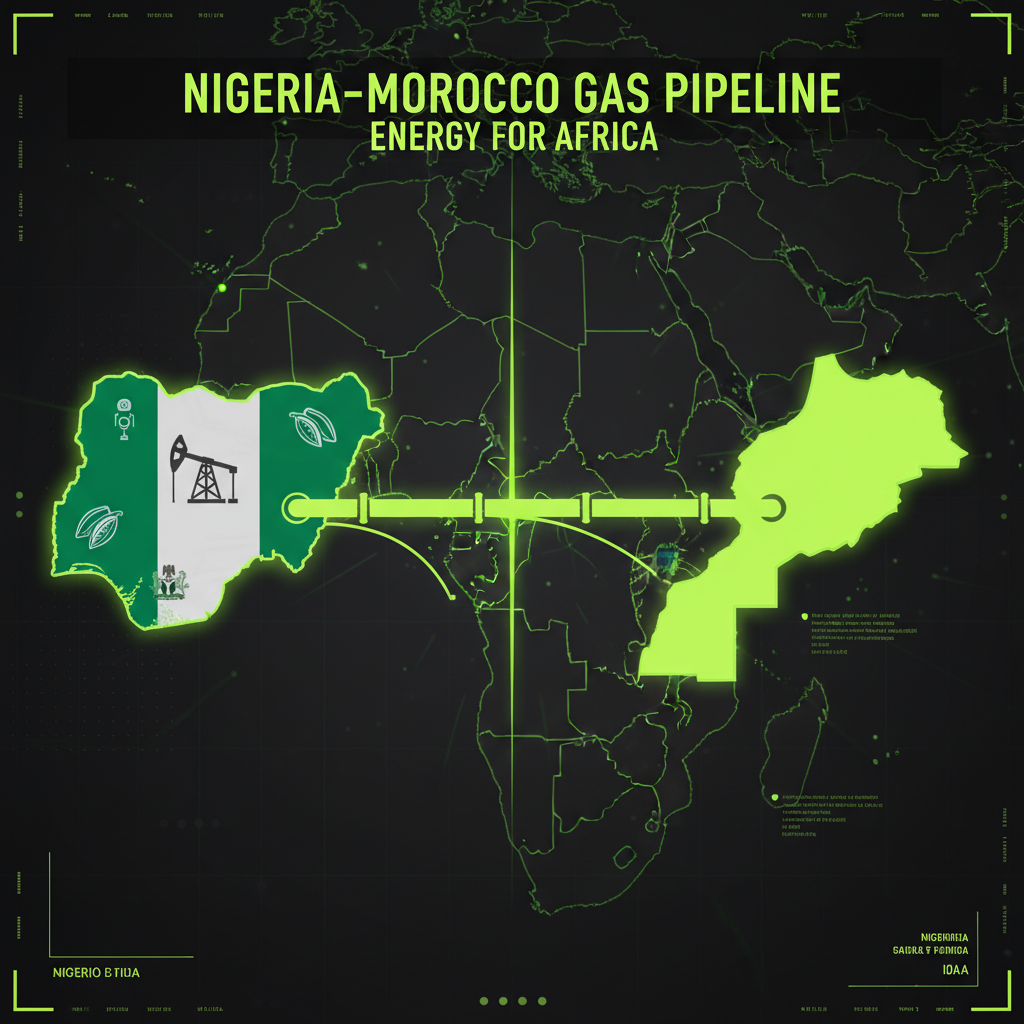
This renewed partnership has led to several impactful agreements in trade, energy, and agriculture. One of the most ambitious collaborations is the Nigeria-Morocco Gas Pipeline. This massive infrastructure project, conceived in 2016, aims to connect the two nations, providing energy to numerous countries across West Africa. Ultimately, the pipeline is expected to boost regional trade, create jobs, and foster greater economic integration across the continent.
Conclusion
Nigeria and Morocco offer two different but equally compelling visions of African progress. Nigeria is a continental giant, driven by its immense human capital and resource wealth. Morocco is a strategic gateway, powered by a diverse economy and a deep cultural heritage. Their differences are clear, but their growing collaboration, especially on transformative projects like the gas pipeline, underscores a shared commitment to a prosperous African future. Together, they are not just regional leaders; they are partners building a more connected and powerful continent.